
Honor Your Roots, Use the Name Daily: Practical Steps to Choose a
A warm, practical guide for parents who want to honor family origin without choosing a name that’s hard to spell, pronounce, or live with. Concrete tests, middle-name strategies, and family conversation scripts.
Quick Answer
A warm, practical guide for parents who want to honor family origin without choosing a name that’s hard to spell, pronounce, or live with. Concrete tests, middle-name strategies, and family conversation scripts.
- Start with the purpose: why honor a specific origin matters to your family
- Practical naming tests to run before you commit
- Middle-name and nickname strategies that preserve origin while easing everyday use
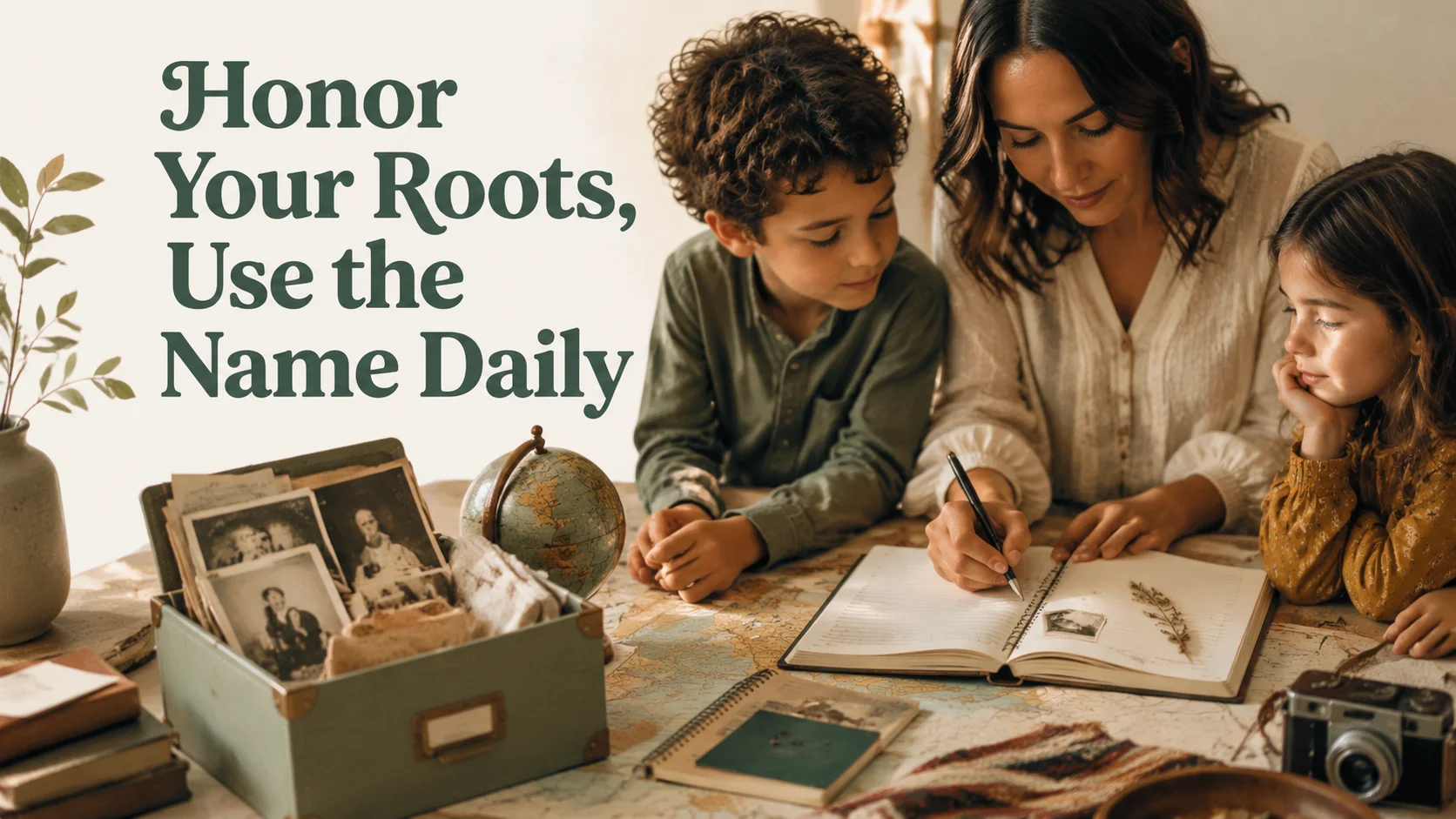
Start with the purpose: why honor a specific origin matters to your family
Be specific about what honoring origin means to you: language preservation, family memory, or a cultural handshake that connects generations and guides choices.
Decide whether the goal is symbolic, practical, or both; a symbolic middle name can honor lineage without making daily use difficult for your child or others.
Clarify audience: are you choosing for immediate family recognition, extended relatives abroad, or for a broader cultural connection that you want to keep visible?
Practical naming tests to run before you commit
Say the full name aloud in at least five key contexts you’ll encounter: announcing at home, calling across a playground, spelling on a form, saying it in a school roster, and a quick voicemail introduction.
Write the name in a handwritten kids' drawing, on a homework label, and on a smartphone contact to see how it looks and whether spelling variations appear or invite misspellings.
Try a one-week live test: use the name in emails, social media, sample school forms, and ask three different friends to pronounce it without help; note friction points and repeated corrections.
Middle-name and nickname strategies that preserve origin while easing everyday use
Use a culturally specific name as a middle name and pair it with a short, easy-to-pronounce first name so the child carries heritage while minimizing daily friction at school and work.
Plan intentional nicknames derived from the heritage name that are natural and usable; choose nicknames that respect the original while providing a simpler daily option.
Document preferred pronunciations and spellings early: include phonetic cues on birth announcements, email signatures, and family group chats so teachers, relatives, and caregivers learn the intended forms.
Design family conversations and boundary scripts that center respect and clarity
Prepare a short family script explaining your choice: mention the heritage link, why usability matters, and how you’ll use the name publicly versus privately to keep expectations aligned.
Set simple boundaries with relatives who push for a different name by offering specific alternatives, like using the ancestral name in private ceremonies or as a middle name, so the conversation stays practical and solution-focused.
Invite relatives to contribute stories or pronunciations to a shared document or audio file; this preserves family voice while keeping the naming decision ultimately yours.
Administrative, school, and social steps to make a heritage name stick comfortably
When registering the name on official forms, include a preferred pronunciation line where allowed and a short phonetic spelling in parentheses so educators and administrators see your intent from the start.
At daycare and early school meetings, offer a one-line pronunciation tip and a suggested nickname so staff can use a comfortable form consistently and avoid repeated mispronunciations.
Prepare a digital name card with phonetic spelling and a short origin sentence to share with new teachers, community groups, and family email lists; consistency across platforms reduces friction and protects the name's heritage.
Name Examples And Meanings
An Indian name meaning 'hope', short and familiar across many accents.
A widely used Arabic form of Abraham that keeps cultural integrity.
Used in South Asian and Latin cultures, meaning varies but stays accessible.
An Italian form of Luke that travels well in many languages.
A name of Arabic and European roots meaning 'light', clear and short.
Spanish form of Matthew that reads familiar in many languages.
A Swahili name meaning 'beautiful', concise and modern-sounding.
A Danish name meaning 'stern', uncommon but straightforward to pronounce.
A name of Sanskrit and Scandinavian use, meaning 'graceful' or 'soldier'.
An Arabic nickname meaning 'exalted', usable as a given name in many places.
Hashtags
Related Articles
- More origin meaning articles
- Honor Your Roots, Use the Name Daily: A Practical Guide to Blending
- Honoring Family Origins in a Baby Name While Keeping Everyday Useable
- One Name, Three Needs: A Practical Guide to Balancing Pronunciation
- Finding One Name That Says Home and Now: Balancing Pronunciation