
Practical Indoor Movement Circuits for Toddlers: Build Energy, Bala
Five easy, adaptable indoor circuits toddlers can do in 15–25 minutes to burn energy, strengthen balance, and build coordination on rainy days or small spaces.
Quick Answer
Five easy, adaptable indoor circuits toddlers can do in 15–25 minutes to burn energy, strengthen balance, and build coordination on rainy days or small spaces.
- Why short indoor circuits help toddlers and how to set expectations
- Quick setup: use three household zones and six portable props
- Five starter circuits with clear, toddler-friendly cues
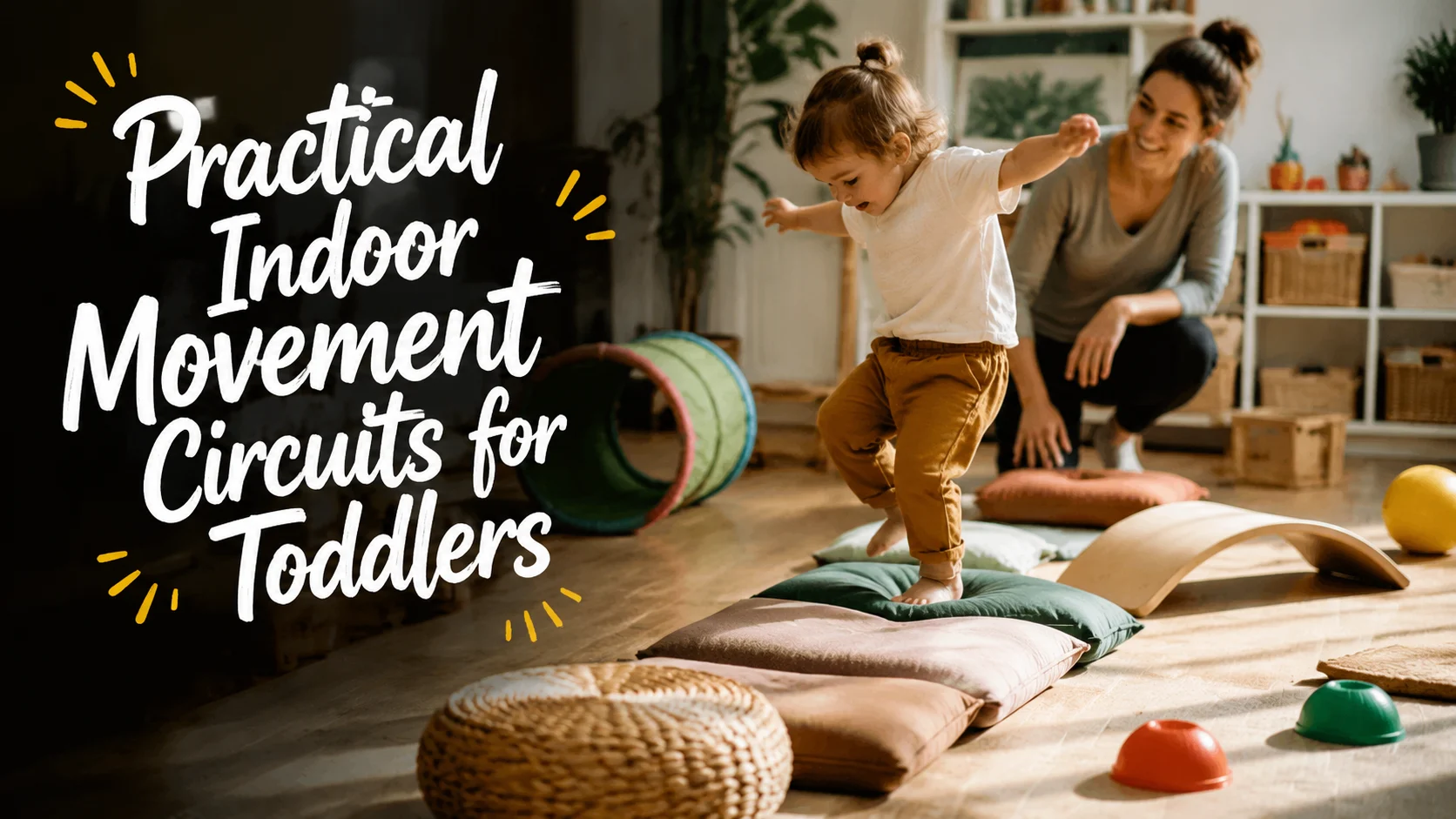
Why short indoor circuits help toddlers and how to set expectations
Toddlers thrive on predictable movement blocks that match their short attention spans, so plan circuits that last 15 to 25 minutes and include frequent transitions.
Accept that a circuit won’t perfectly replace outdoor play but can reliably deliver bursts of aerobic activity, balance practice, and sensory input on days you can’t go out.
Set a simple expectation with your child before starting: name the circuit, show the first move, and promise a calm finish with a favorite quiet activity afterward.
Quick setup: use three household zones and six portable props
Pick three compact zones in your home—an active zone for running or jumping, a balance zone for beams or stepping stones, and a calm zone for stretching and breath work.
Gather six easy props you can move between zones: a small cushion, a rolled towel, a lightweight ball, a short masking-tape line, an empty plastic bin lid, and a lightweight scarf.
These props keep setup minimal and portable, let you adapt to tight spaces, and give toddlers tactile anchors for each station without extra clutter to store.
Five starter circuits with clear, toddler-friendly cues
Circuit A: Warm-up hop-and-scoop—hop eight times, scoop a cushion and walk it to the calm zone, then crawl back; use a singable cue to keep rhythm and focus.
Circuit B: Balance path—follow a masking-tape line for ten steps, step on towel stones without touching the floor, then freeze for three slow breaths before returning.
Circuit C: Ball rhythm—kick or roll a lightweight ball between two markers three times, chase it back, throw it gently into a bin, and practice two deep belly breaths together.
Practical coaching tips that keep toddlers engaged and safe
Use clear, concrete language: say 'jump high five times' rather than vague directions like 'be active', and demonstrate each move once before asking your child to try.
Offer two escalating options for each move so toddlers can choose difficulty: for example, hop on two feet or hop on one foot, then celebrate the chosen effort.
Watch the room for hazards—clear a small radius around each zone, anchor rugs or move small furniture, and keep sharp objects and breakables well out of reach.
Transitions, rhythm, and making circuits part of daily life
Link circuits to daily rhythms by placing them before snack time, after nap, or as a mid-afternoon reset; a consistent placement makes participation easier and more predictable.
Use short ritual cues to start and end: a five-second countdown, a signature clap, or the same two-line song each time helps toddlers anticipate what comes next.
Rotate the props and tweak small challenges weekly so circuits feel fresh without becoming complicated, and invite older siblings or caregivers to join for built-in social play.
Hashtags
Related Articles
- More movement sport articles
- Apartment-Friendly Toddler Circuits for Rainy Days and Small Spaces
- Apartment-Friendly Toddler Circuits: Practical Indoor Movement Plan
- Indoor movement circuits for toddlers when outdoor play is not real
- Quick Movement Breaks for High‑Energy Toddlers During Long Family Days