
Reading Regional Name Patterns: Practical Limits and Uses for Paren
Regional baby-name patterns give useful signals about local culture and pronunciation, but they have limits. This guide explains what regional data can reveal, what it can't, and how to use it practically when choosing a name in 2026.
Quick Answer
Regional baby-name patterns give useful signals about local culture and pronunciation, but they have limits. This guide explains what regional data can reveal, what it can't, and how to use it practically when choosing a name in 2026.
- Why regional name data matters for practical parents in 2026
- What regional trends reliably show
- What regional data cannot and should not tell you
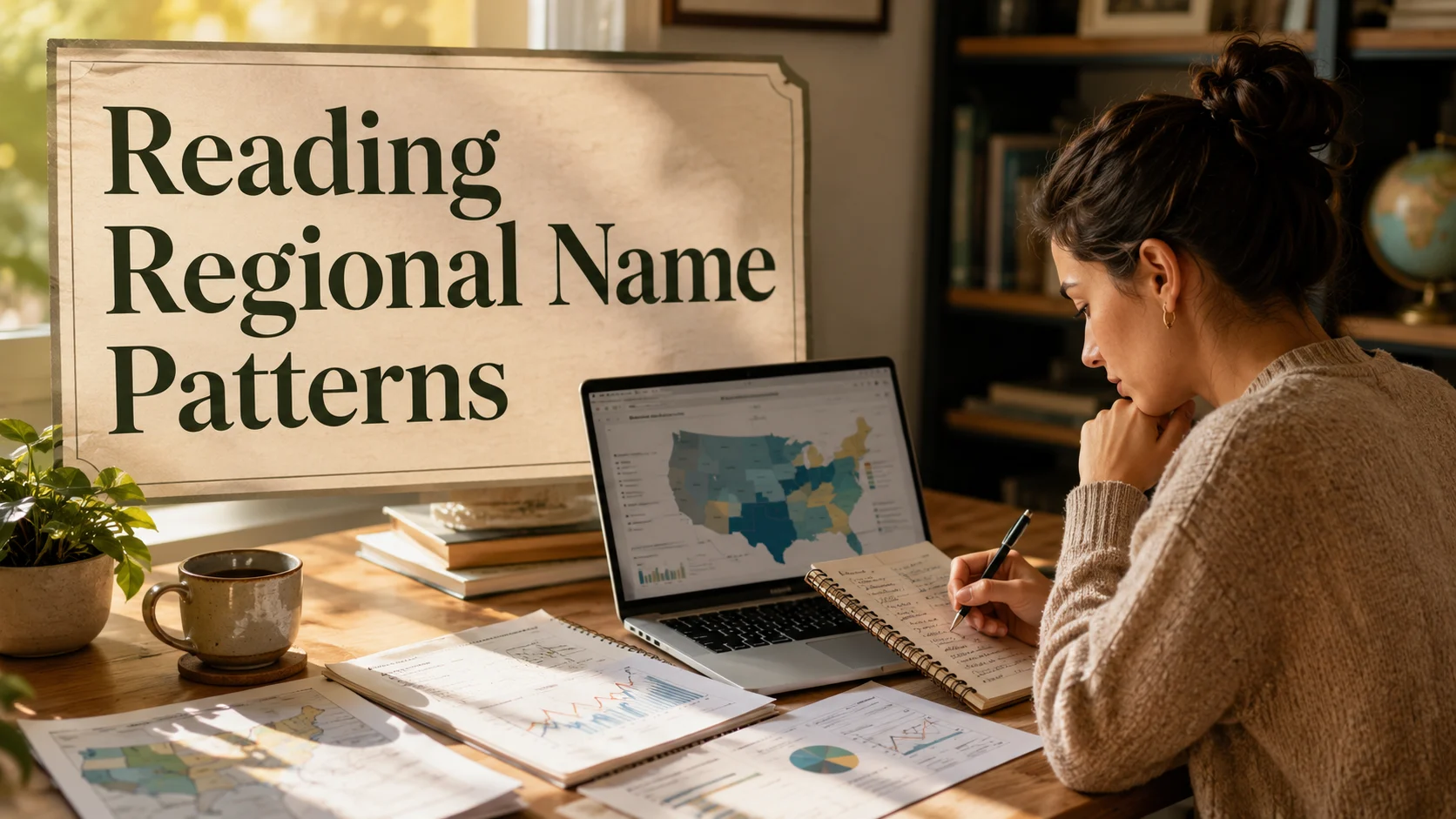
Why regional name data matters for practical parents in 2026
Regional name data helps parents anticipate how often their chosen name will appear at school, daycare, or in local circles, letting them plan for duplicates and nicknames beforehand.
Knowing local pronunciation and spelling tendencies allows parents to pick a name that works smoothly in daily life, reducing frequent corrections during introductions and administrative forms.
In 2026, regional patterns remain useful because migration, media, and local culture interact; this means a name that feels common in one county can be rare the next town over, which matters for everyday fit.
What regional trends reliably show
Frequency clusters: public records and local tip sheets show where certain names concentrate, which helps predict the chance of classmates sharing a name in your neighborhood or school district.
Pronunciation preferences: regional accents and common languages shape how a name will sound locally, so checking local recordings or community examples can prevent daily mispronunciations.
Spelling variants and shorthand: areas with particular cultural influences often favor one spelling or nickname over another; being aware helps you decide on a full legal name versus a likely everyday form.
What regional data cannot and should not tell you
Regional trends can't predict an individual child's social experience, personality, or popularity; patterns describe populations, not futures for a single child in a mixed neighborhood.
They don't reliably forecast long-term national or global popularity shifts because cultural moments, viral media, or celebrity use can rapidly change a name's appeal beyond regional bounds in months.
Regional data should not be used to rigidly exclude names tied to heritage; it can inform practical considerations but shouldn't replace values like family meaning or cultural authenticity.
Practical checks to use regional patterns without overcommitting
Quick neighborhood check: scan your local school's public directory or community social media to see if a name appears multiple times; this low-effort check gives a realistic sense of local frequency.
Pronunciation test: say the name aloud in common regional accents or ask three local people to pronounce it. Track likely variants so you can decide whether to simplify spelling or rehearse a preferred pronunciation.
Form-and-tech check: type the name into likely systems you’ll use—email address, school forms, or daycare apps—to see auto-corrections or frequent misspellings and adjust your chosen spelling if needed.
How to fold regional insight into your naming process
Make a priority list: note three nonnegotiables (meaning, family ties, pronunciation) and two negotiables (popularity, spelling). Use regional data only to inform negotiables while keeping core values first.
Practice the name daily in realistic setups: say it at drop-off, write it on forms, and introduce it to neighbors. These practical rehearsals reveal daily friction points that statistics alone won't show.
Plan simple fallbacks: choose a preferred full name plus one short everyday version you like. If regional trends suggest common duplicates, a distinct nickname or middle-name habit can create daily ease without changing your core choice.
Name Examples And Meanings
Common across many regions; signals approachable multicultural fit and simple pronunciation.
Basque origin popular in parts of Spain; suggests regional pride and strong consonant sounds.
Meaning varies by origin; popular in several regions for its vowel-driven, gentle cadence.
Widely used in many regions; signals mainstream choice and probable high local frequency.
Nordic-rooted short name that indicates regional heritage and can influence pronunciation needs.
Short, internationally familiar name that often maps to urban areas and fashion-forward pockets.
Popular in several European regions; implies classic styling with modern revival tendencies.
Globally common with regional spelling variants; signals timelessness and frequent local variants.
Spelling and pronunciation shift regionally; useful example of how the same name travels differently.
Short, vintage revival name that tends to cluster in certain regions favoring classic sounds.
Hashtags
Related Articles
- More trends 2026 articles
- Fast-Rising Names vs. Staying Power: A Practical Playbook for 2026
- How to Read SSA Name Ranks Without Letting the Chart Pick Your Baby
- Fast-Rise vs. Staying Power: A Practical Guide to Compare Baby-Name
- Using SSA Popularity Ranks as a Compass, Not a Command: A Practical