
Three-Line Feeding Notes: A Fast, Repeatable Routine for Clear Patt
A short, structured feeding-notes habit that helps parents and caregivers track patterns, answer common questions, and hand off care with confidence in minutes each day.
Quick Answer
A short, structured feeding-notes habit that helps parents and caregivers track patterns, answer common questions, and hand off care with confidence in minutes each day.
- Why a Three-Line Note Works for Busy Families
- The Three Lines: What to Record and Why
- Practical Formats and Tools That Actually Get Used
Why a Three-Line Note Works for Busy Families
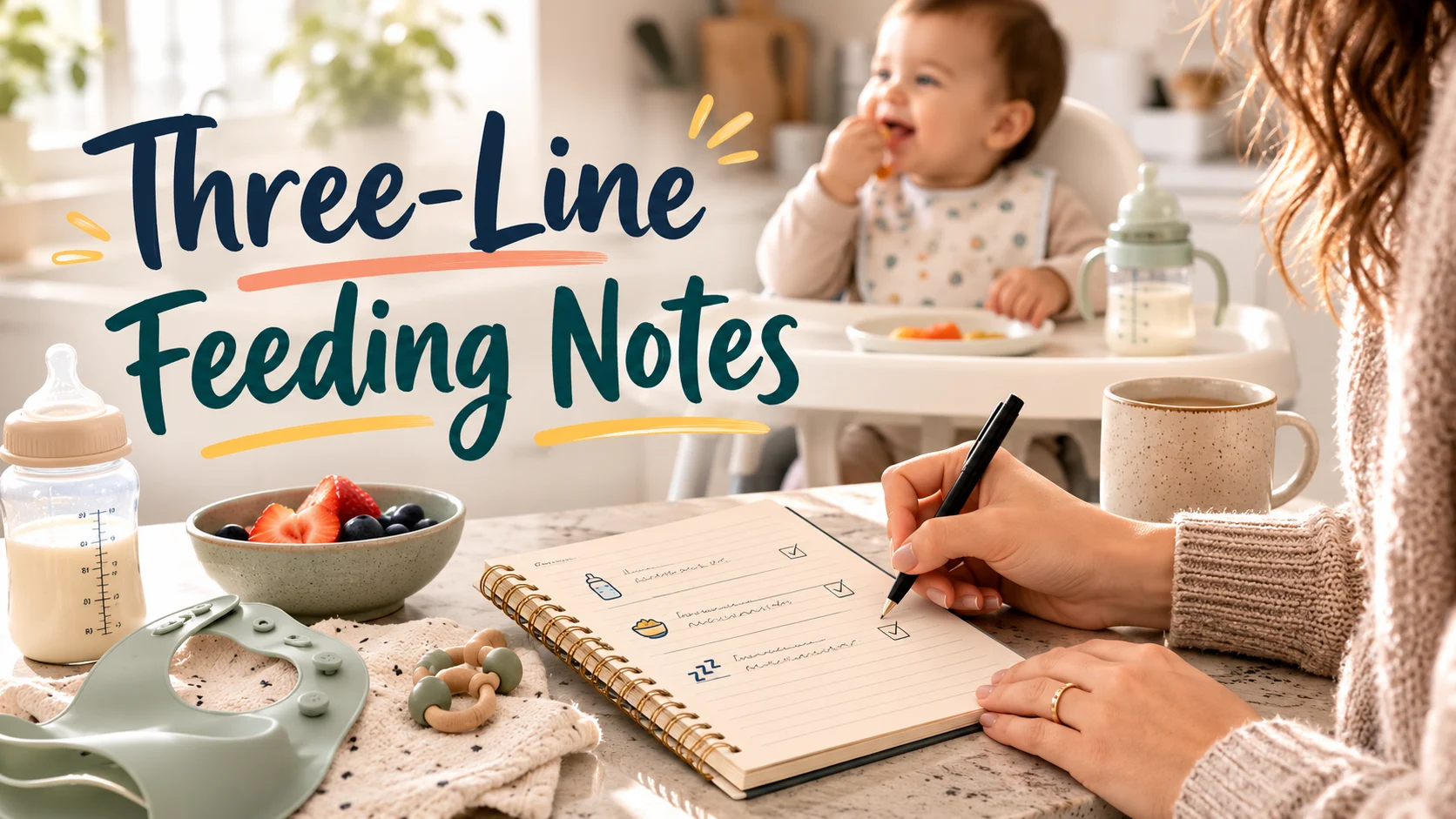
Busy days make long notes unrealistic; three clear lines force useful choices so anyone can read and act quickly without scanning pages of detail.
A short structure reduces anxiety at handoffs because it highlights what changed, what’s next, and which question needs attention instead of burying priorities.
Keeping notes this compact encourages consistency: caregivers are more likely to fill something out if it takes under two minutes, which builds reliable data over time.
The Three Lines: What to Record and Why
Line one: last feeding and amount or duration — note time and either minutes at breast or exact ounces for bottles to show intervals and intake trends.
Line two: output and comfort — write diapers (wet/dirty) and any fussiness or sleeping changes so patterns of digestion and comfort are visible at a glance.
Line three: one quick question or next action — list what you want checked later or what to try next (extra burping, refill bottle, call pediatrician if persistent) to keep follow-up focused.
Practical Formats and Tools That Actually Get Used
Use a laminated card and dry-erase marker at the feeding station so notes stay visible and are wiped clean after each caregiver reads and confirms, reducing lost slips.
Alternatively, keep a small dedicated notebook near the crib or changing table; a two-column layout (time | three-line note) keeps entries compact and chronological without extra formatting.
For daycare or wider caregiver teams, a shared photo of the completed card or a single-note app with a templated three-line field preserves consistency and timestamps handoffs without extra typing.
How to Keep Notes Useful, Not Judgmental
Focus entries on observable facts and one next step; avoid judgmental language so notes remain practical tools rather than critiques that create defensiveness between caregivers.
If a pattern worries you, use the third line for a specific, time-bound request (for example, “recheck temp at 6pm” or “offer 15ml extra at 7pm”) instead of vague concerns that won’t guide action.
Rotate a weekly short review between partners or caregivers to turn accumulated three-line notes into clear patterns, avoiding speculation and surfacing small changes before they become big.
Setting Up a Simple Start-and-Stop Routine
Decide a visible home location for the note system and agree on when entries must be made, such as immediately after each feeding or before any caregiver leaves the room.
Train everyone with a one-page cheat sheet: show three real example entries and a sample handoff script so filling notes and reading them becomes predictable and fast.
Check the system in week one and then at two-week intervals; tweak the phrasing or placement if entries are skipped, and celebrate consistency so the habit sticks without friction.
Hashtags
Related Articles
- More feeding routines articles
- Minimal Feeding Stations for Early Months: Set Up Smart, Not Full
- One-Counter Feeding Rotation: How to Keep First-Month Supplies Hand
- Early-Month Feeding Setup: A Minimal, Practical Plan for the First
- A Minimalist Early-Month Feeding Shelf: Essentials, Stations, and