
A Calm 20-Minute After‑School Decompression Routine for Preschool
Practical, low-drama steps to help young children unwind after school: arrival cues, a quick sensory reset, a snack-and-talk pairing, short movement, and a clear handoff to evening caregivers.
Quick Answer
Practical, low-drama steps to help young children unwind after school: arrival cues, a quick sensory reset, a snack-and-talk pairing, short movement, and a clear handoff to evening caregivers.
- Why a brief decompression routine matters
- Arrival cues: a calm landing that everyone can follow
- A simple sensory reset to lower arousal
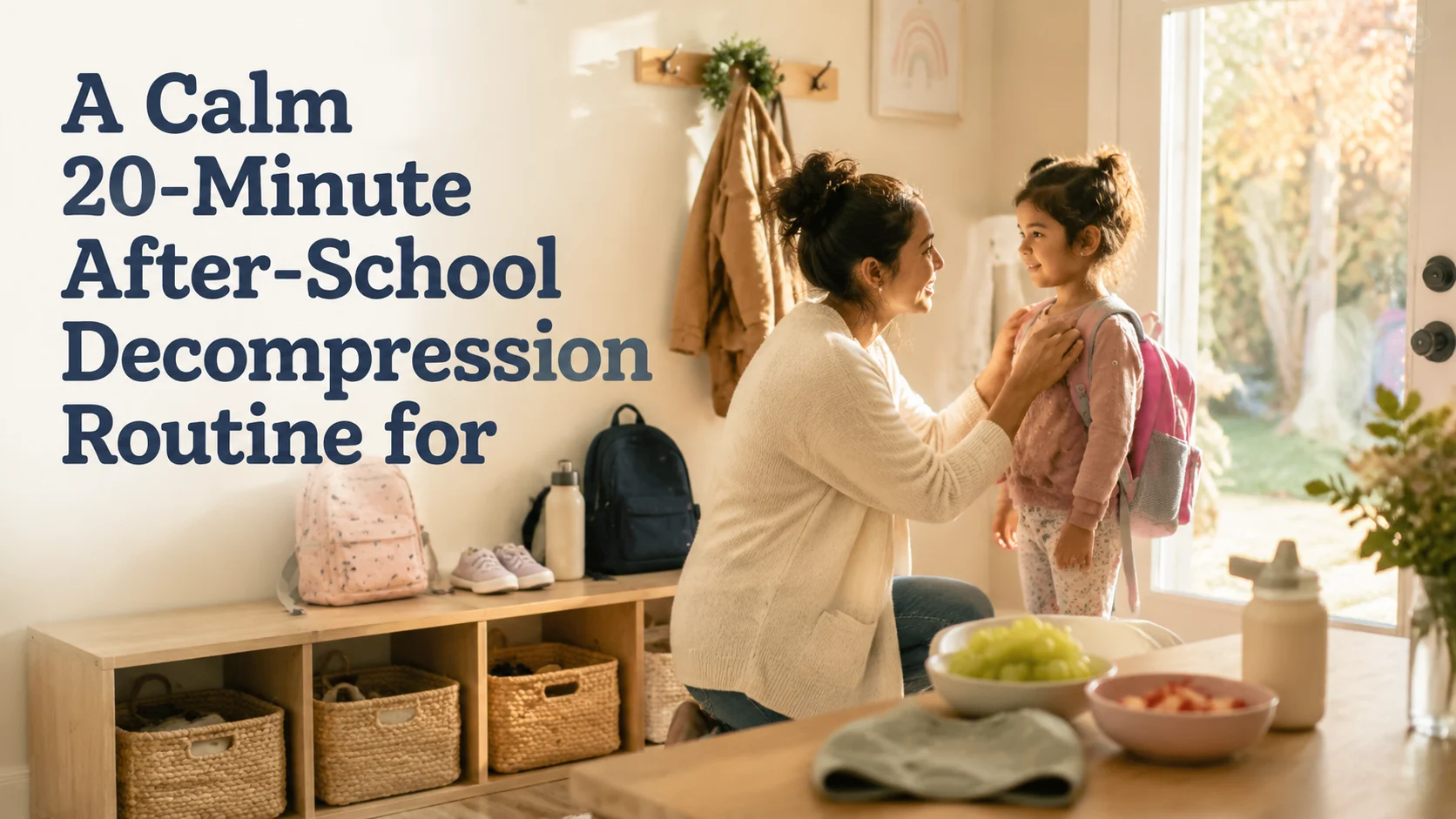
Why a brief decompression routine matters
The end-of-day transition can easily overwhelm small children; a short routine gives predictable time and structure to process the school day without pressure.
Children often shift from high-stimulation group time to a home environment that expects quick cooperation; a decompression window helps lower arousal for smoother cooperation.
Keeping the routine brief and consistent makes it easier for busy families to follow and helps kids learn an internal script for calming down after transitions.
Arrival cues: a calm landing that everyone can follow
Create a single, consistent arrival cue—open the front door, hang a specific bag, or ring a small bell—that signals the start of decompression and separates school from home time.
Tell your child the cue in advance and keep the first minute low-demand: remove shoes, hang the coat, and avoid immediate tasks like homework or errands that raise stress.
Use the cue to shift roles: parent becomes listener and supporter for the next 20 minutes, not manager; this expectation helps kids feel heard and safe.
A simple sensory reset to lower arousal
Offer a short sensory activity—five minutes of quiet play with a small sensory bin, fidget toy, or water cup—to help the child regulate before conversation or tasks begin.
Pair the activity with neutral language: sit nearby, narrate what you see, and avoid quizzing about the day; this models calm attention and encourages voluntary sharing.
If your child resists sitting, allow a brief moving reset like three gentle stretches or a short walk around the block; movement often reduces big feelings enough to continue the routine.
Snack-and-talk: practical pairing to rebuild connection
A small, predictable snack placed in a dedicated spot invites conversation without pressure and refuels the child after school energy expenditure.
Ask two focused prompts during the snack—one about something that was fun and one about something that was tricky—so conversations stay specific and manageable.
Keep answers short and mirror language instead of giving solutions; validating feelings first reduces defensiveness and makes it easier to problem-solve later if needed.
Short movement and a clear evening handoff
After snack, invite a three- to five-minute active break—jumping jacks, a hallway race, or a dance song—to discharge excess energy and mark the end of decompression.
Use a one-minute tidy and a single handoff phrase—'Tidy, teeth, talk in five'—to set expectations for the next phase of the evening and keep transitions friction-free.
If multiple caregivers are present, quickly share one detail from snack-time talk so everyone knows the child's mood and can respond consistently during the evening.
Hashtags
Related Articles
- More preschool kindergarten articles
- Label, Pack, Stage: A Kindergarten Launch Routine That Stops Last-M
- First-week daycare drop-off routines that help mornings feel predic
- The Quiet Transition: A Practical 4-Station After‑School Decompress
- First‑Week Daycare Drop‑Off: A Predictable Morning Routine That