
The 25-Minute After‑School Decompress Dock: A Calm, Repeatable Rout
A practical 25-minute routine to help preschool and kindergarten kids unwind after school with predictable stations: arrival, snack, movement, quiet play, connection, and transition to evening tasks.
Quick Answer
A practical 25-minute routine to help preschool and kindergarten kids unwind after school with predictable stations: arrival, snack, movement, quiet play, connection, and transition to evening tasks.
- Why a short, station-based decompression helps young kids
- Station 1 — Arrival: five minutes to land and shed school
- Station 2 — Snack and hydrate: structured fuel for mood regulation
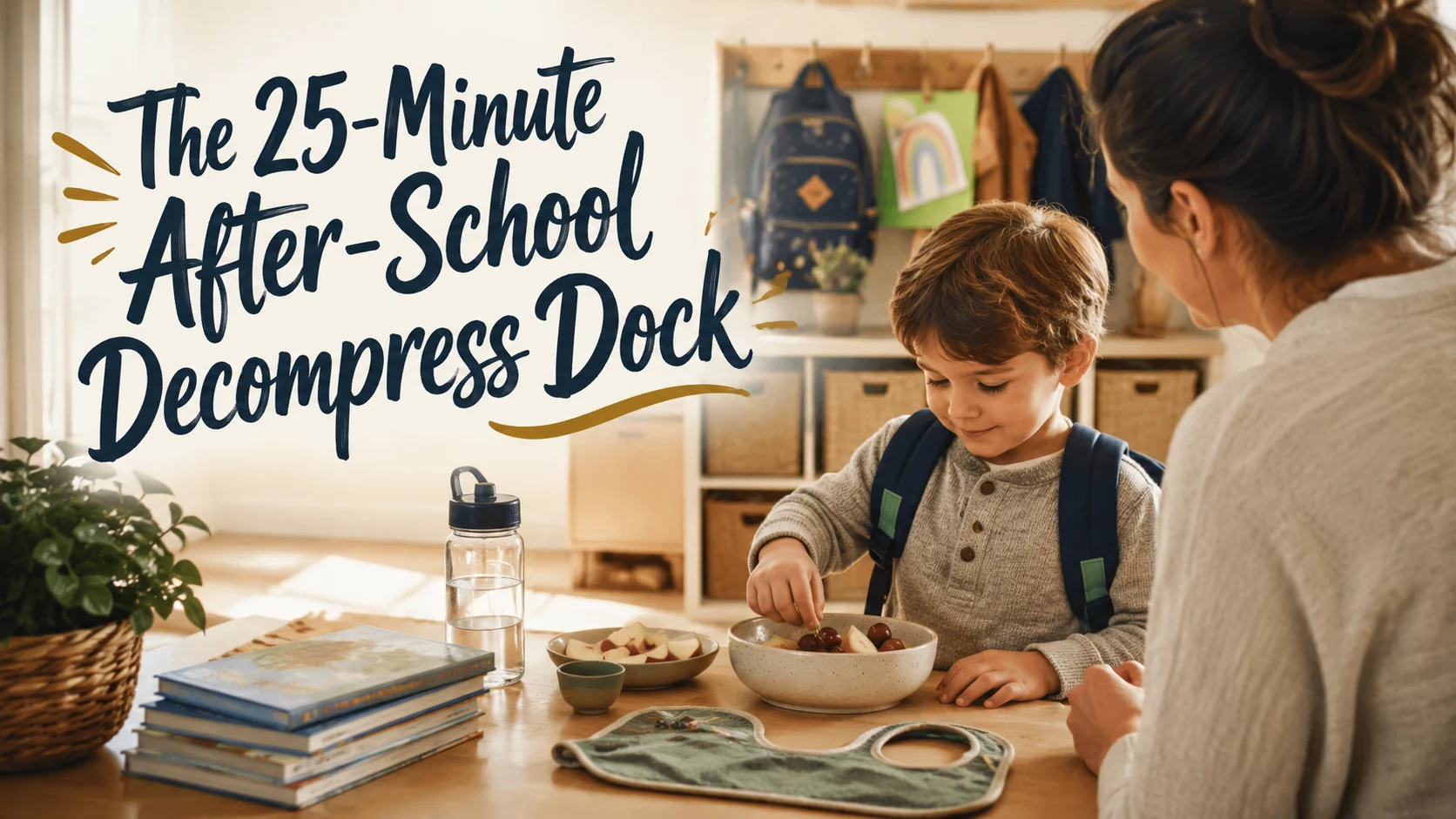
Why a short, station-based decompression helps young kids
Young children reset best with brief, predictable routines that give them control and cue emotional shifts, which reduces meltdowns at home and helps caregivers plan the evening.
Keeping the routine to about 20–30 minutes creates a clear breakpoint between school and home life, avoiding long, vague transitions that leave both child and caregiver unsure what comes next.
Stations work because they let children choose small, bounded activities while adults supervise; a repeated sequence builds expectation and removes decision fatigue at the exact moment everyone is low on spoons.
Station 1 — Arrival: five minutes to land and shed school
Create a consistent landing spot by the door with a hook or tray for backpacks and a simple arrival phrase you always say, such as “coat off, backpack here, hello home.” That verbal cue signals the start of decompression.
Give children a single small choice at arrival—put their bag in the bin or hang it—so they practice one win and feel ownership without overwhelming options that can spark resistance.
If mood is tense, use a short physical cue like two deep breaths together or a one-minute quiet corner. This predictable five-minute ritual helps move stress out of the body before snack or play begins.
Station 2 — Snack and hydrate: structured fuel for mood regulation
Offer a prepared, simple snack station with two balanced options—one sweet or favorite and one savory or protein-rich—and a water cup ready at child height to encourage self-help skills.
Keep snack choices consistent across the week so children know what to expect and caregivers avoid nightly negotiations; rotate one new item weekly to expand palate without undoing routine stability.
While they eat, sit nearby for two or three minutes of low-key presence and narration—comment on the snack or the day without heavy questions—to model calm conversation and rebuild connection.
Station 3 — Movement burst: three to seven minutes to release energy
Include a short movement burst after snack to help reset body chemistry: jumping on a small trampoline, two minutes of animal walks, or a quick backyard toss-and-catch game works for most preschoolers.
Use an activity card or two choice options so the child picks the movement type and you avoid decision overload; time the burst with a simple kitchen timer for predictable limits.
If weather or space limits movement, swap for an indoor gross-motor alternative like stair steps, dance to one song, or a hallway scooter ride—any activity that elevates heart rate briefly and feels fun.
Station 4 — Quiet choice play: 8–10 minutes of focused calming activity
Offer three small bins with different calm activities—puzzle bin, art prompt box, and story tray—so children select a manageable independent play task that matches their current mood and concentration level.
Set clear expectations for this station: a visual timer, an invitation such as “pick one bin, play for ten minutes,” and an agreed signal when they need help so independence is encouraged and boundaries stay consistent.
Rotate items in each bin weekly to maintain interest without increasing options; include one open-ended item each week to support creativity and one familiar favorite to anchor comfort.
Station 5 — Connection check and gentle transition to evening
Conclude the dock with a two-minute connection check: a quick share of one highlight from the day and one practical check—homework bag, permission notes, or what’s for dinner—so information handoffs are short and kind.
Use a simple ritual to mark the end of decompression, like a sticker on a chart or a shared high-five, which signals the shift to evening tasks and helps the child move mentally from free time to responsibilities.
If homework or family activities follow, complete them within the next hour while the child is still regulated; otherwise, allow an additional 10–15 minutes of free play before dinner to keep the evening flexible but anchored.
Hashtags
Related Articles
- More preschool kindergarten articles
- Label, Pack, Stage: A Kindergarten Launch Routine That Stops Last-M
- First-week daycare drop-off routines that help mornings feel predic
- The Quiet Transition: A Practical 4-Station After‑School Decompress
- First‑Week Daycare Drop‑Off: A Predictable Morning Routine That