
A Simple Feeding Notes Routine for Clear Patterns, Calm Handoffs
A practical, low-effort feeding notes routine to track feeds, spot patterns, and make handoffs between caregivers calmer and clearer without overlogging.
Quick Answer
A practical, low-effort feeding notes routine to track feeds, spot patterns, and make handoffs between caregivers calmer and clearer without overlogging.
- Why a minimalist feeding notes routine helps families
- What to capture: the essential, no-fluff fields
- Choose a simple format and stick with it
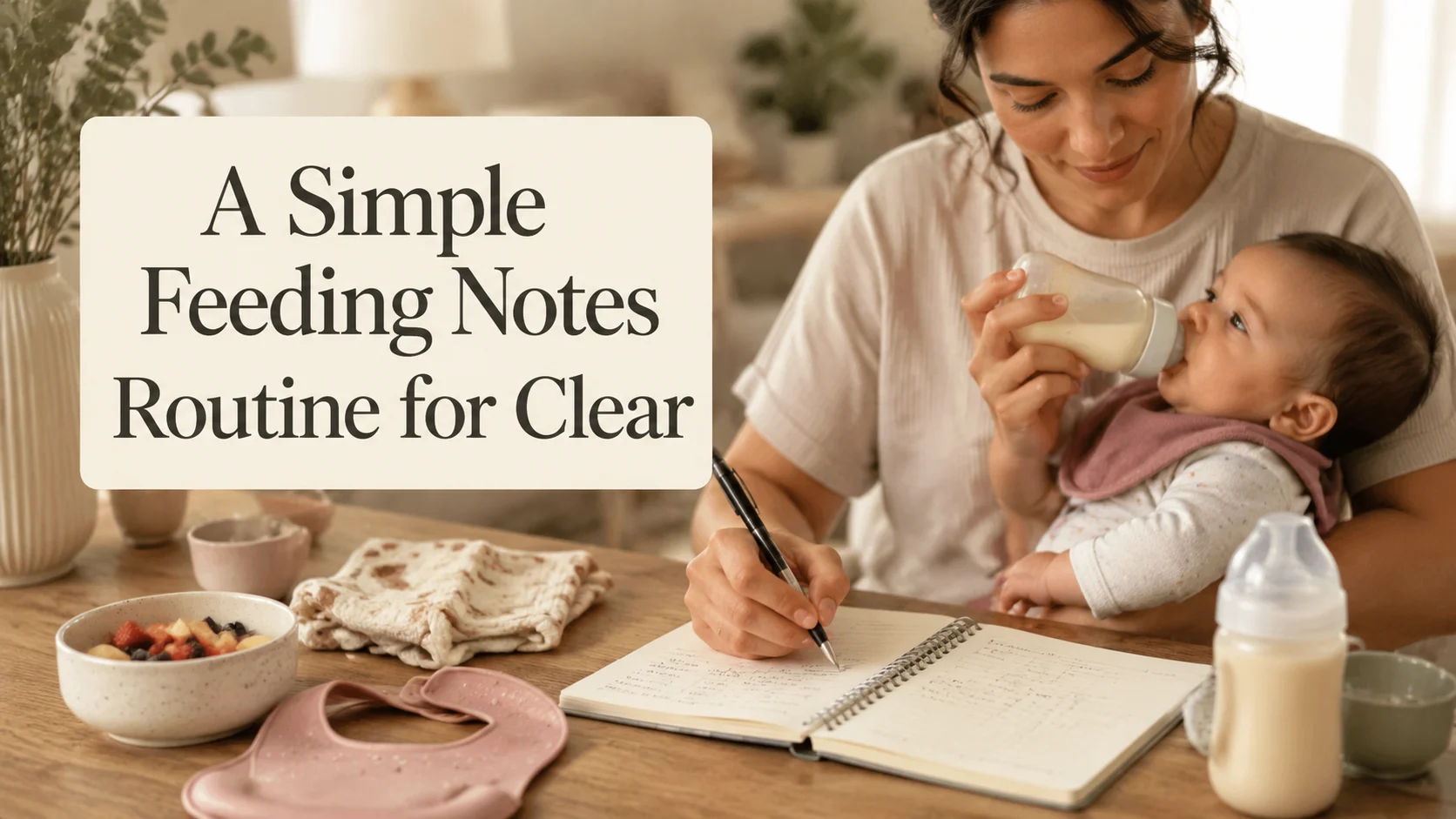
Why a minimalist feeding notes routine helps families
Keeping short, consistent feeding notes gives parents and caregivers a shared record that reduces guesswork and lowers stress during handoffs. When multiple people care for the baby, a clear note removes the need to repeat questions and helps everyone follow the same rhythms. A lightweight routine also supports better questions for pediatric visits without becoming a chore that you abandon.
A practical notes habit is not about tracking every detail but about capturing patterns over days—the way diapers, feeds, and behavior line up. Those patterns are what reveal trends like longer cluster feeds, changes in appetite, or consistent fussiness after certain times. With a few well-chosen items recorded reliably, you can see whether an issue is occasional or persistent.
A short, shared record also helps partners and caregivers feel competent and connected. When someone hands off care with a written note, the next person can start calm and confident rather than distracted by trying to reconstruct the day. That calm handoff matters for sleep, feeding success, and family wellbeing more than any exhaustive log would.
What to capture: the essential, no-fluff fields
Design your notes to include the minimum fields that answer the most common questions: time, feed type (breast/bottle/solid), amount or duration, baby’s mood, and last diaper. Time plus one measure of quantity and a short mood note cover most day-to-day needs and make it simple to spot patterns without overthinking entries.
Use shorthand that everyone understands—examples: “10:30 B-20m, calm” for a twenty-minute breastfeeding at 10:30, or “14:00 F-3oz, spit” for a 3-ounce formula feed with spit-up. Agree on a two- or three-word mood list (calm, fussy, sleepy, alert) so notes stay fast and readable in a few seconds during a busy day.
Optional but useful fields include any feeding aids used (paced bottle, nipple type), and a quick note if something different happened, like a long nap before or after the feed. Keep the optional field for exceptions so the core habit stays daily and brief, and people only use extras when something worth flagging occurs.
Choose a simple format and stick with it
Pick one format that fits your life: a paper pad by the feeding spot, a designated notes app with a shared list, or a whiteboard in the nursery. Paper works well for many families because it’s tactile and visible; a single column with rows for time, feed, qty/duration, and mood keeps entries under fifteen seconds each.
If you prefer digital, use a shared note (Google Keep, Notes, or a shared document) and create a template row to copy. Use consistent abbreviations and, if possible, pin the note to the top of the caregiver phones so it’s a one-tap open at handoff. Whichever medium you choose, prioritize visibility and ease of entry over bells and whistles.
Set sensible rules for how long to keep daily notes visible—some families keep a week on the board, others keep a running two-day digital file. Create a single place for completed sheets so it’s easy to pull up a pattern across several days if you need it for discussions or planning, then recycle or archive the old pages.
Handoff best practices: clarity over completeness
When handing off, read the last two entries aloud and point out any recent changes or concerns; then leave the note visible for the next caregiver to reference. A two-line summary at the top of the sheet—such as “last fed 20:00 B-15m, slept 40m, fussy after feeds”—gives a quick orientation without forcing the next person to scan the whole page.
Encourage a short confirmation habit: the arriving caregiver adds their initials and the time they took over or simply checks a box to acknowledge they saw the note. That small step builds accountability and prevents the same question from being asked multiple times during a handoff window.
Use neutral language in notes to reduce alarm and bias; describe what you observed rather than what you think it means. For example, write “vomited small amount post-feed” instead of “baby is refluxing badly.” Clear observations make handoffs calmer and keep decision-making rooted in what’s actually happened.
Weekly review and turning notes into useful patterns
Schedule a five- to ten-minute weekly touchpoint to scan the past week’s feeding notes with your partner or primary caregiver. Look for recurring times, changes in appetite, or mood shifts that line up with naps, travel, or bottle changes; this brief review converts messy daily entries into actionable insights without medical interpretation.
Use the review to set small adjustments for the coming week—shift a nap time, try a different bottle, or swap the bedtime routine order—and record those experiments in the notes so you can see their effect. Keep each change small and one-at-a-time so you can tell whether a shift improves feeding, mood, or sleep rather than guessing at multiple simultaneous tweaks.
If something persistent appears in the notes, frame it as a question for a provider—for example, “noticed 3 days of shorter feeds and more spitting up around 3–6pm” rather than a diagnosis. Your concise, dated notes will give the clinician clear information to consider, and they’ll help you track whether recommended adjustments change the pattern over subsequent days.
Hashtags
Related Articles
- More feeding routines articles
- Minimal Feeding Stations for Early Months: Set Up Smart, Not Full
- One-Counter Feeding Rotation: How to Keep First-Month Supplies Hand
- Three-Line Feeding Notes: A Fast, Repeatable Routine for Clear Patt
- Early-Month Feeding Setup: A Minimal, Practical Plan for the First