
Early-Month Feeding Supply Plan: Smart, Minimal Prep That Keeps
A concise plan for stocking the essentials new parents need in the first months—practical lists, storage strategies, and simple rotation rules so you have what you need without overflowing cabinets.
Quick Answer
A concise plan for stocking the essentials new parents need in the first months—practical lists, storage strategies, and simple rotation rules so you have what you need without overflowing cabinets.
- Start with a small, prioritized inventory
- Build a compact backstock, not a warehouse
- Smart shopping: timing, price, and quality trade-offs
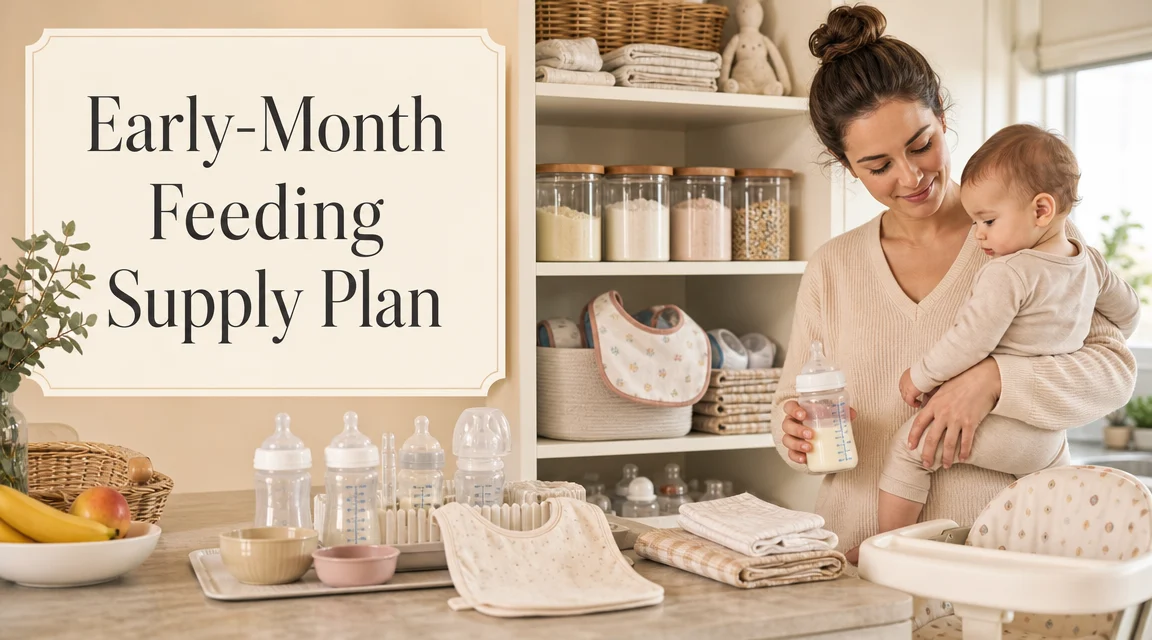
Start with a small, prioritized inventory
Begin by defining a two-week active kit: items you use daily for feeding during the earliest months. Limit this to what fits in one kitchen drawer or a single tote so you can see everything at glance and avoid overbuying.
Prioritize per feeding method. For chestfeeding: nursing pads, a few supportive tops, and a hands-free pump kit if you plan to pump. For bottle feeding: 6–8 bottles with slow-flow nipples, a bottle brush, and a compact sterilizer or microwave sterilizer bags.
Include practical extras in the two-week kit: a small supply of formula or breastmilk storage bags (if using), burp cloths, and a basic cleaning paste or soap. Keep receipts and manual in one envelope so returns or exchanges are swift if you misjudged quantity.
Build a compact backstock, not a warehouse
Create a one-month backstock for the items that are slowest to replace, like formula canisters or boxed nipples. Store this separately from active supplies in a labeled bin so you only access it when you’re down to your last few of the active kit.
For disposable supplies—nursing pads, pump replacement parts, formula—buy no more than four weeks’ worth initially. This gives breathing room for supply chain changes and infant feeding shifts without taking over storage spaces.
Keep bulky items off kitchen counters. Use a shallow plastic bin under a changing table or a shelf in a hallway closet for the backstock. A clear bin makes inventory checks quick and prevents impulse restocking.
Smart shopping: timing, price, and quality trade-offs
Schedule a single ‘feeding supply’ shopping session close to your due date or right after birth so current needs guide purchases. Bring your two-week active kit list to avoid duplicating items you already received as gifts.
Compare per-unit costs for formula and disposables, but prioritize return policies and subscription flexibility. If you choose subscription delivery, set initial deliveries to arrive after the first two weeks so you can adjust quantities based on real use.
Buy replacement parts and accessories—extra nipples, pump valves—in small quantities from local stores for quick swaps. Order bulk or subscription-only items online after you confirm they fit your routine and equipment preferences.
Simple storage and rotation rules that actually get followed
Adopt a first-in, first-out rotation for formula and open items: always use the oldest container first and mark opened dates with a permanent marker. This prevents expired or stale supplies from accumulating in hidden spaces.
Designate one visible shelf or bin for the active kit and one for backstock with clear labels and a simple rule: when the active kit drops below a set threshold, move one item from backstock to active and add a single replacement order.
Set a monthly 10-minute pantry check on your calendar to review counts, discard expired items, and adjust future orders. A brief, regular check prevents the six-month panic where you realize you have too much of one size or none of another.
Make daily prep and outings low-friction
Assemble a grab-and-go feeding pouch for outings: two bottles (or a nursing cover and pads if you prefer), pre-measured formula in individual containers if you use formula, 2–3 wipes, and a small insulated bottle bag if needed. Keep this pouch near the door so it’s always ready.
Create simple prep rituals: wash and dry two sets of bottles each evening, rotate them into the active kit in the morning, and place used items directly into a drying rack to avoid nighttime searching. Consistency reduces stress and saves time.
If multiple caregivers are involved, post a one-page feeding supply checklist on the fridge that shows where items live and how to replenish. Clear roles—who checks the backstock, who orders replacements—keep supplies steady without clutter.
Hashtags
Related Articles
- More feeding routines articles
- Minimal Feeding Stations for Early Months: Set Up Smart, Not Full
- One-Counter Feeding Rotation: How to Keep First-Month Supplies Hand
- Three-Line Feeding Notes: A Fast, Repeatable Routine for Clear Patt
- Early-Month Feeding Setup: A Minimal, Practical Plan for the First