
Countertop-First Feeding Prep: A Minimal Early-Month System That
A compact, practical plan to keep early-month feeding supplies organized, accessible, and low-volume. Prioritize a countertop core kit, simple rotation, and clear handoff notes so feeding feels easier without filling every cabinet.
Quick Answer
A compact, practical plan to keep early-month feeding supplies organized, accessible, and low-volume. Prioritize a countertop core kit, simple rotation, and clear handoff notes so feeding feels easier without filling every cabinet.
- Why a countertop-first approach helps in the first month
- Build a compact core kit: essentials for quick access
- Space-saving storage and layout tricks that actually work
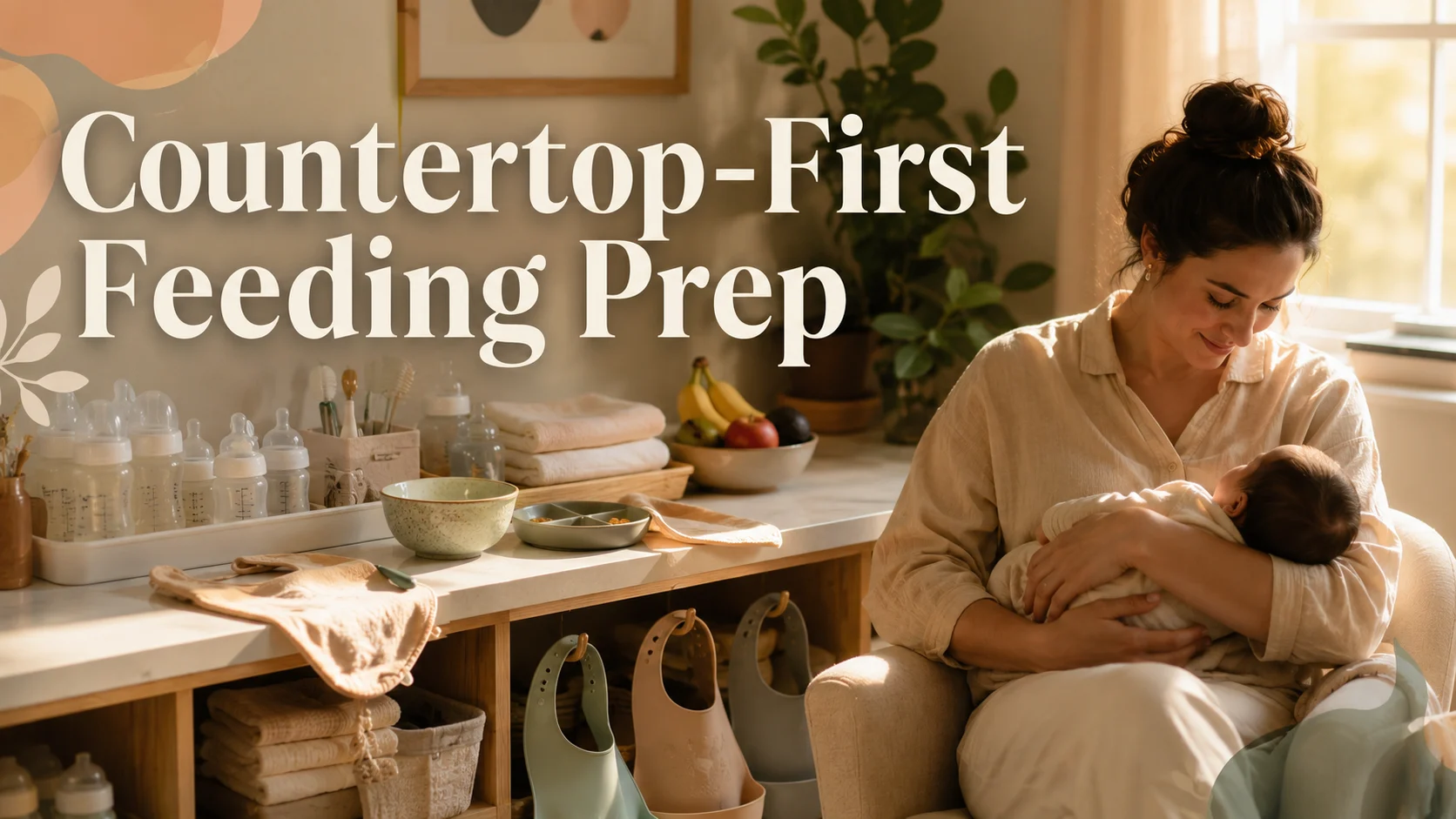
Why a countertop-first approach helps in the first month
The first weeks after birth are full of unpredictable rhythms, so keeping your most-used feeding items within arm’s reach reduces friction and stress when you’re sleepy or feeding in dim light.
A countertop-first plan intentionally limits how much you store away, which prevents overbuying, keeps cabinets usable for daily dishes, and reduces the visual clutter that increases decision fatigue during late-night feeds.
By treating kitchen or nursery counter space as staging, you create one reliable zone that partners, visitors, and overnight caregivers can quickly learn to use, which reduces interruptions and awkward searching when a feed or bottle prep is needed.
Build a compact core kit: essentials for quick access
Start with a shallow caddy or small tray that stays on the counter; include two clean feeding vessels such as a pre-sterilized bottle and a simple sippy cup lid if planning to pump, plus one extra for quick swaps between uses.
Add basic sanitary items: a small pack of disposable breast pads or a cloth, a dedicated small bottle brush, a stack of paper towels or a cloth towel folded under the caddy, and a compact bottle drying mat or rack that can rest nearby.
Include one clearly labeled container of formula or a small baggie of measured powder if formula feeding, or simple pumping accessories like spare flanges sealed in a zip bag, keeping quantities intentionally small to avoid clutter.
Space-saving storage and layout tricks that actually work
Use vertical organization on counters: a two-tier wire basket or riser keeps frequently used items on top and overflow below without taking extra footprint on limited surfaces.
Keep less-used stock—bulk formula cans, extra nipples, backstock burp cloths—on a single labeled shelf or in one small box in a nearby closet rather than scattered across multiple cabinets; this concentrates replenishment tasks to one place.
Install adhesive hooks under upper cabinets or on the side of the fridge for hanging small items like drying mitts, a measuring scoop, or a lightweight bottle brush, freeing counter space while keeping tools reachable.
A weekly rotation routine to keep supplies fresh and minimal
Designate a 10-minute weekly check—pick a consistent day—to swap out two to three items: replace one cloth, check formula amounts, and confirm spare nipples or pump parts are clean and ready to use.
Use a tiny, visible inventory card on the tray with three simple counts: bottles ready, formula/packets remaining, and clean pump parts; update it during your weekly check so you avoid last-minute store runs or accidental stock overload.
When restocking, buy only what will be used in the next two weeks; place bulk items in long-term storage elsewhere and add them to the one-box backstock when you finish the countertop supply to maintain a compact footprint.
Handoff notes and simple labeling for calmer shared care
Create a short one-line handoff note taped to the caddy or a small laminated card that states key routines, such as preferred warming method, where extra formula lives, and any simple bottle preferences to reduce guesswork for partners or babysitters.
Label each item in the core kit with a washable marker or adhesive dot: mark ‘clean’, ‘in use’, or the date washed so caregivers can quickly see what’s ready and what needs cleaning without asking questions in the middle of a feeding.
Keep one small, refillable checklist pad beside the caddy for notes like ‘ran out of nipples’ or ‘need more freezer packs’; this keeps communication simple, actionable, and tied to the small zone you already use daily.
Hashtags
Related Articles
- More feeding routines articles
- Minimal Feeding Stations for Early Months: Set Up Smart, Not Full
- One-Counter Feeding Rotation: How to Keep First-Month Supplies Hand
- Three-Line Feeding Notes: A Fast, Repeatable Routine for Clear Patt
- Early-Month Feeding Setup: A Minimal, Practical Plan for the First