
Early-Month Feeding Supply Plan: Stock Smart, Not Stacked
Practical plan to prepare feeding supplies for the first month without overfilling cabinets. Learn a compact checklist, rotation system, easy shopping, and daily setup that keeps essentials accessible and clutter minimal.
Quick Answer
Practical plan to prepare feeding supplies for the first month without overfilling cabinets. Learn a compact checklist, rotation system, easy shopping, and daily setup that keeps essentials accessible and clutter minimal.
- Why plan a compact one-month supply
- Build a one-month checklist that fits your routine
- Smart storage and rotation to avoid cabinet overload
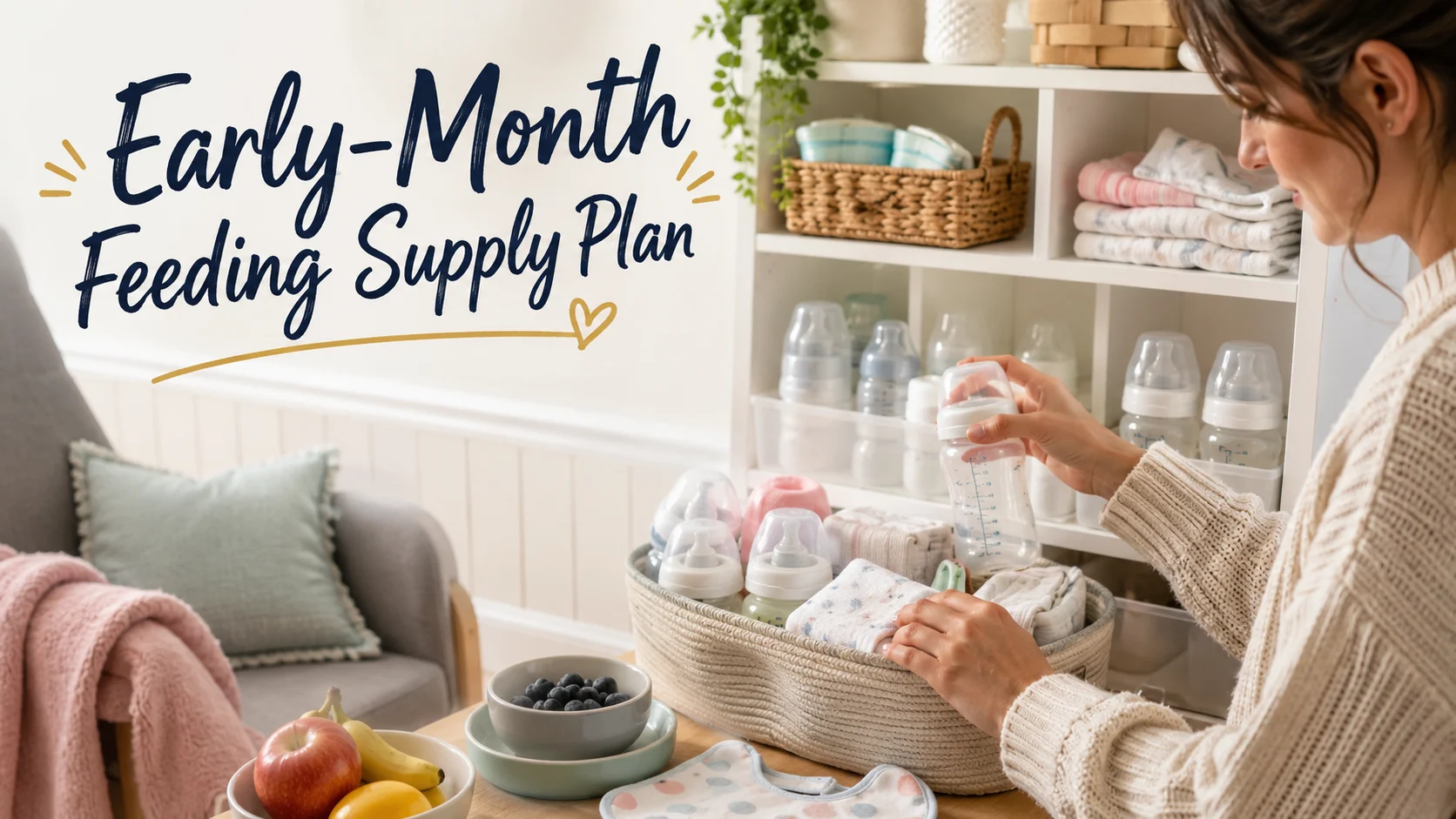
Why plan a compact one-month supply
Expecting families often overbuy because uncertainty feels risky; a focused plan gives confidence while avoiding excess that creates stress and clutter in small homes.
A one-month horizon balances preparedness with flexibility, letting you adjust to feeding preferences, growth changes, and supply realities without committing precious storage to little-used items.
Planning this way helps prioritize what you need immediately: feeding tools you use every day, a short buffer for delays, and room to test formulas, bottles, or breastfeeding aids before buying in bulk.
Build a one-month checklist that fits your routine
Start with basics: three to six bottles (depending on your laundry cadence), one bottle brush, a small drying rack, pump parts if you plan to pump, and a week’s worth of sterilizing supplies or wipes to clean on the go.
Add feeding-specific consumables in limited quantities: one box of disposable nursing pads, a two-week supply of formula tins or ready-to-feed packs if used, and a small stock of burp cloths to rotate through daily washes.
Include comfort and convenience items: a nursing pillow, a spill mat for burp time, a hands-free pump bra if pumping, and a compact cooler bag for short outings; these improve daily flow without occupying large cupboards.
Smart storage and rotation to avoid cabinet overload
Designate a single, accessible zone for daily items—a lower kitchen drawer, a basket near the changing station, or a compact cart—so frequently used items don’t get lost among rarely used gear.
Store overflow or seasonal items elsewhere: reserve a closet shelf for backstock of formula or extra pump parts and restock your main zone from that shelf once a week to maintain a tidy everyday setup.
Use a simple rotation method: label backstock with purchase dates and move the oldest items forward each week; this prevents expired formula or unused single-use items from accumulating unnoticed.
Shopping strategy: buy just enough and where to save time
Start with trial sizes and multi-packs that are moderate in quantity; buying a small can of formula or a six-pack of bottles gives room to test brand preferences before committing to larger packages.
Use subscription services or local stores for predictable reorders once your routine is established; set subscriptions to a modest cadence with easy pause options so supplies arrive when you need them, not sooner.
Shop strategically for bulk-only items: save larger purchases like high-capacity sterilizers or extra pump kits until you’re certain they’ll be used regularly, and keep receipts for easy returns if plans change.
Daily setup and simple fixes for unexpected days
Create a morning and evening reset: load bottles into the drying rack at night and clear a small tote with feeding essentials for the day so grab-and-go moments don’t require rummaging through cupboards.
Have a two-item contingency kit for outings—pre-measured formula packs or one extra bottle and a travel-size cleaning spray—so short trips don’t require hauling the whole supply system with you.
When supplies shift due to growth or preference, do a 15-minute monthly audit: remove items you no longer need, rehome duplicates, and update your shopping list to keep the one-month plan lean and useful.
Hashtags
Related Articles
- More feeding routines articles
- Minimal Feeding Stations for Early Months: Set Up Smart, Not Full
- One-Counter Feeding Rotation: How to Keep First-Month Supplies Hand
- Three-Line Feeding Notes: A Fast, Repeatable Routine for Clear Patt
- Early-Month Feeding Setup: A Minimal, Practical Plan for the First