
Entryway Launchpads: A Two-Basket System to Stop School, Daycare
Create two dedicated baskets by the door—one for what's leaving the house, one for what's coming home—to streamline mornings and handoffs, reduce lost items, and keep the family moving with less stress.
Quick Answer
Create two dedicated baskets by the door—one for what's leaving the house, one for what's coming home—to streamline mornings and handoffs, reduce lost items, and keep the family moving with less stress.
- Why two baskets beat a messy entryway
- Choosing baskets, locations, and labels that actually work
- Daily rhythms: what goes in each basket and when
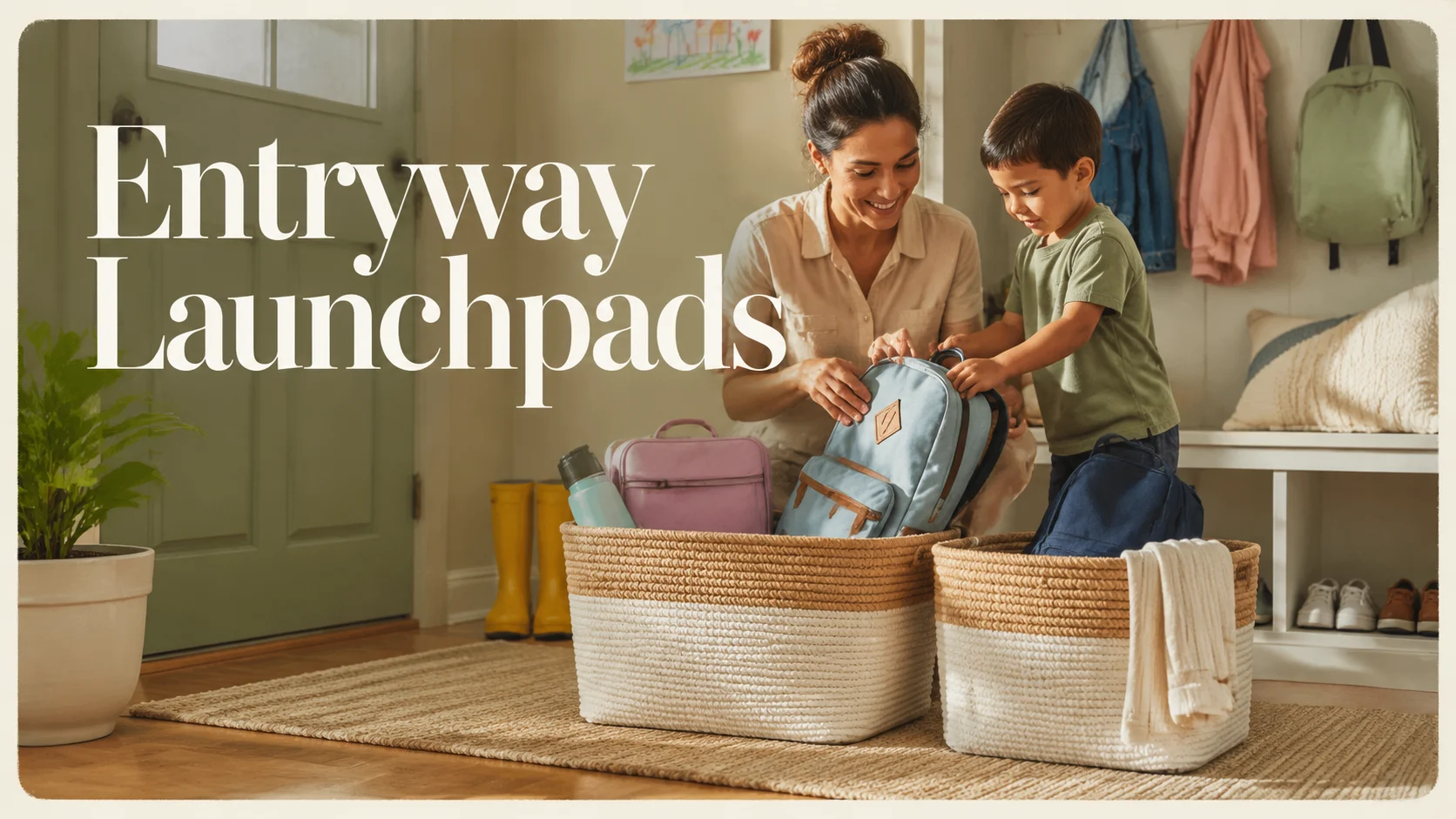
Why two baskets beat a messy entryway
A single catch‑all pile creates friction: packed lunches, permission slips, and wet mittens all compete for space and attention at the last minute. Two clearly labeled baskets reduce decision fatigue by giving every item an obvious home and a clear purpose before parents and kids rush out the door.
Separating 'outgoing' and 'incoming' flows mirrors what actually happens in family life: some things leave the house every morning, and different things return by afternoon. When baskets match those flows, partners and caregivers can scan at a glance for missing pieces and avoid the habitual scramble five minutes before departure.
This simple split also helps handoffs when others step in—grandparents, child care staff, or older siblings can follow the same system without lengthy explanations. A two-basket habit creates reproducible behavior so the family core routine persists even when schedules change, which matters for reliability and calm.
Finally, a physical system reduces mental load because it offloads memory to placement. Instead of trying to remember whether a permission slip was tucked under a shoe, the family trains itself to use the baskets as the single source of truth for school and activity essentials.
Choosing baskets, locations, and labels that actually work
Pick two sturdy containers with slightly different looks so kids can tell them apart quickly; a shallow tray and a box or two different colored woven baskets often work well. Choose sizes that fit your entry footprint and can hold the typical midday returns like a jacket, a lunchbox, or a folder without overflowing.
Place the baskets at your main departure point: by the front door, mudroom bench, or inside a hallway closet if the climate changes shoes there. The goal is visibility and convenience—baskets should be within the natural path so dropping and grabbing require no detours that invite forgetfulness.
Label the baskets with short, action-focused tags like 'Out by 8:00' and 'Home & Check' or use symbols for young readers, such as an arrow leaving the house and an incoming arrow. Labels help everyone make the right choice quickly and keep the system consistent across caregivers and grandparents who might step in.
Add small, related zones nearby: a peg for keys, a tray for pocket items, and a charging station for devices. These adjacent touches reduce the number of loose items that otherwise compete for space in the baskets and help each bin stay focused on the specific school-activity flow it supports.
Daily rhythms: what goes in each basket and when
Outgoing basket items are whatever must leave with the child: lunchbox, school bag, signed forms, sports cleats, payment envelopes, and practice gear. Establish a quick visual checklist for mornings so kids can self-check their basket before shoes go on, turning packing into a predictable step rather than a last‑minute scramble.
Incoming basket items are anything coming back that needs attention before the next day: artwork to save, notes to read, soiled uniforms to wash, and chargers to put on overnight. Make it a short afternoon habit for the caregiver or child to sort that basket within two hours of arriving home to prevent papers and dirty clothing from migrating around the house.
Create micro‑routines tied to the baskets: a 60‑second 'bag check' before leaving for school and a 5‑minute 'after‑arrival' sweep after returning from activities. Timeboxing these tasks helps the family stick with the system and prevents baskets from turning into long-term dumping grounds.
Use sticky notes or a laminated checklist on the wall for variable items—field trip money, library books, or permission forms—so nothing depends on memory alone. When checklists and baskets work together, replacements like temporary labels and reminders become part of the normal routine rather than extra friction.
Weekend reset and maintenance that keeps the system honest
Schedule a weekly 10–15 minute reset—Sunday evening often works for many families—to empty both baskets, deal with anything that needs action, and return items to their long‑term homes. This prevents hidden clutter and ensures the baskets are ready for Monday morning without the backlog that sabotages routines.
During the reset, create a quick triage: toss obvious trash, wash or separate soiled clothing into the laundry basket, file school papers into a homework folder, and place items that belong elsewhere back in their spots. Teach children to do a one-item-at-a-time return so the task stays short and achievable.
Use the reset to adjust what lives in the baskets seasonally—swap mittens and raincoats in autumn and winter for sunscreen and swim gear in summer—and to reassess basket capacity. If overflow is frequent, consider adding a dedicated bin for sports equipment or a separate mail station to keep the primary baskets focused.
If the family uses digital calendars, add a recurring calendar reminder that aligns with the physical reset. The combination of a short listed habit and a physical action reinforces the practice until it becomes automatic for all family members.
Troubleshooting common breakdowns and adapting the system
If kids forget to use the baskets, add a brief pre-departure script: 'Bag? Lunch? Shoes? Basket check.' Say it with them until it becomes part of the rhythm. Reinforcement that is low drama and consistent beats intermittent lecturing and helps the habit stick with minimal resistance.
When overflow becomes a problem, audit what’s being stored there and remove one category that doesn’t belong—extra toys, random receipts, or items that should be in a different station. The baskets work because they are narrowly purposed; broadening purpose dilutes effectiveness and invites clutter to creep back.
For multi-child households, consider subdividing baskets with small mesh pouches or color-coded folders so every child has a predictable slot without adding extra containers to the entryway. This preserves the simplicity of two launchpads while ensuring fairness and clarity across siblings.
Finally, adapt the system for caregivers who run different schedules by placing a small note on the basket with any temporary changes—late pickups, different drop‑off times, or special items needed for a particular day. Clear, minimal notes prevent confusion and keep the baskets serving as a stable, family-wide coordination tool.
Hashtags
Related Articles
- More family routines articles
- A Sunday evening family reset that does not take over the whole
- A Family Calendar Everyone Actually Uses: A Practical Setup for
- Two Bins, Less Chaos: A Practical Household System to Stop School
- A Family Calendar Everyone Actually Follows: A Practical System