
Two Bins, Less Chaos: A Practical Household System to Stop School
A simple two-bin system at your entryway cuts lost permission slips, mismatched socks, and last-minute scrambles. Practical tips to label, load, and maintain bins so mornings and after-school handoffs feel predictable.
Quick Answer
A simple two-bin system at your entryway cuts lost permission slips, mismatched socks, and last-minute scrambles. Practical tips to label, load, and maintain bins so mornings and after-school handoffs feel predictable.
- Why two bins beat piles: the simple logic behind the system
- Choosing and placing your bins for real homes
- Daily rituals: quick checks that prevent last-minute scrambles
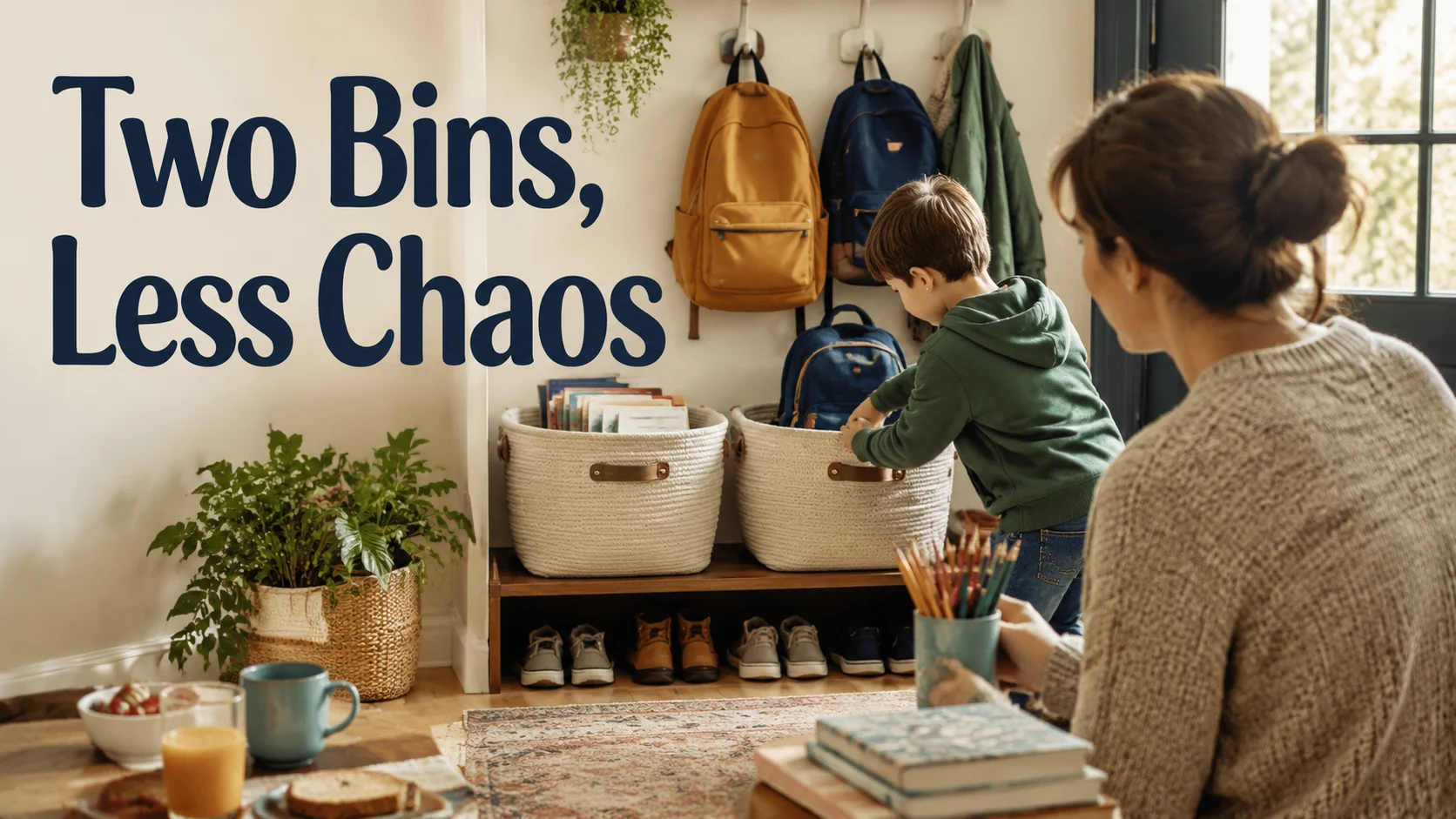
Why two bins beat piles: the simple logic behind the system
Piles become invisible until the last minute; bins make decisions visible and actionable in seconds. A dedicated incoming bin collects items from school, daycare, and activities so papers, art, and uniforms don’t migrate across the house and get lost in couches or bedrooms.
The second bin is outgoing: items that must leave the house next are staged, checked, and tapped before departure. By separating incoming clutter from outgoing intent, you create a physical pause that reduces frantic searches and forgotten items.
Two bins also make handoffs less cognitive for kids and caregivers alike. A child can be given the simple rule: put all work and notes in the incoming bin, put everything you need tomorrow in the outgoing bin, and an adult can scan both bins at set times rather than chasing random piles.
Choosing and placing your bins for real homes
Pick two durable containers that are easy for kids to use: open-top fabric bins, shallow plastic tubs, or wooden crates work well. Aim for sizes that hold a day’s worth of items without overflowing—too large encourages dumping without sorting and too small creates constant overflow.
Place the bins in the entryway, mudroom, or the most-used transition spot between outside and inside. Mounting a small shelf or using a low bench with the bins underneath creates a natural pause point where shoes and coats already live, reinforcing the habit of dropping items immediately.
Label the bins clearly with terms your family uses—Incoming / To Review and Outgoing / To Go—or with icons for younger children. Consistent placement and clear labeling remove ambiguity so everyone knows where to deposit and find items during busy transitions.
Daily rituals: quick checks that prevent last-minute scrambles
Set two predictable checkpoints: an evening review and a departure check. In the evening, an adult or older child reviews the incoming bin for permission slips, artwork needing signatures, and items that belong back to school, moving those into the outgoing bin if needed.
The departure check happens just before leaving: glance the outgoing bin, confirm packed items like instruments, uniforms, water bottles, and signed forms, and transfer any last-minute additions into backpacks or bags. Keep this check to 60 seconds with a short checklist on the wall.
Teach children short, repeatable language for each checkpoint—'incoming goes in, outgoing gets packed'—and practice it for a week at drop-off and pick-up times. Simple scripts and consistent checks reduce reliance on memory and make the system stick across caregivers.
Weekly reset and maintenance to keep the system working
Once a week, schedule a 10- to 15-minute reset to sort the incoming bin: recycle old flyers, file permanent paperwork, photograph bulky art to store digitally, and move anything that needs laundering or returning into specific piles or baskets. Regular maintenance prevents gradual overflow.
Check clothing and activity gear during the reset so mismatched socks, wet uniforms, or stained items get addressed rather than tossed back into bins. Use a small laundry basket nearby to immediately separate dirty clothing and speed up washing decisions.
Use the weekly reset to restock the outgoing bin with essentials like spare sneakers, a labeled water bottle, or a small activity kit. Replenishing these items prevents last-minute scrounging and means the outgoing bin becomes a reliable 'grab-and-go' resource.
Adapting the two-bin system for multiple kids and travel days
For families with multiple kids, add simple personalization: color-coded bin liners, initialed tags, or small dividers inside a single incoming bin. This keeps shared pickup flow while making it clear whose permission slip or artwork belongs where without creating many separate stations.
On travel or busy activity days, create a temporary 'travel outgoing' tote next to the main outgoing bin to collect everything that must leave the house early. Pack this tote the night before and swap it back after the event so the primary system stays intact and uncluttered.
When grandparents, babysitters, or partners step in, a one-page cheat sheet near the bins explains the two checkpoints, the weekly reset, and where to look for commonly forgotten items. This small document preserves consistency and reduces friction during handoffs or transitions.
Hashtags
Related Articles
- More family routines articles
- A Sunday evening family reset that does not take over the whole
- A Family Calendar Everyone Actually Uses: A Practical Setup for
- A Family Calendar Everyone Actually Follows: A Practical System
- Entryway Launchpads: A Two-Basket System to Stop School, Daycare