
Grounded Green: Choosing Gender-Neutral Nature Names That Feel Worn
Practical guidance for expecting parents choosing gender-neutral nature names that feel rooted, usable, and age with a child. Strategies for testing, pairing surnames, and everyday trial runs to avoid future friction.
Quick Answer
Practical guidance for expecting parents choosing gender-neutral nature names that feel rooted, usable, and age with a child. Strategies for testing, pairing surnames, and everyday trial runs to avoid future friction.
- Why 'nature' doesn't have to read trendy: choosing names that age well
- Practical tests to see if a nature name feels grounded in daily life
- Pairing nature names with surnames and middle names for balance
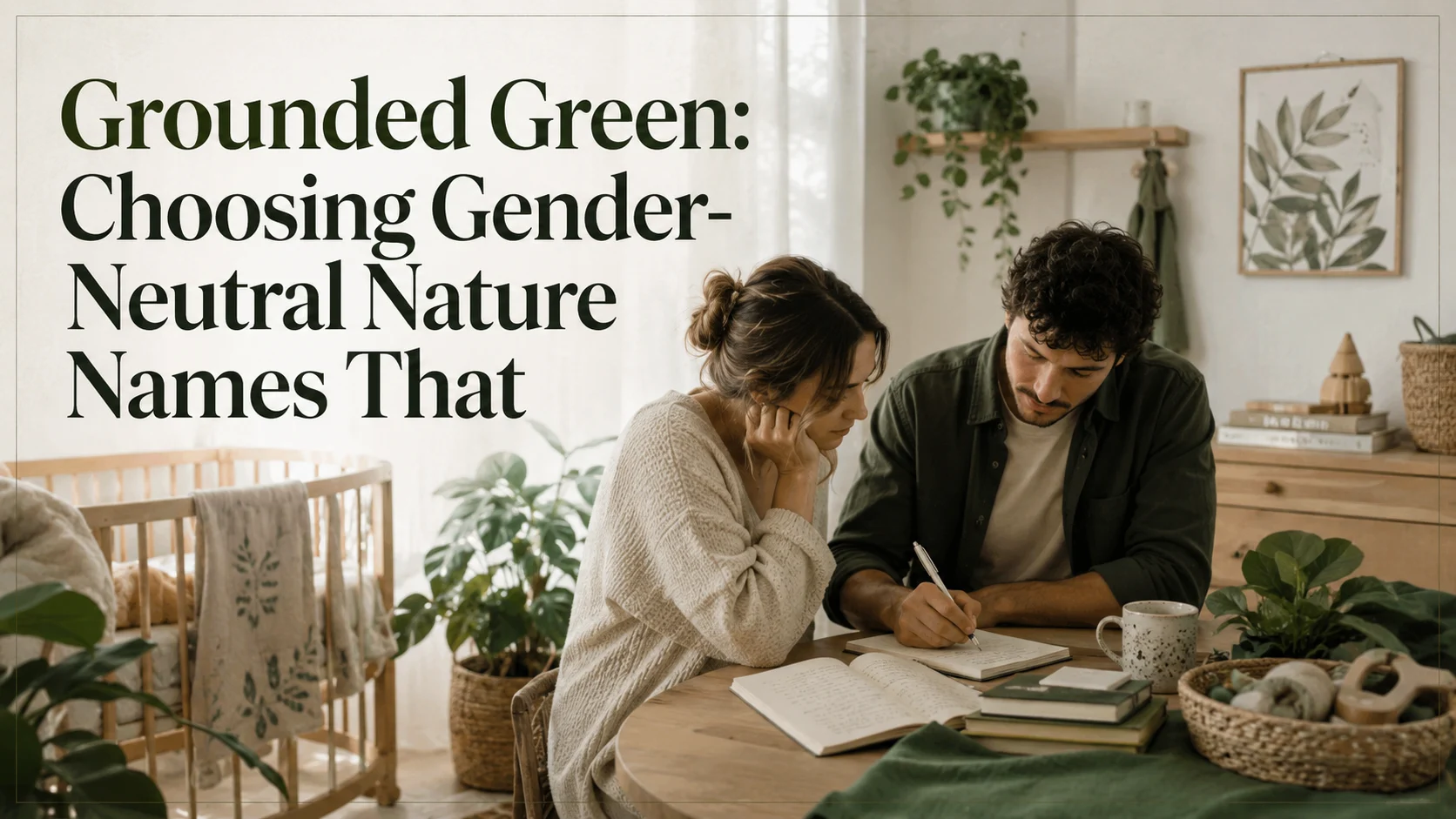
Why 'nature' doesn't have to read trendy: choosing names that age well
Nature names can feel faddish when chosen only for current popularity; to avoid that, focus on tangible associations you personally value and can explain simply to family and teachers. Choosing a name tied to a physical place, plant, or element you know helps it feel earned and less like a headline. Look for names with historical or linguistic roots you like; etymology that ties a name to a real object or landscape helps it survive trend cycles. Consider how a name sounds in different life stages—from playground to résumé—by saying it aloud with common adult titles and initials to check for unintended impressions.
Test potential names against three durable criteria: clarity, carry, and comfort. Clarity means the name is easy to spell and say in noisy places like school lines, carry means it pairs neatly with your surname and possible nicknames, and comfort means you can imagine calling it after a long day without wincing. Write the name on sample forms, place it on pretend email headers, and say it in three tones: playful, firm, and formal; this reveals unexpected frictions. If a name fails one of these tests, tweak it by adding a middle name that softens or anchors the raw nature word.
Avoid choosing nature names solely because they sound cute on a baby; instead, choose words that hold a clear, modest image—trees, small landforms, herbs, or water features tend to age better than abstract celestial or fanciful nature words. For example, tree and water names often carry steady, familiar associations that translate well into adulthood. If you love a rarer plant or phenomenon, pair it with a simple, conventional middle name to balance distinctiveness and ease. Keep a short list of backup names that share the same practical qualities so you aren't stuck on a single trendy option.
Practical tests to see if a nature name feels grounded in daily life
Run a two-week trial where you use the candidate name in everyday settings: add it to a grocery list, a calendar entry, and a mock library card to see how it reads in print and speech. Encourage friends to use it casually in conversation—this helps you notice nicknames or mispronunciations you might otherwise miss. Also practice calling it across rooms and in voicemail greetings to check for crispness and unwanted echoes with your surname. These simple household tests reveal whether a nature name is comfortably usable, or if it will cause constant corrections.
Create a short set of role-play prompts to test tone flexibility: say the name when praising, when speaking firmly, and when writing a professional email header. A grounded nature name should sound warm while still functioning in firm contexts like parent-teacher conferences. If the name loses authority in the firm tone, try a pairing that adds gravitas—either an additional given name or a middle name that balances playful nature imagery. Use this method to decide whether to keep, modify, or drop a name candidate before it becomes a permanent choice.
Check how the name scales with family dynamics by imagining sibling pairings, initials, and potential rhyming teasing that children may face at school. Test initials for awkward acronyms and run the full name aloud with your surname; a nature word that creates an odd or humorous phrase might seem charming at first but wear thin. To protect against future regret, choose names that avoid obvious puns or rhymes with common words most kids use. Practical foresight ensures the name feels grounded now and later.
Pairing nature names with surnames and middle names for balance
When your chosen nature name is a single-syllable or unusual word, a middle name can provide conventional ballast and improve formality for adult contexts. Pick a middle name that complements rather than competes—simple classics like Marie, James, or Lee often smooth transitions from childhood to professional life. If you prefer two word-like names, alternate the order to see which reads most natural: sometimes the nature word works best as a middle instead of a first name, preserving the image while giving a conventional first name to use in formal settings. Try the name full-length on mock documents to see how it looks visually.
Consider surname sound and rhythm: a crisp one-syllable nature name may clash with a long, multi-syllable surname, while two short names in a row can feel clipped. Aim for a balanced cadence—if the surname is long, a shorter nature name can be striking; if the surname is short, choose a slightly longer nature-derived name to avoid abruptness. Also test common last-name-first formal contexts (e.g., school rosters) to ensure the full name combination reads smoothly and avoids unfortunate alliteration or consonant clusters. Adjust order or add a middle name to create a pleasant flow.
Think about nickname pathways proactively: decide which shortened forms you welcome and which you’d correct gently. For example, Rowan can reasonably shorten to Ro; Sage often stays intact; Cove might invite Covey, which could be desirable or not. If you foresee a particular nickname you don’t like, choose a fuller base name or a middle name that redirects common diminutives. Communicate your preferences early with family to build consistent usage, but remain open to the child’s own future name choices as they grow.
Everyday styling: clothing, classroom, and online considerations
Visual branding matters: imagine how a name looks on a nametag, backpack label, or social profile; nature names that are easy to write and read reduce daily friction at school and activities. Test hand-written versions in different scripts—cursive, block letters—to spot potential legibility problems you’ll need to teach a child. Consider potential abbreviations used on sign-up sheets; a name that naturally condenses to a messy shorthand may create avoidable logistical issues. Choose names with clear spelling patterns to help teachers and administrators get it right the first time.
For online presence, check username availability and search results—short, common nature words often clash with preexisting accounts or brands. If online uniqueness matters to you, prefer compound or less-common combinations (for example, LindenMae instead of plain Linden) or plan to use an initial or middle name in handles. Also consider how the name will appear on family-school communication platforms and whether it fits character limits on forms and apps used by schools in 2026; shorter, clearer names typically integrate more smoothly into current systems.
When selecting clothing and gear, think practical labeling strategies: iron-on name tags, a consistent first-name style, or a school-specific nickname can all reduce lost-item stress. If you choose a name with multiple possible spellings, include the spelling on labels early to set a pattern. For mixed-age family settings, teach older siblings a consistent way to refer to the child to model peers and caretakers. Small, proactive labeling rules save time and protect the name's intended presentation in everyday life.
Cultural respect, uniqueness, and long-term meaning
Research cultural origins of nature words to avoid accidental appropriation or disrespect; many nature names come from languages and traditions with distinct meanings and histories. A short internet search or a respectful conversation with family members who share that heritage can clarify whether a name is appropriate to use. If a name carries cultural significance outside your family, consider whether you can honor that context properly or choose a different option that doesn't risk erasure. Thoughtful selection reflects care for communities and future identity.
Balance uniqueness with usability by setting a personal threshold: perhaps you’ll allow one unusual spelling but not two, or you’ll accept uncommon names only if paired with a familiar middle name. Decide ahead how much correction you’re willing to do over time; unique names often require repeated explanations and re-spellings, which can be tiring for a child and family. If you lean unique, create a short family story or explanation that helps teachers and peers understand and remember the name without frequent correction.
Finally, prepare to let the child own their name as they grow; even a thoughtfully chosen nature name may feel different to a teenager than it did to you in pregnancy. Build flexibility into your approach: choose a name that can shorten, formalize, or be swapped for a middle name later if the child prefers. Encourage conversation about name preferences as the child develops identity; a grounded, respectful start gives them the best chance to keep, adapt, or change the name with confidence.
Name Examples And Meanings
A hardy tree with red berries; suggests resilience and approachable strength.
A thorny climbing plant; evokes protection, independent spirit, and textured warmth.
From the sea; offers a calm, open quality tied to water and travel.
An herb known for wisdom and scent; feels grounded, practical, and quietly thoughtful.
From the holly trees; conveys evergreen steadiness and seasonal cheer without fuss.
A small sheltered bay; implies safety, intimacy, and quiet openness.
A tree associated with community gatherings; warm, stable, and pleasantly historic.
A valley or lowland; suggests shelter, softness, and accessible calm.
A tart green herb; brings bright flavor, approachable earthiness, and lightness.
Town near ash trees; balances woodsy roots with a modern surname-friendly sound.
Hashtags
Related Articles
- More gender neutral articles
- Clear, Practical Choices: Picking a Gender-Neutral Name That Works
- Warm, Soft-Sounding Gender-Neutral Names: A Practical Guide for
- Soft-Sounding Gender-Neutral Names That Prioritize Warmth Over Trend
- Grounded Nature Names: Practical Guide to Gender-Neutral Choices