
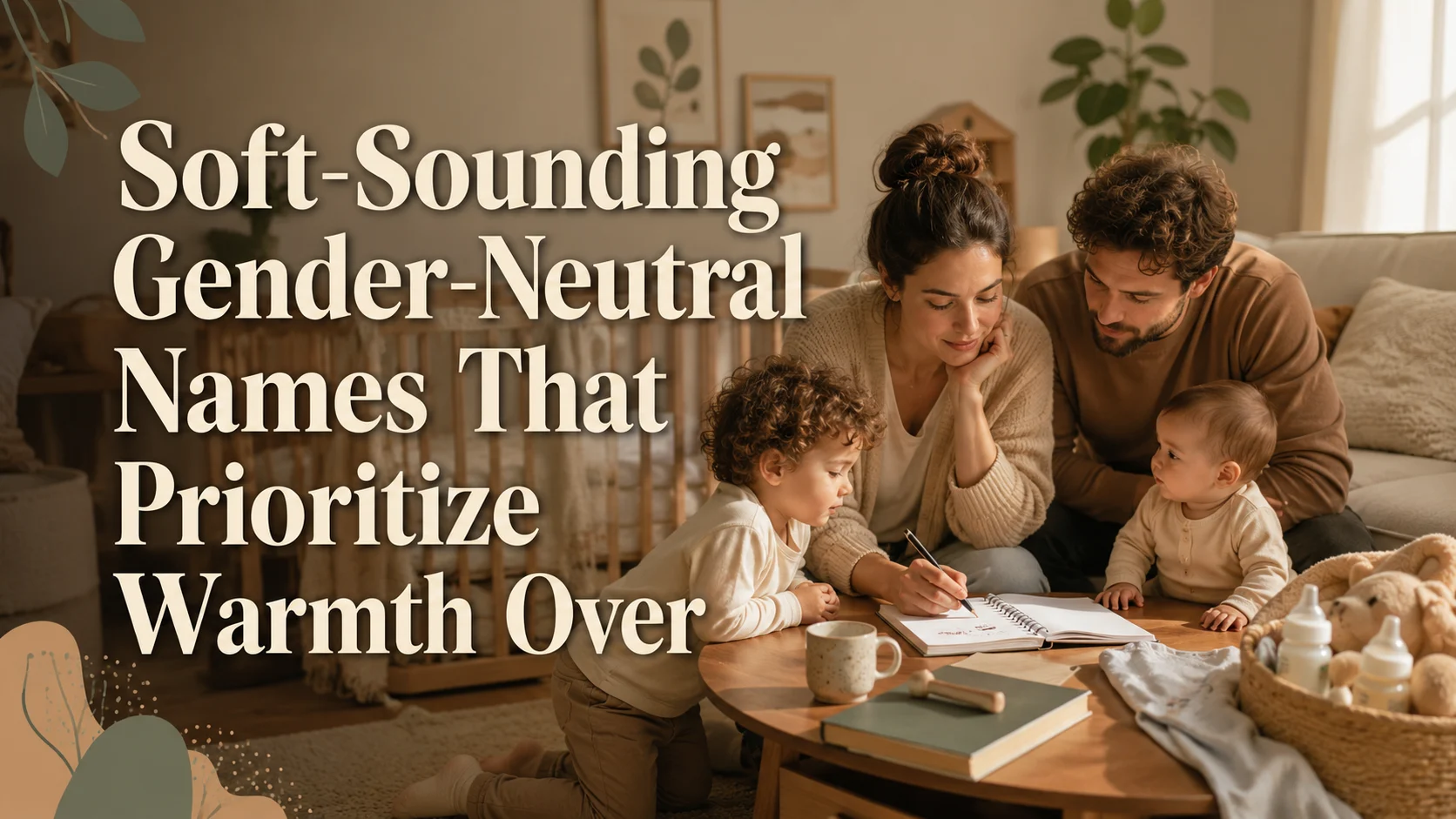
Soft-Sounding Gender-Neutral Names That Prioritize Warmth Over Trend
A practical guide for parents who want gentle, gender-neutral baby names that feel timeless, easy to say, and family-friendly. Includes naming criteria, real-life testing tips, sibling-fit advice, and 10 name ideas with meanings.
Quick Answer
A practical guide for parents who want gentle, gender-neutral baby names that feel timeless, easy to say, and family-friendly. Includes naming criteria, real-life testing tips, sibling-fit advice, and 10 name ideas with meanings.
- Why choose a soft, gender-neutral name now
- Practical criteria: what makes a name 'soft' and useful
- How to test names in real life before deciding
Why choose a soft, gender-neutral name now
Choosing a soft-sounding gender-neutral name signals warmth and approachability in daily interactions, making introductions feel less formal and more personal without leaning on sharp consonants that can sound harsh.
In 2026 many families are looking past short-lived trends toward names that will age with a child; a softer name often reads as timeless and adaptable across school, work, and family settings while avoiding trend-driven spikes.
Soft gender-neutral names reduce the odds of audible misgendering or stereotyping because they don't rely on strongly gendered sounds, and they offer flexibility as children grow and express their identities in different ways.
Practical criteria: what makes a name 'soft' and useful
Listen for vowel-forward shapes and fewer clustered consonants; names with open syllables (ending in vowels) and gentle consonants like L, M, N, or R tend to sound soft and are easier for young children to learn to say.
Prioritize spelling simplicity and common letter combinations so forms are easy on school forms, passports, and pronunciation by relatives or teachers; names that need repeated corrections add friction over years.
Check nickname potential and length; a slightly longer soft name that naturally shortens gives choices, while a concise vowel-led name can be complete on its own and still read warm in conversation.
How to test names in real life before deciding
Try the name aloud in common scenarios: calling your child to dinner, writing it on a pretend attendance sheet, and saying it on a voicemail; hearing the name in everyday contexts reveals pacing, tone, and how it pairs with your surname.
Use a two-week 'trial run' with a close circle: refer to a practice name with your partner, older children, or family members and observe ease of pronunciation, emotional resonance, and whether the name invites affectionate nicknames you like.
Write the name on a calendar, include it on a mock email signature, and say it in potential disciplinary moments to see if it carries the right authority and warmth balance you want for school and parenting situations.
Sibling and cultural fit without losing individuality
Aim for phonetic harmony rather than matching patterns; choose names that complement sibling names in rhythm and tone—soft endings with soft endings, varied syllable lengths—so siblings feel linked without forced sameness.
Consider cultural origins and family pronunciations to honor heritage while keeping ease of use; a name that carries family meaning can be anglicized gently or kept intact depending on how it sounds within your household language mix.
Balance uniqueness with everyday usability by avoiding extremely uncommon spellings; a distinctive name that still follows common phonetic rules prevents constant spelling corrections while preserving individuality.
Finalizing, paperwork, and everyday habits that settle a name
When you're ready, check practical details like how the name fits on legal documents, whether common abbreviations are acceptable, and how the initials look together to avoid unintended combinations on forms and monograms.
Create everyday rituals that reinforce the name positively: a bedtime phrase, a personalized book label, and a small name-related game during family time help the child and community internalize the choice with warmth and consistency.
Allow room to adapt; if a child later prefers a variation or nickname, prioritize their comfort. Choosing a soft, gender-neutral name now gives many natural pathways for future preference without dramatic renaming.
Name Examples And Meanings
Hebrew for 'lion' or short, gentle form meaning 'air' in some usages, warm and concise.
A soft nature name suggesting warmth and calm, easy to spell and say around family.
From 'valley,' evoking a quiet, sheltered place; short and intimate without sharp consonants.
Hebrew-origin name meaning 'I have light,' gentle and melodic with soft consonant endings.
A brief, vowel-forward name meaning 'movement' in Hebrew and widely used as gender-neutral.
Tree-inspired name meaning 'little red one' in Gaelic, balanced and soft in everyday use.
Herb name suggesting wisdom and calm, monosyllabic and easy to pair with many surnames.
Latin-rooted name meaning 'of the sea,' gentle cadence and familiar without being trendy.
Color name that reads lyrical and warm, longer but with soft vowel sounds and nickname options.
Botanical name evoking small evergreen berries, playful yet cozy and resilient-sounding.
Hashtags
Related Articles
- More gender neutral articles
- Clear, Practical Choices: Picking a Gender-Neutral Name That Works
- Warm, Soft-Sounding Gender-Neutral Names: A Practical Guide for
- Grounded Green: Choosing Gender-Neutral Nature Names That Feel Worn
- Grounded Nature Names: Practical Guide to Gender-Neutral Choices