
Low-Fuss First-Trimester Meals and Reminders: A Practical Plan to
Simple rhythms, three go-to meal templates, a 7-item flexible pantry, and gentle reminders help pregnant people navigate first-trimester food needs without strict plans or stress.
Quick Answer
Simple rhythms, three go-to meal templates, a 7-item flexible pantry, and gentle reminders help pregnant people navigate first-trimester food needs without strict plans or stress.
- Why low-effort meal rhythms beat rigid plans in early pregnancy
- Assemble a seven-item flexible pantry that supports quick meals
- Use three easy meal templates to minimize thinking at mealtime
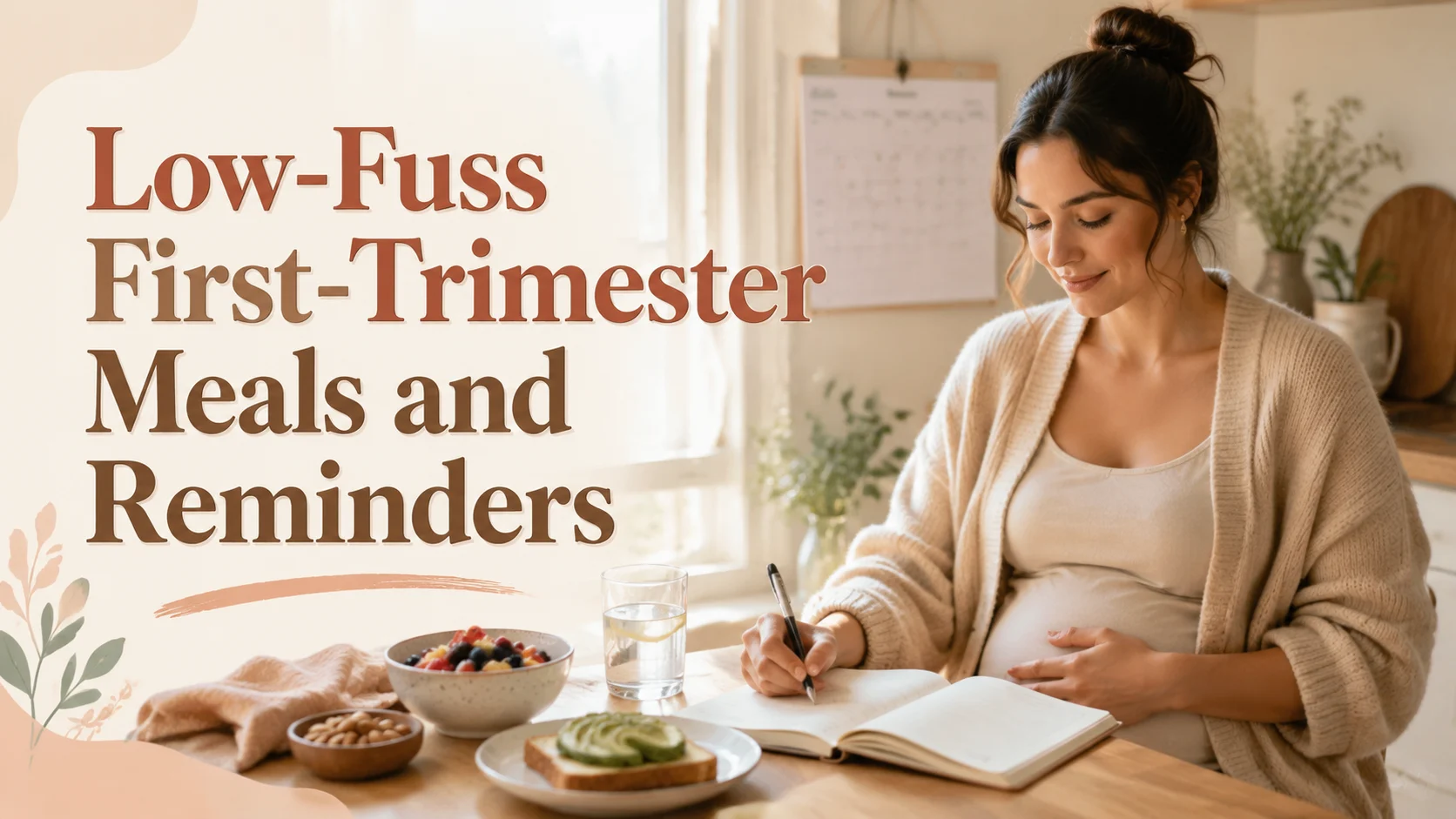
Why low-effort meal rhythms beat rigid plans in early pregnancy
The first trimester often brings fluctuating appetite, nausea, and energy, so rigid multi-week meal plans usually create more stress than relief; a low-effort rhythm accepts daily variation while still delivering balanced nutrition.
Holding a simple rhythm—three meal templates plus two snack ideas—means you only make small choices each day instead of committing to a long grocery list or complex recipes that feel impossible when nauseous.
A practical rhythm also protects your time and emotional energy: it reduces decision fatigue, helps partners or caregivers step in easily, and keeps food accessible for sudden hunger or aversions without constant rethinking.
Assemble a seven-item flexible pantry that supports quick meals
Pick seven shelf-and-fridge items that combine quickly into balanced bites: a whole-grain base, a protein option, a fruit, a quick vegetable, a dairy or dairy-free substitute, a flavor element, and a ready fat like olive oil or nut butter.
Examples: brown rice or whole-grain tortillas; canned beans or smoked salmon; bananas or apples; pre-washed salad greens or frozen peas; yogurt or fortified plant milk; jarred salsa or soy sauce; and olive oil or almond butter for added calories and comfort.
Keep quantities modest and rotate one item per week so your space doesn’t fill up; the goal is variety through substitution, not stockpiling, so you can assemble meals even on low-energy days or when aversions strike.
Use three easy meal templates to minimize thinking at mealtime
Template 1 — Grain + Protein + Quick Veg: Combine a cooked whole grain or wrap with a protein source and a quick veggie like grated carrot, spinach, or frozen corn warmed briefly; add a flavor element and fat to taste.
Template 2 — Smoothie or Bowl: Blend fruit, a protein (yogurt, silken tofu, or protein powder), and a liquid for an easy smoothie, or layer the same items into a breakfast bowl with nuts and a spoonable fat for extra calories.
Template 3 — Snack Plate: When a full meal feels like too much, assemble a plate with a soft carb (crackers or toast), a protein (cheese, hummus, or canned tuna), a fruit, and a comforting fat; portion to appetite and eat slowly.
Build gentle reminders that actually help without nagging
Set three daily touchpoints rather than alarms: a morning hydration prompt, a midday meal cue, and an evening check-in. Keep reminders short and kind so they support habit without pressure.
Use a visual cue in your kitchen—like a small sticky note or a bowl that holds the day's snack—to make the plan visible for partners and caregivers, so they can help without asking what to do.
If you prefer digital, schedule single, labeled calendar events (e.g., “Breakfast: small, soothing”) rather than recurring alarm tones. This keeps reminders contextual and reduces alarm fatigue while still prompting action.
Weekly lightweight check-ins and small course corrections
Once a week, spend 10–15 minutes reviewing what worked: which foods felt good, what times of day were hardest, and which pantry items went unused. Use that short snapshot to replace one item or tweak a template.
Communicate the results to your partner or household member with one sentence: what to keep, what to remove, and one way they can help this week. Clear, tiny asks make support easy to provide and maintain.
Adjust portion sizes, swap a flavor you disliked, or shift reminder times based on energy patterns. Small changes keep the plan aligned with how you feel without turning the kitchen into a project.
Hashtags
Related Articles
- More pregnancy first trimester articles
- Practical First-Trimester Meal and Reminder System: Low-Planning
- First-Trimester Meals and Reminders: A Low-Planning System That
- A week-by-week first-trimester notes system for symptoms, questions
- First-trimester energy planning for workdays, errands, and quieter