
The Snack Drawer That Keeps Grazing Calm: A Practical System for
Set up one organized snack drawer to stop chaotic grazing. This warm, practical guide shows how to design, stock, rotate, and run a family snack drawer that saves time, reduces waste, and keeps kids fed between meals.
Quick Answer
Set up one organized snack drawer to stop chaotic grazing. This warm, practical guide shows how to design, stock, rotate, and run a family snack drawer that saves time, reduces waste, and keeps kids fed between meals.
- Why one snack drawer changes afternoon chaos
- Choosing the right drawer and layout
- Stocking smart: balanced, shelf-stable choices
Why one snack drawer changes afternoon chaos
A single, well-stocked snack drawer removes decision friction for kids and adults by gathering choices in one predictable place, which reduces impulsive kitchen raids. When snacks live together with simple rules, children learn limits and parents spend less time answering “What can I eat?” than hunting for mismatched items across cupboards. This creates calm between meals and helps keep the kitchen tidy after busy days.
Predictability matters: a dedicated drawer builds a visible, repeatable system that younger kids can use independently while older kids can learn to restock. Having one go-to spot also helps caregivers spot low supplies at a glance and prevents duplicate purchases. Expect this to feel a little strange at first; families who commit for two weeks usually notice smoother afternoons and fewer hurried grocery trips.
A single drawer also makes portioning and healthful balance easier without policing every choice, because parents control what options are available and how much is accessible. That gentle boundary supports better appetites at mealtimes while still offering variety. In 2026, with noisier schedules and stretched attention, micro-systems like this reduce daily decision load and protect family rhythms.
Choosing the right drawer and layout
Pick a drawer at child-height where items are easy to reach and see, ideally near the kitchen work area or a family hub. Measure depth and width and choose shallow bins or trays to keep things visible; stacked packages quickly become forgotten. If a single drawer at child height isn’t possible, select a low shelf and use a labeled basket to mimic the drawer setup.
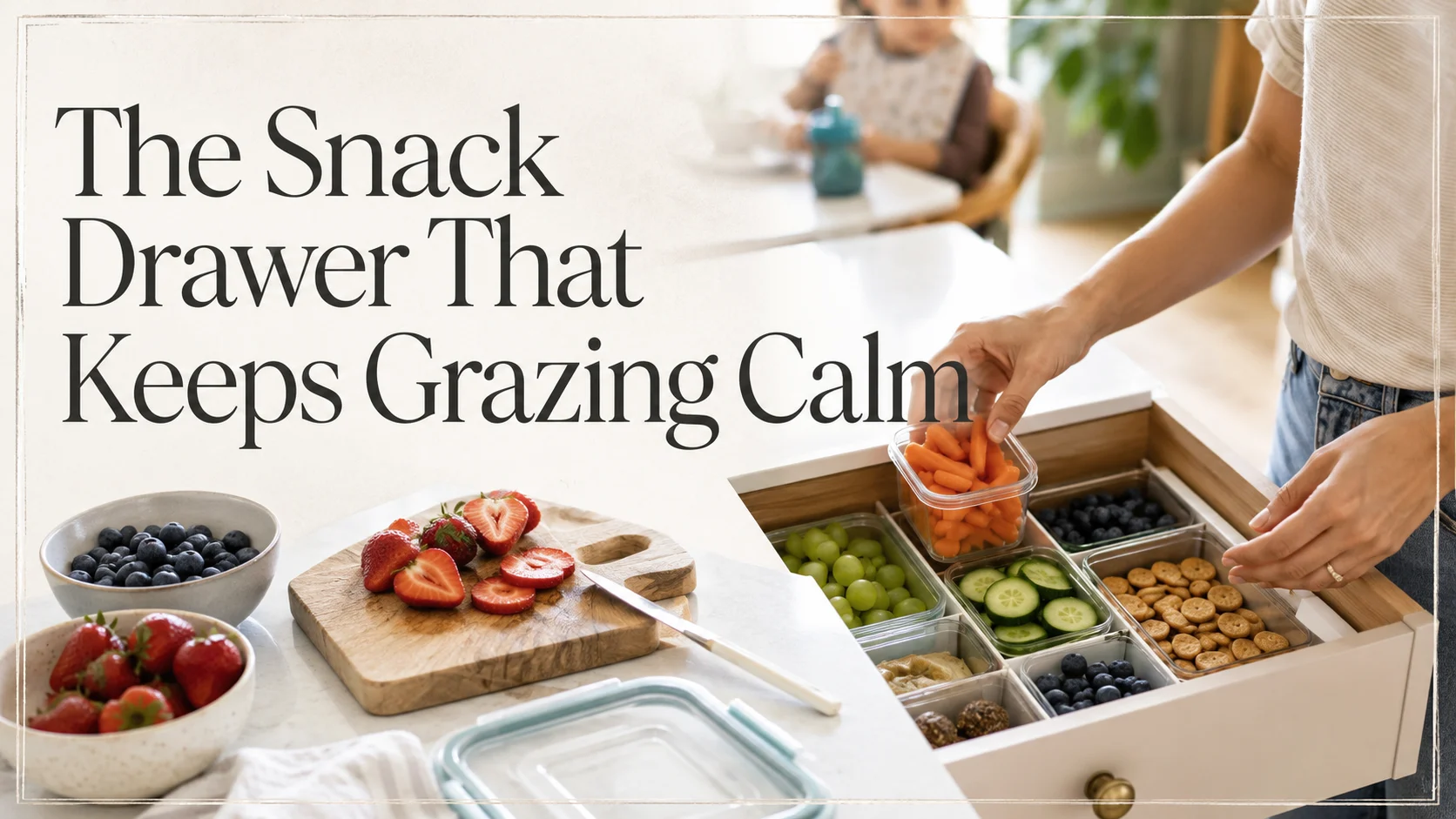
Divide the drawer into clear zones: ready-to-eat, prep-required, and drinks or utensils. Use shallow plastic bins or simple drawer organizers so zones don’t mix, and label each zone with words or pictures for younger children. Keep frequently grabbed items in the front so small hands can access them without moving other things around.
Reserve a small corner for refill supplies—extra squeeze pouches or resealable bags—so caregivers can top up without opening the pantry. Keep a roll of resealable bags and a small scoop or measuring cup in the drawer to make on-the-spot portions and to repackage bulk items. A small laminated note with the family’s snack rules can be tucked inside as a gentle reminder for everyone.
Stocking smart: balanced, shelf-stable choices
Aim for a mix of protein, produce, and whole-grain options to keep energy steady until the next meal; examples include nut or seed butter packets, whole-grain crackers, shelf-stable cheese sticks, dried fruit with no added sugar, and single-serve hummus cups. Choose shelf-stable or longer-lasting items when refrigeration space is limited, and replace perishable items with a refrigerated mini-station if you plan to include yogurt or fresh fruit.
Buy multipack items you can split into child-sized portions to control servings and reduce waste—small containers of cottage cheese repackaged into reusable containers or individually wrapped rice cakes work well. Rotate flavors and textures weekly to keep interest high but keep the overall list short so shopping stays simple. Keep one treat slot per drawer to satisfy cravings without turning the drawer into a candy trove.
Label portions when needed and use clear, resealable packaging for leftovers so kids can grab a pre-measured snack without asking. If allergies or dietary needs are present, maintain a separate marked zone for safe items to avoid cross-contact. Use expiration checks as part of your weekly restock routine to avoid stale surprises and wasted food.
Daily habits that keep the drawer working
Set a two-minute after-snack rule: whoever opened the next-to-last item should note it on the family grocery list or place a small token in the front 'refill' bin. Make restocking a short shared task—partnered caregivers can alternate weekly responsibility so the system doesn’t fall to one person. A quick evening glance during kitchen tidy-up is enough to keep items rotating and prevent last-minute scrambles.
Teach kids how to serve themselves using the drawer’s zones and portion tools, and practice the routine over a few days so it becomes second nature. Reinforce rules like 'one snack between meals' with consistent responses and a visual cue, such as a sticker chart or a small sign on the drawer, so expectations are predictable and calm. Praise independent, correct use to build competence and reduce questions during high-energy afternoons.
Keep a simple refill list near the drawer or in your shared family app, and schedule a weekly 10-minute pantry check when you unpack groceries so replenishment happens once and doesn’t interrupt midweek. If a favorite item disappears rapidly, temporarily reduce its presence to one portion per week while you find a replacement that lasts longer and keeps routines stable.
Troubleshooting and scaling for changing needs
If kids consistently overgraze, shift to slightly larger, more satisfying portions of protein-rich snacks and remove the least satiating items for a week to reset appetite. Observe which snacks get ignored and replace them with similar-texture options to avoid waste; sometimes a packaging change (single-serve vs. bulk) makes a big difference in consumption patterns. Adjust the mix seasonally to include cooling or warming options as schedules and appetites change through the year.
Scale the system easily for childcare or grandparents by taking a photo of the drawer interior and pinning it to your shared calendar or app; include the short rules and refill list so backups can follow your routine without guessing. For larger families, add a labeled second drawer or a hanging basket for bulk items but keep the child-accessible drawer focused on ready-to-eat, portioned choices to preserve independence.
If the drawer becomes cluttered, perform a five-minute reset: remove expired or unappealing items, consolidate duplicates, and re-label zones. Every few months, rotate one or two new items in and retire others to keep interest high without overwhelming shopping. Small maintenance steps—two minutes a day, a ten-minute weekly check—keep the snack drawer a consistent helper rather than another chore.
Hashtags
Related Articles
- More feeding nutrition articles
- Snack drawer systems that help busy families avoid chaotic grazing
- How to build a simple rotation of family snacks with protein, fiber
- A Simple Family Snack Rotation: Protein, Fiber, and Color the Easy Way
- Lunchbox Rhythms for Busy Families: Keep Sundays Free and Lunches