
Three Compact Feeding Stations to Prep Early-Month Supplies Without
Set up three small, purpose-driven feeding stations—night, daytime, and travel—that keep early-month bottles, pumping, and nursing gear tidy and accessible without filling every cabinet.
Quick Answer
Set up three small, purpose-driven feeding stations—night, daytime, and travel—that keep early-month bottles, pumping, and nursing gear tidy and accessible without filling every cabinet.
- Plan by Need: Why three stations beat one sprawling stash
- Night Station: What to include for calm, low-light feeds
- Daytime Station: A compact prep and cleanup hub near the kitchen
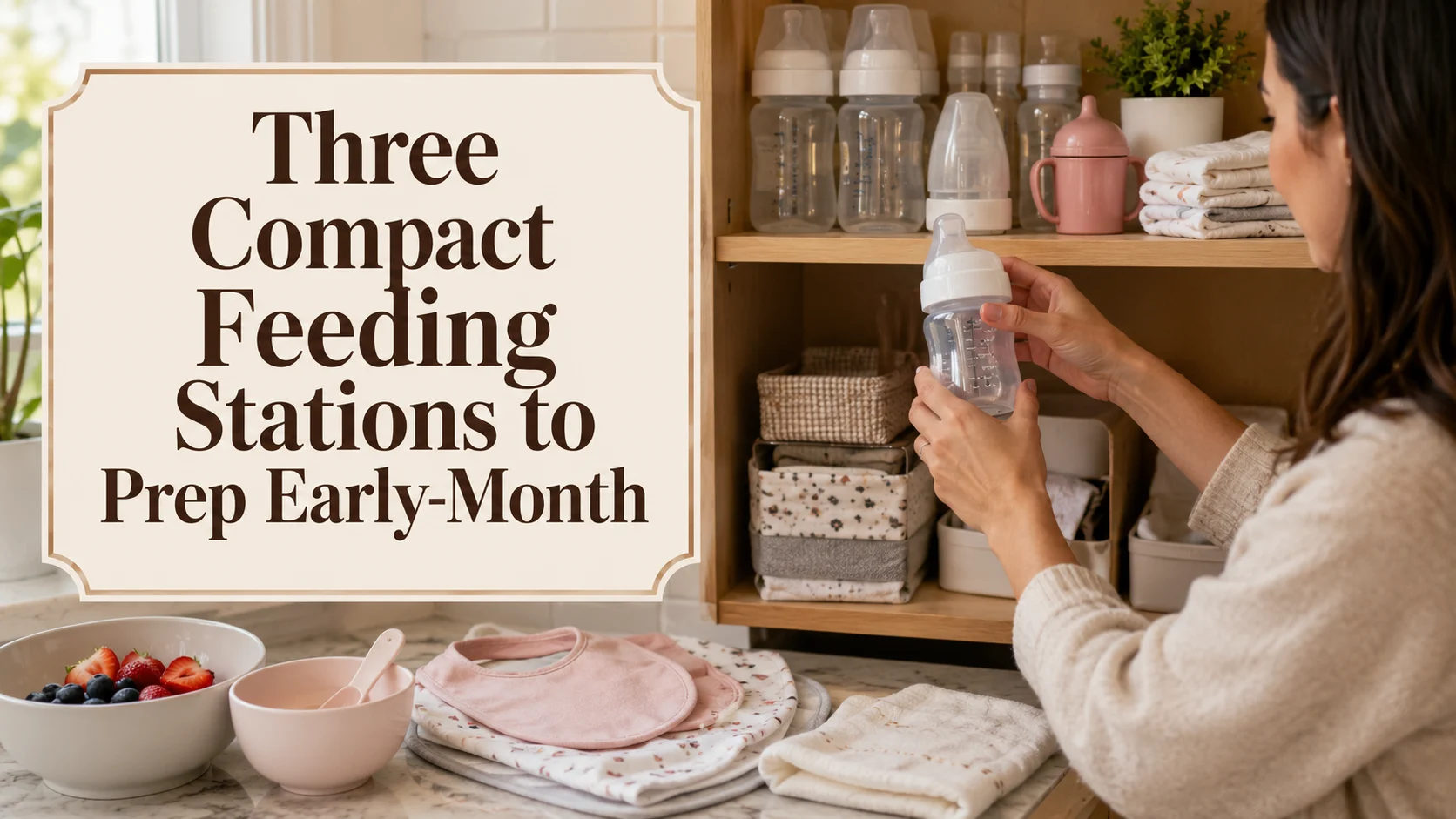
Plan by Need: Why three stations beat one sprawling stash
Most families feel pressure to stockpile feeding supplies in cabinets and drawers, but three small stations map to real-life needs and reduce searching when you’re tired and busy.
Create separate zones for night, daytime, and travel so items live where you use them; each zone can fit in a drawer, basket, or caddy rather than commanding multiple cupboards.
A station approach prevents overbuying: when you set limits for each zone, you buy only the quantity you need for a typical day rather than an imagined emergency stockpile.
In 2026 many products claim convenience, but the organizing principle remains the same—place like-with-like and place near where tasks happen, so prep time and stress both fall.
Night Station: What to include for calm, low-light feeds
The night station should be within arm’s reach of the nursing or feeding spot and contain dimmable light, burp cloths, a small water bottle, and a minimal set of sterilized bottles or milk storage for convenience.
Add a portable bottle warmer or thermos with warm water if you use formula or expressed milk; keep a spare nipple and a simple fast-close storage container for used items until morning.
A soft tray or shallow basket prevents spills and keeps everything visible without rummaging; choose muted colors and soft textures to avoid stimulating you or the baby during nocturnal wake-ups.
Limit the night station to three to five items so it remains quick to use and easy to reset, reducing middle-of-night decision fatigue and helping household partners who assist with feeds.
Daytime Station: A compact prep and cleanup hub near the kitchen
The daytime station sits near the kitchen or main living area and stores what you need for daytime bottles, pumping, and quick cleanups including a small drying rack with a tight footprint.
Keep measured formula, a few labeled storage bottles, breast pads, a hands-free pump accessory, wipes, and a lightweight spray bottle for quick sterilizing; organize these in a shallow drawer or a narrow shelf bin.
Use labeled, clear containers for small items so you can see inventory at a glance and restock weekly; a consistent place for items speeds handoffs to partners, babysitters, or grandparents.
Allocate space for a small checklist or sticky note with basics to refill, which keeps restocking a five-minute Sunday task rather than a hurried, late-night scramble.
Travel and Out-and-About Station: Packable, weather-aware essentials
A travel station is a single grab-and-go bag or tote with insulated pockets for milk or formula, a compact changing pad, extra bibs, and a foldable bottle brush so outings don’t require more gear than fits in a stroller basket.
Keep pre-measured single-use formula packets or a small shaker bottle, plus resealable ice pouches for expressed milk; rotate items after each trip so supplies stay fresh and usable.
For short errands, a slim caddy with two bottles, wipes, and a spare outfit is usually sufficient; for longer outings include an extra feeding cover and a small wet bag for used items.
Store the travel kit in a consistent spot near the door or in the car and schedule a weekly inspection to replace used items and check that insulated elements are dry and clean.
Sustainable stocking and simple restock rhythms
Choose a small, consistent shopping rhythm—Sunday evening or midweek—dedicated to restocking the three stations so supplies are refreshed without bulk storage taking over the kitchen.
Favor multipurpose items that live easily across stations, like a neutral burp cloth that can be used night or day, and choose stackable containers to keep visual clutter low and surfaces easy to wipe down.
Track what you actually use for the first six weeks and then reduce or reassign items that go unused; a short daily check and a weekly refill habit cut waste and help avoid overfilling cabinets.
Label bins with short notes and keep a single digital or paper list for backup supplies; this pragmatic, small-station system protects counter and cabinet space while keeping feeding accessible and realistic for parents.
Hashtags
Related Articles
- More feeding routines articles
- Minimal Feeding Stations for Early Months: Set Up Smart, Not Full
- One-Counter Feeding Rotation: How to Keep First-Month Supplies Hand
- Three-Line Feeding Notes: A Fast, Repeatable Routine for Clear Patt
- Early-Month Feeding Setup: A Minimal, Practical Plan for the First