
A 45-Minute Sunday Evening Reset That Keeps Weekends for Family Time
A practical, time-boxed Sunday reset to prep school bags, plan meals, and sync calendars in under an hour so your week starts calm and your weekend stays free.
Quick Answer
A practical, time-boxed Sunday reset to prep school bags, plan meals, and sync calendars in under an hour so your week starts calm and your weekend stays free.
- Why a short, consistent Sunday reset works
- Set up a 45-minute, three-zone workflow
- Make planning practical: calendar, tasks, and contingency
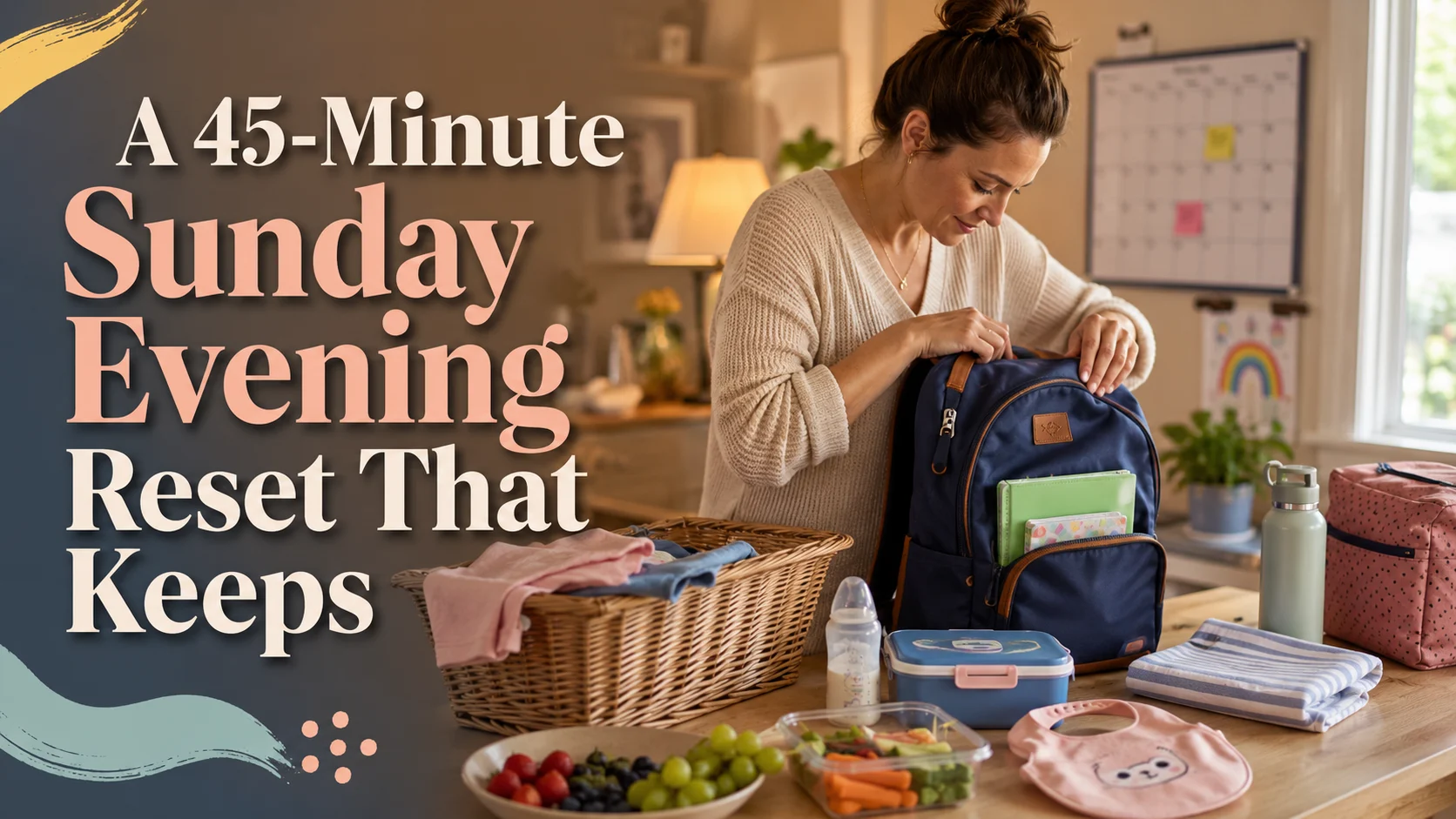
Why a short, consistent Sunday reset works
A focused 45-minute routine reduces decision fatigue across the week by clearing small chores that otherwise pile up and steal time during weekday evenings and weekend fun.
Consistency builds trust: when kids know Sunday means a quick reset, they learn simple tasks and the household gains a reliable rhythm without elaborate planning sessions.
Designing a compact routine keeps it achievable for caregivers in 2026 with busy schedules, remote work, and mixed custody calendars; the aim is stability, not perfection.
Set up a 45-minute, three-zone workflow
Divide the work into three zones: backpacks and outerwear, meal and fridge prep, and shared planning. Give each zone 12–15 minutes and use a visible timer to keep the pace honest.
Backpack zone: place a clear tote for each child near the door and have each child or caregiver check schedules, permission slips, and library books while you refill snacks and replace batteries in key devices.
Kitchen zone: assemble two to three simple components for weekdays—washed fruit, portioned lunch snacks, and a batch-ready dinner element—so weekday nights need minimal prep and less mental energy.
Make planning practical: calendar, tasks, and contingency
Open a shared family calendar and mark non-negotiables like school events, medical appointments, and work travel. Update any new items and color-code by person to keep the view instantly actionable.
Create a short task list for the week with three priorities per caregiver—keep it visible on a sticky note or a shared app so decisions during the week are limited to one or two taps.
Identify one simple contingency plan—such as a backup dinner or an emergency contact chain—and write it down where everyone can see it so last-minute changes don't derail the week.
Engage kids and partners without making it work for one person
Assign age-appropriate micro-tasks: toddlers match socks, school-age kids pack one snack, and teens confirm their own extracurricular items. Rotate small responsibilities weekly to teach independence.
Use a gentle script for requests—clear, specific, and time-limited. Say, “You have five minutes to pack your reading book and put sneakers in the tote,” which creates a predictable task window for kids.
Involve partners by assigning one consistent weekly role each: one person manages laundry handoff while the other checks the calendar and handles meal elements, reducing friction and last-minute debates.
Small systems that stay useful all year
Create a dedicated 'Sunday reset' basket for chargers, wallets, and permission slips so items have a home and you avoid hunting during weekday exits.
Keep a labeled shelf in the fridge for grab-and-go items and a snack box for lunches; restock these during the kitchen zone to make weekday assembly fast and reliable.
Review the reset in five minutes on Monday morning for missed items; a tiny follow-up prevents small issues from ballooning and keeps the weekend reset lightweight and effective.
Hashtags
Related Articles
- More family routines articles
- A Sunday evening family reset that does not take over the whole
- A Family Calendar Everyone Actually Uses: A Practical Setup for
- Two Bins, Less Chaos: A Practical Household System to Stop School
- A Family Calendar Everyone Actually Follows: A Practical System