
Split-Stash Stations: A Two-Bin Method to Stop School, Daycare
A clear, usable two-bin system that separates daily school/daycare must-haves from activity and weekend gear, so mornings are faster and clutter stays out of living spaces.
Quick Answer
A clear, usable two-bin system that separates daily school/daycare must-haves from activity and weekend gear, so mornings are faster and clutter stays out of living spaces.
- Why two bins, not one: the thinking behind split-stash stations
- Choosing locations and bins that actually work in your home
- What goes in each bin: clear categories for faster decisions
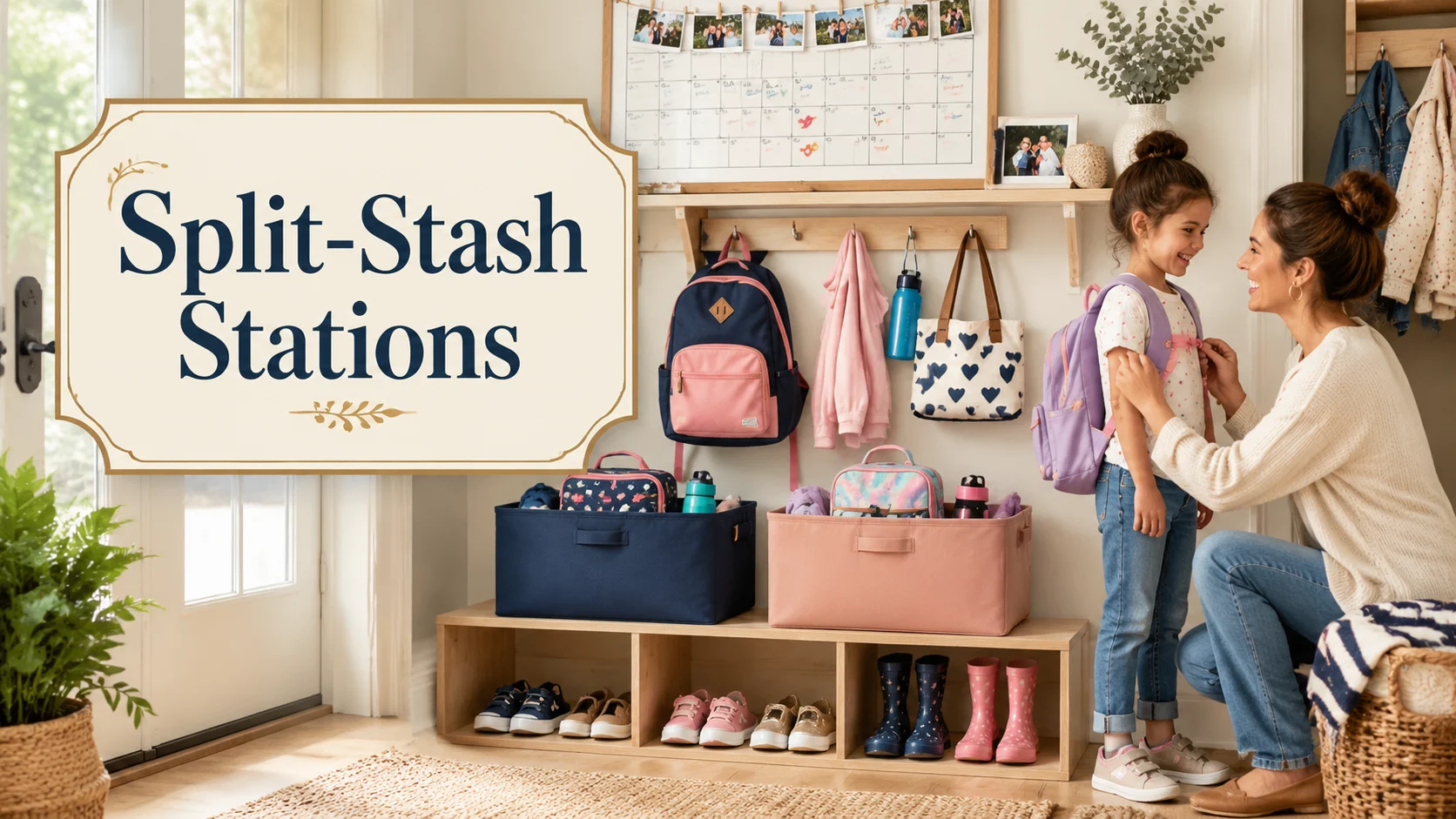
Why two bins, not one: the thinking behind split-stash stations
Two distinct bins reduce decision fatigue by making one bin for daily departures and a second for extras, so families stop rifling through a single pile at the last minute.
Daily departures (school, daycare, work) demand speed and predictable items; the second bin holds occasional gear like sports uniforms, library books, or weekend backpacks that don’t belong in the daily flow.
Keeping the bins visible but contained changes behavior: kids learn where to drop kit, partners see what’s missing, and the living room stops becoming a staging ground for tomorrow’s chaos.
Choosing locations and bins that actually work in your home
Place the daily-departure bin as close to the exit route as possible — near the front door, mudroom, or back hallway — to make packing the final step before leaving.
Position the activity/extra bin in a transition spot that’s still visible but not in the main living area; hall closet shelves or a bench cubby keep extras accessible without crowding shared spaces.
Pick bins that fit the space and the family: shallow open tote for quick visual checks, a lidded basket to hide clutter in shared rooms, or stackable bins if floor space is limited.
What goes in each bin: clear categories for faster decisions
Daily-departure bin contents should be short, repeatable items: packed lunch if made the night before, labeled water bottle, spare mask, permission slip, and the day’s shoes if weather-specific.
Activity-and-weekend bin holds less-frequent gear: sports cleats, musical instruments in soft cases, extra uniform pieces, library books due soon, and signed paperwork that needs returning.
Use simple labels or color coding so each child can own their bin: a small laminated card listing their daily items taped inside the lid reduces questions and speeds morning handoffs.
Workflows: routines that keep bins functional, not ignored
Night-before rhythm: do a 5-minute bin check after dinner—restock daily bin with items you can prepare (snack, notes) and move anything leftover for tomorrow into the activity bin.
Morning handoff script: a single verbal cue—'Bin check'—walks kids to touch their daily bin, confirm packed items, and move missing things to the outbox if needed to prevent last-minute searches.
Weekly reset: set a 10-minute Sunday check to empty the activity bin of outgrown items, launder uniforms, return library books, and reassign items that should live permanently elsewhere.
Adapting the two-bin method for small homes, shared custody, or multi-kid chaos
In tiny apartments stack bins vertically or use hanging shoe organizers inside a closet door labeled by child and purpose to keep both stations but save floor space.
For co-parenting or shared custody, add a simple checklist inside each bin with contact info and a short note about supplies to ease handoffs and keep expectations aligned.
When kids’ activities overlap, create a small 'holding' envelope inside the activity bin for each week’s schedule; items for that week live in the envelope so the bin stays organized and purposeful.
Hashtags
Related Articles
- More family routines articles
- A Sunday evening family reset that does not take over the whole
- A Family Calendar Everyone Actually Uses: A Practical Setup for
- Two Bins, Less Chaos: A Practical Household System to Stop School
- A Family Calendar Everyone Actually Follows: A Practical System