
Smart Drop-and-Go Stations: Two Bins That Keep School and Activity
Create two simple, durable drop stations to clear backpacks, shoes, and activity gear each day. Practical setups, kid-friendly labeling, and quick weekly resets help families reduce lost items and chaotic mornings.
Quick Answer
Create two simple, durable drop stations to clear backpacks, shoes, and activity gear each day. Practical setups, kid-friendly labeling, and quick weekly resets help families reduce lost items and chaotic mornings.
- Why two bins work better than one
- Choosing the right bins and where to place them
- Labeling, color-coding, and kid-friendly rules
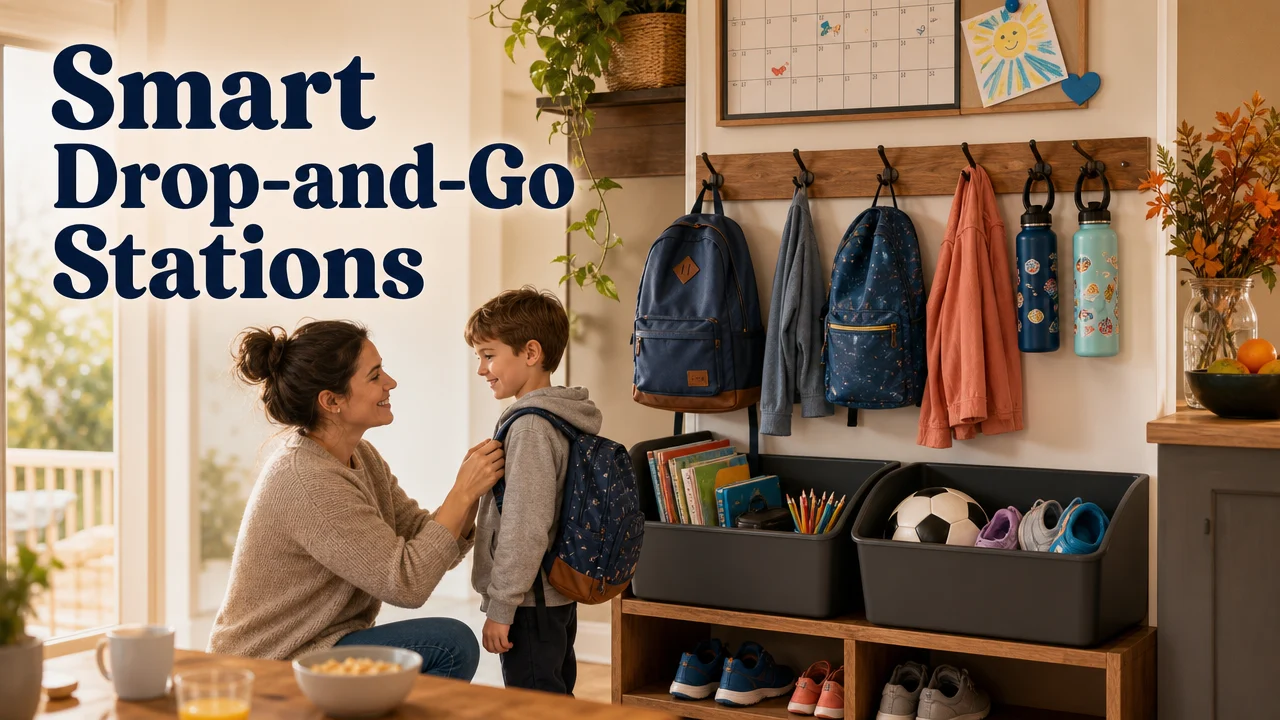
Why two bins work better than one
Two separate bins create a clear decision at the door: one for everyday essentials and one for items that need attention later. That split reduces the “everything goes in one pile” problem and makes misplacement less likely during busy transitions. Each bin has a single, focused purpose so kids and caregivers don’t agonize over where to put things.
A second advantage is visible triage: parents can scan both bins at a glance and know what needs action before the next day. When items requiring washing, charging, or repair go in one bin, and ready-to-use items go in the other, sorting tasks become simple. This reduces late-night searches and forgotten gear for school or activities.
Finally, two bins teach fast habits: children learn a binary choice, which is easier for developing brains than multiple rules. Reinforcing the same step every arrival—put backpack in Ready bin, put dirty clothes or permission slips in Action bin—builds automaticity. Over weeks this small habit substantially cuts morning friction and lost items.
Choosing the right bins and where to place them
Pick bins that match daily use: one easy-to-open shallow bin for backpacks and shoes, and one lidded or mesh bin for sweaty clothes, wet swim suits, or papers that need attention. Durable plastic with handles or open baskets with liners work best for quick dumping and emptying. Avoid tiny containers; bins should be clearly visible and large enough for one family’s daily load.
Place the stations where the family naturally moves: the entryway by the main door, the mudroom, or the garage entrance used most on weekdays. Position the Ready bin closest to the door so kids drop items without detours, and place the Action bin slightly inside to cue follow-up at home. Keep a bench or low shelf near the bins so younger children can sit while removing shoes and gear.
Consider traffic flow for arrival and departure. If multiple doors are used, duplicate a mini version of the two-bin setup at the secondary entrance or create a mobile caddy for high-traffic seasons. Keep the most-used bin handle accessible and the Action bin visible to avoid turning it into an out-of-sight out-of-mind pile.
Labeling, color-coding, and kid-friendly rules
Use simple, consistent labels that the whole family understands: Ready and Action, Home and Fix, or Go and Needs. For pre-readers, add color bands or picture icons—backpack, shoe, and checkmark for Ready; washing machine, charging cord, and exclamation mark for Action. Place labels at child eye level to encourage ownership.
Create two clear rules and practice them for a week: everything that can be used the next day goes in Ready; anything that requires adult help, cleaning, or attention goes in Action. Run a 3-day walkthrough where an adult models the choice and narrates reasons aloud so kids internalize the logic. Reinforce with gentle reminders rather than punishment to keep mornings calm.
Use a small checklist on the wall above the bins for older children: pack lunch, permission slip, water bottle, instrument, and shoes. When kids can check off items themselves, they build accountability and the Ready bin truly becomes a launchpad. Swap checklists seasonally to reflect sports, classroom projects, or performance rehearsals.
Daily micro-routines and the five-minute evening reset
A two-minute arrival routine helps: open door, take off shoes, empty pockets into Action bin, place backpack into Ready bin. Make that sequence predictable and practiced—set a timer for five minutes the first week so everyone sees how fast the system can be. Short, repeated practice beats long lectures about responsibility.
Adopt a five-minute evening reset habit: check the Action bin for permission slips or wet items, move washed clothing back into readiness, and tuck any ready gear near the door. Put this reset on one adult’s nightly to-do list, or make it a family task—assign different nights to different family members so responsibility is shared. Consistency here prevents accumulation and weekend cleanup sessions.
For busy nights, leave a sticky note on the Ready bin with any special reminders—uniforms needed, snacks for practice, or items to charge. These visual prompts help whoever packs the bag in the morning and reduce last-minute scrambles. Keep a small supply kit near the bins with spare hair ties, a mini deodorant, extra socks, and zip ties for quick fixes.
Maintaining the system: weekly checks and seasonal tweaks
Schedule a weekly 10-minute check on Sundays to inspect both bins: empty Action contents, launder or repair items, and restock essentials in the Ready bin. Make the check part of a family routine—pair it with a coffee or music to make it pleasant rather than a chore. A short regular check prevents the bins from becoming drop zones for forgotten items.
Adjust the bins for seasonal needs: add a waterproof liner in rainy months, a glove compartment for winter accessories, or a ventilated mesh bag for sweaty sports kits in summer. Rotate checklist items to reflect seasonal gear and school calendars, and remind family members when schedules change to keep the system accurate and useful.
Troubleshoot common friction points by asking what breaks the habit: Is the Action bin hidden? Are kids rushing through arrival? Tweak placement, simplify rules, or create an extra cue (a hallway hook or a light) to restore flow. Small, targeted changes often fix recurring problems without overhauling the whole setup.
Hashtags
Related Articles
- More family routines articles
- A Sunday evening family reset that does not take over the whole
- A Family Calendar Everyone Actually Uses: A Practical Setup for
- Two Bins, Less Chaos: A Practical Household System to Stop School
- A Family Calendar Everyone Actually Follows: A Practical System