
Five-Station Morning Setup: Label, Pack, and Stage Kindergarten
A practical step-by-step system to label, organize, and stage kindergarten clothes, lunch, and backpacks so mornings run predictably and stress stays low.
Quick Answer
A practical step-by-step system to label, organize, and stage kindergarten clothes, lunch, and backpacks so mornings run predictably and stress stays low.
- Why a Five-Station System Beats Last‑Minute Runs
- Weekend Prep: Labeling and One‑Touch Decisions
- Smart Labels and Materials That Actually Last
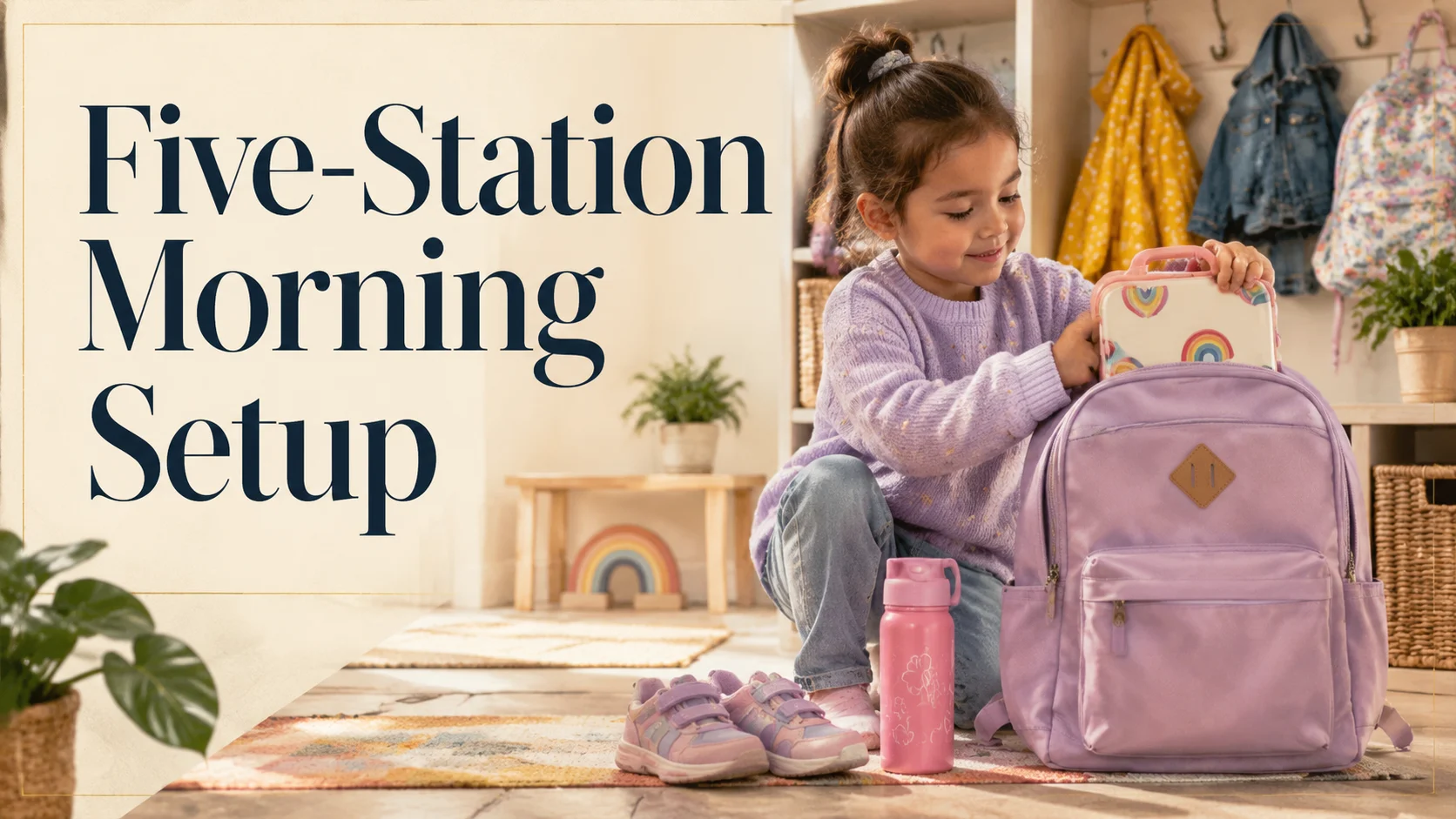
Why a Five-Station System Beats Last‑Minute Runs
Mornings with a kindergartner often fail for predictable reasons: missing shoes, wet lunches, or a forgotten permission slip. Designing five dedicated stations — sleep-to-shoe, clothes, snack/lunch, backpack, and exit — reduces decision points and concentrates prep in visible places where you’ll actually notice problems before you walk out the door.
When you move most choices out of the heated moment of departure and into routines you can execute earlier, you protect time and energy. The system treats small tasks (labeling, packing, swapping wet clothes) as parts of a repeatable workflow, so the same steps happen every day without conscious effort from 6:50 to 7:10 a.m.
This setup is especially helpful in 2026 when families juggle hybrid work, shifted school hours, and extracurriculars that start earlier. A five-station approach allows you to adapt quickly: swap the order of stations for a later bus time or merge two stations during a simpler schedule without scrapping the whole routine.
Weekend Prep: Labeling and One‑Touch Decisions
Spend 20–40 minutes on the weekend labeling essentials: one label for clothing, one for shoes, one for lunch containers, and one for school paperwork. Use a consistent label style — readable first name, last initial, and a small icon — so children can self-identify their items and staff can re‑return lost pieces without guesswork.
Decide one-touch rules while labeling: everything with a food sticker goes to the snack station after use; permission slips go immediately into the homework folder; spare socks live in a clear zip pouch in the clothes station. These rules reduce micro-decisions during the weekday and make it easy to correct missing items during a single glance at each station.
Package duplicates where it matters. Prepare two identical weather kits (one in the car, one in the exit station) with a light jacket, hat, and an extra mask or sanitizer pack. If your child has a comfort item or specific cup, label and place it in a designated bin so replacements aren’t scrounged together the morning of school.
Smart Labels and Materials That Actually Last
Choose labels built for laundering and playground wear: iron-on or heat-seal clothing labels for daily wear, and waterproof name labels for bottles, containers, and shoes. Invest in a small label printer or long-lasting hand-stamp for the best balance of speed and durability; sharpie on tape fades and peels more often than you’d expect.
Color-code by category to speed visual checks: bright yellow tags for lunch items, blue for outerwear, and green for paperwork. The color system helps kids match items to stations independently and helps caregivers quickly scan the entryway to confirm everything is staged before leaving.
Keep a simple repair kit near the labeling station: a roll of fabric tape, extra label sheets, a few zip pouches, and clear packing tape. When a label peels or a zipper breaks the night before kindergarten, you’ll be able to fix or replace it in five minutes rather than having the issue derail the next morning.
How to Stage Each Station for Low‑Fuss Use
Sleep-to-shoe station: place slippers or indoor shoes by the bed and outdoor shoes on a low shelf with a picture for each child. Include a small tray for lost items and a checklist card with three morning tasks so a child learns the flow from bed to door without prompting.
Clothes station: hang tomorrow’s outfit on a hook labeled with the weekday, or place it in a clear, labeled hanging organizer. Leave one spare outfit in a zip pouch for accidents and a weather sticky note that indicates coat or no coat depending on the forecast, reducing early-morning debates about what to wear.
Snack/lunch station: store lunch boxes and water bottles in an easy-to-reach cubby with a shelf for refrigerated items and a charging spot for insulated packs. Keep a lunch checklist magnet on the fridge with must-haves (main, fruit, napkin, ice pack) so you can perform a quick visual audit as you stage the final container.
Backpack Rituals That Keep Papers and Permissions Tidy
Create a two-pocket insert for the backpack: a shallow front pocket for daily essentials (mask, snack, folder) and a deeper back pocket for bulkier items (sweater, laminated schedule). Teach your child to unzip both pockets the night before and place items into the correct space so mornings are just a zip and a grab.
Establish an ‘action folder’ system: one labeled folder for outgoing papers, one for permissions needing signatures, and one for artwork to keep. Keep these folders in the backpack station; at bedtime review the action folder together so nothing important is left on the kitchen table where it gets missed.
Set a five-minute backpack audit time each night: open pockets, empty the lunch crumb bin, check replacement labels, and confirm the name tag faces outward. Making this a predictable step reduces morning rummaging and gives kids agency in maintaining their gear.
Night‑Before Checklist and Quick Morning Fixes
Use a short, consistent night-before checklist pinned to the exit station: outfit hung, lunch packed, backpack staged, shoes out, and permission slips in the folder. Display it as a visual routine card with icons so younger children can participate and feel ownership, which reduces morning resistance.
Prepare a quick-fix bag for inevitable last-minute needs: a resealable sandwich bag with a granola bar, a spare zip pouch of cash or a transit card, a small hand sanitizer, and adhesive name labels. Keep this bag at the exit station or in your car so small mishaps don’t force big changes to the plan.
Reflect weekly for five minutes to tweak the stations: if lunches are consistently returned unfinished, try smaller portion containers; if outerwear is forgotten, move the jacket hook adjacent to the shoe shelf. These tiny, data-driven adjustments keep the system working and shift improvement from chaotic problem-solving to routine maintenance.
Hashtags
Related Articles
- More preschool kindergarten articles
- Label, Pack, Stage: A Kindergarten Launch Routine That Stops Last-M
- First-week daycare drop-off routines that help mornings feel predic
- The Quiet Transition: A Practical 4-Station After‑School Decompress
- First‑Week Daycare Drop‑Off: A Predictable Morning Routine That