
Monthly Themed Rotation: A Calm, Predictable System for Books, Bloc
Use simple monthly themes and a three-station flow to rotate books, blocks, and puzzles so shelves stay calm, choices stay meaningful, and kids build skills without overwhelm.
Quick Answer
Use simple monthly themes and a three-station flow to rotate books, blocks, and puzzles so shelves stay calm, choices stay meaningful, and kids build skills without overwhelm.
- Why monthly themes beat random toy cycling
- Designing simple, family-friendly monthly themes
- A three-station flow to keep shelves tidy and useful
Why monthly themes beat random toy cycling
Randomly swapping toys can feel productive, but it often leaves shelves cluttered and kids anxious from too many choices. A monthly theme narrows options, giving children a predictable set of materials to explore and master before introducing new ones. This predictability reduces decision fatigue for both caregivers and children and supports deeper play.
Monthly themes let you align materials to developmental goals without overhauling the whole collection each week. For example, a “building” month can highlight blocks and construction books, while a “puzzles and patterns” month focuses attention on spatial reasoning. Over four to six weeks, repeated exposure builds skill and confidence rather than scattering the child’s focus across many disconnected toys.
A theme-based rotation also makes maintenance easier for caregivers: you only need to tidy, inspect, and swap items for one category at a time. That reduces the mental load of keeping play spaces fresh. Themes can be seasonal, skill-focused, or interest-led, and they create a visible, simple narrative children can anticipate and enjoy.
Designing simple, family-friendly monthly themes
Start with five to eight core themes that fit your child’s age and your storage limits; examples: sensory, building, stories, puzzles & patterns, pretend play, nature table. Choose themes that reuse items across months so you don’t need a huge stash. Reusing lets favorites reappear regularly, which supports attachment and reduces pressure to constantly buy new toys.
Pick themes that match realistic rhythms in your household: a busy-work month might favor independent play materials, while a stay-at-home month can include more collaborative, messy activities. Keep each month’s kit to three to eight items per category (books, blocks, puzzles) to keep shelves uncluttered and choices manageable. Labeling theme baskets or shelf sections helps everyone in the household know what belongs where.
Include one flexible slot in each theme for a rotating ‘surprise’ item you swap mid-month to re-engage interest. That could be a new board book, a small manipulative, or a simple craft kit. The surprise keeps novelty without disrupting the coherent theme, making transitions smoother and giving caregivers a low-effort way to refresh engagement.
A three-station flow to keep shelves tidy and useful
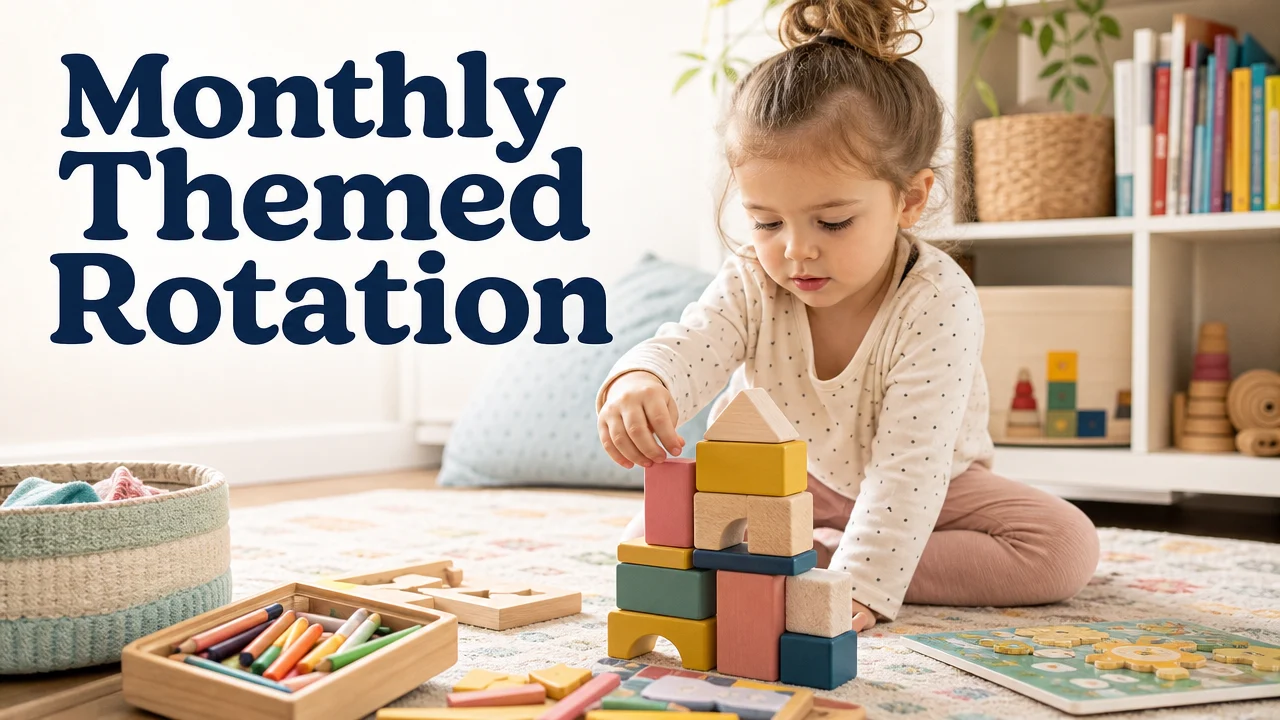
Set up three play stations: Display, Explore, and Restock. Display holds the month’s chosen books, blocks, and puzzles at child height for immediate access. Keep Display minimal—three books, one puzzle, and one set of blocks, for instance—to encourage focused play and easy cleanup at the end of the day.
Explore is a small bin or tray for current-in-use items that children bring away from the shelf. Its purpose is to contain active play without scattering pieces across the house. Teach children the habit of returning items from Explore back to Display at a consistent daily cue, like after snack or before bedtime.
Restock is a storage box for the remaining items tied to the theme that rotate into Display across the month. Use clear bins or labeled lids so caregivers can quickly see what’s available. At the end of each month, Restock becomes the pack-up bin when you prepare next month’s theme; this tidy flow prevents accumulation and keeps the shelf looking intentional.
Practical steps to implement and maintain the rotation
Start with a 30-minute audit: remove duplicates, inspect for broken pieces, and sort books, blocks, and puzzles into rough theme piles. Don’t aim for perfection—focus on creating five functional theme kits you can manage. Take photos of each completed theme kit for quick reference when restocking or shopping.
Create a simple calendar reminder for mid-month and month-end checks on your phone or family calendar. Mid-month check is for swapping the surprise item or replenishing supplies; month-end check is for washing, mending, and packing items away. These short, scheduled tasks prevent the system from slipping into chaos.
Invite your child into the rhythm gradually: announce the theme at the start of the month and use a small visual cue, like a themed card on the shelf. Offer a short guided play session the first two days to model how items can be used. Over time, kids will learn the pattern and feel ownership, which reduces resistance when it’s time to rotate.
Troubleshooting common bumps and keeping it sustainable
If a child fixates on an item outside the current theme, allow limited exceptions rather than forcing a strict purge—place the item in Explore for a set time and then encourage return. This respects the child’s interests while keeping the overall system intact. Use the surprise slot to formally include out-of-theme favorites occasionally, preventing power struggles.
When toys start accumulating because of hand-me-downs or gifts, practice a quick “one-in, one-out” rule tied to themes: new items join a theme only if you retire or donate a similar one. This rule maintains the compactness of each monthly kit and teaches gentle decision-making about belongings.
To keep the system sustainable across caregivers and routines, leave a one-page shelf script by the play area that explains the Display/Explore/Restock flow and the current theme items. A short script reduces friction during childcare handoffs and helps partners, grandparents, or babysitters follow the same rotation with minimal explanation.
Hashtags
Related Articles
- More play learning articles
- Two-Minute Setups, Five-Minute Invitations: Practical Prompts to
- Low-mess sensory play ideas for families with small spaces: Practic
- Micro-Sensory Stations: Low-Mess Play Setups for Tiny Living
- Compact Sensory Play Toolkit for Tiny Homes: Low‑Mess Ideas You