
Compact Sensory Play Toolkit for Tiny Homes: Low‑Mess Ideas You
Practical, low-mess sensory play strategies for families in tiny homes or rentals: a compact toolkit, three portable activities, quick cleanup scripts, and rotation tips you can store in a single drawer.
Quick Answer
Practical, low-mess sensory play strategies for families in tiny homes or rentals: a compact toolkit, three portable activities, quick cleanup scripts, and rotation tips you can store in a single drawer.
- Why a compact sensory toolkit works in small homes
- Building the drawer: what to keep and why
- Three portable low-mess sensory activities
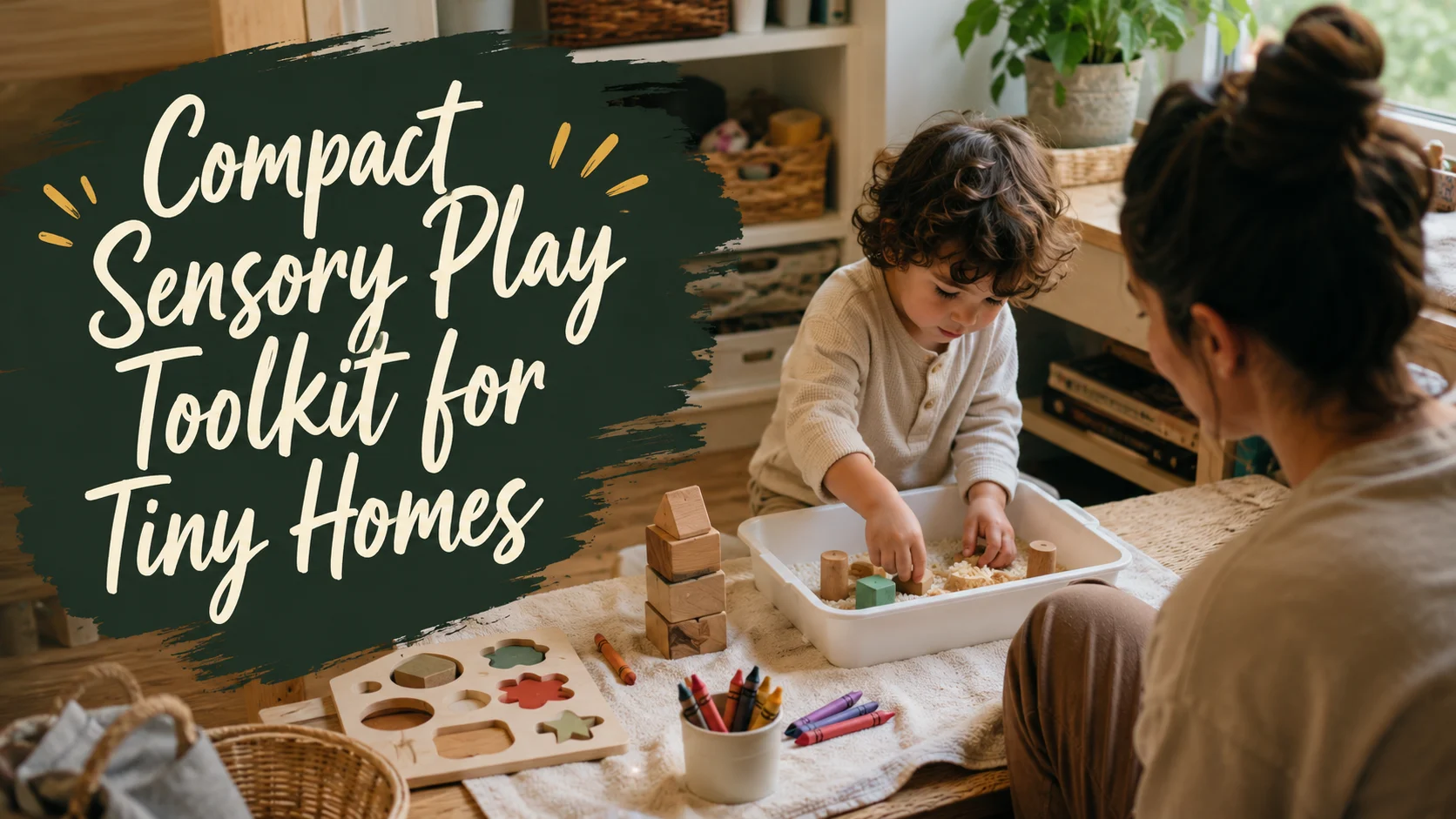
Why a compact sensory toolkit works in small homes
Tiny homes and apartments benefit from play solutions you can set up and put away in minutes, which reduces clutter and landlord stress while still supporting sensory exploration.
A drawer-sized toolkit focuses on items that are dual-purpose, durable, and easy to clean so parents can offer varied textures and challenges without dedicating a whole room to play.
Designing for portability also removes the decision friction: when everything fits in one place parents are more likely to offer sensory experiences several times a week.
This approach respects space limits and household routines by prioritizing activities that confine materials to a tray, mat, or small bin, making cleanup predictable and quick.
Building the drawer: what to keep and why
Choose one shallow plastic bin or drawer organizer to hold small sensory items: scoops, measuring cups, a silicone mat, and three interchangeable material bags keep the kit compact and accessible.
Opt for washable, nonporous items like silicone muffin cups, wooden spoons, and metal tongs; these stand up to repeated use, rinse easily in the sink, and don’t absorb stains or smells.
Select three base materials that store dry and change texture: dried pasta, colored rice (in airtight jars), and pom-poms; rotate these to keep novelty without new purchases.
Add washable liners—silicone placemats or a shower curtain cut-to-size—that define a messy zone and protect floors, enabling sensory play on a coffee table, kid table, or lap without worry.
Three portable low-mess sensory activities
Mini scoop station: Use a shallow bin with a thin layer of dried pasta or rice, add small cups, tongs, and a muffin tin for sorting; place the mat underneath to catch stray grains and limit spread.
Texture cards: Glue short swatches of fabric, foam, and bubble wrap onto cardstock to make a touch-and-compare deck; store the deck in the drawer and use alongside a magnifying loop or flashlight.
Water painting on silicone: Fill a squeeze bottle or small spray bottle with water and let children “paint” a silicone mat or chalkboard; the activity gives wet sensory feedback but dries without drips or spills.
Quick cleanup scripts and transition cues that work
Create a 3-step cleanup script: 1) count items back into the bin, 2) shake the mat into the trash or sink over a colander, 3) stack tools and close the drawer; rehearse the script with simple phrases and a timer.
Use short auditory cues like a two-note chime or a 2-minute sand timer to signal cleanup time; consistent cues help toddlers switch from play to tidy-up without long negotiations.
Teach ownership by attaching one small task per child—one person counts spoons, another flattens the mat—and praise efficiency over perfection to keep cleanup positive and fast.
Keep cleaning tools at hand: a handheld vacuum for quick rice pickups, a small dustpan, and a stash of disinfectant wipes stored with the kit speed recovery and reduce resistance to putting things away.
Storing and rotating materials to keep play fresh
Use three clear jars in the drawer for dry bases and label them; swapping one jar weekly introduces novelty without buying new supplies and keeps storage tidy and visible.
Rotate tools seasonally or by skill focus—spoons and scoops for fine-motor weeks, tongs and clothespins for pincer strength, and mirrors or flashlights for sensory-motor investigations.
Limit new acquisitions: when introducing a new item, remove one existing piece to keep the drawer manageable and prevent accumulation that defeats the compact concept.
Record a short rotation note on a sticky inside the drawer to remind caregivers which material is active and which two are resting, so transitions stay simple across caregivers.
Adapting the kit as children grow
For infants, convert the kit into supervised tummy-time textures by offering one high-contrast fabric square and the silicone mat; keep pieces large and safe for mouthing and always supervise.
For toddlers, increase complexity with simple challenges like timed sorting races, pattern copying with pom-poms, or counting games using the muffin tin to support early math skills.
Preschoolers benefit from open-ended prompts: ask them to build a small scene on the mat or use the tools to invent a new sorting rule, which develops planning and language without extra materials.
As skills progress, retire the easiest items and replace them with slightly harder tools—wax crayons for drawing on silicone or chopsticks for transfer work—to keep the kit developmentally appropriate.
Hashtags
Related Articles
- More play learning articles
- Two-Minute Setups, Five-Minute Invitations: Practical Prompts to
- Low-mess sensory play ideas for families with small spaces: Practic
- Monthly Themed Rotation: A Calm, Predictable System for Books, Bloc
- Micro-Sensory Stations: Low-Mess Play Setups for Tiny Living