
Micro-Sensory Stations: Low-Mess Play Setups for Tiny Living
Practical low-mess sensory play ideas you can set up in small homes: compact stations, containment hacks, simple materials, and clean-up routines that fit real family days.
Quick Answer
Practical low-mess sensory play ideas you can set up in small homes: compact stations, containment hacks, simple materials, and clean-up routines that fit real family days.
- Why low-mess sensory play matters in small spaces
- Compact station templates you can build in minutes
- Containment and cleanup hacks that actually work
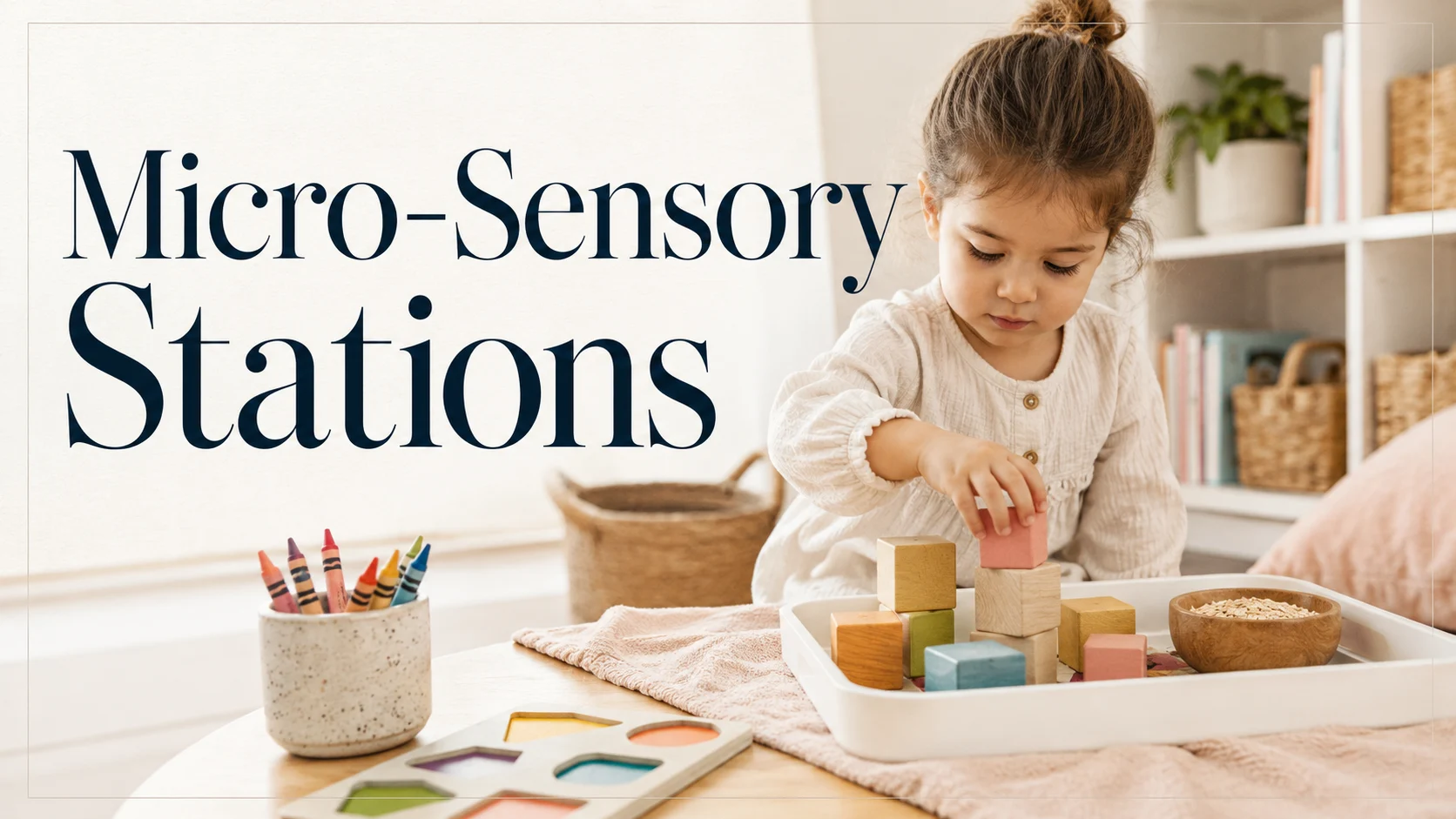
Why low-mess sensory play matters in small spaces
Sensory play supports motor skills, language, and self-regulation, but families in small homes need solutions that don’t take over the living room or become daily cleanup drama. A realistic approach balances developmental benefit with the physical limits of your space and time, so play doesn’t compete with daily life.
Keeping sensory activities low-mess helps you offer frequent, short sessions that are actually sustainable rather than rare ‘big’ setups that demand too much time or storage. When activities are quick to set up and tidy, you can do them more often — which is what supports steady learning for young children.
Designing for low mess also reduces friction for caregivers and partners; if cleanup is simple and predictable, everyone can join and handoffs between caregivers are easier. That predictability matters on busy days and makes sensory play a normal part of the weekly routine rather than a special event.
Compact station templates you can build in minutes
Window-sill station: use a shallow tray, a thin layer of chickpeas or dry pasta, a couple of scoops, and a small cup for pouring; it fits on a short shelf or table and the tray contains loose pieces for easy sweeping. Rotate tactile materials weekly and keep the tray in a low cabinet when not in use to save space.
Folding-lap tray: a small folding TV tray with raised edges becomes a mobile play surface for kinetic sand, water beads in a sealed bag, or sticker collage work. Store it behind a door or under a bed and pull it out when needed; its size keeps the activity self-contained on a lap so mess stays off floors.
Under-bed bin station: repurpose a flat, lidded under-bed bin as a sensorimotor drawer — fill it with a layered bin of beans, scarves, and textured balls so a child can pull the drawer out and play on carpet. Because the lid closes, you get a quick storage solution and a defined footprint that keeps the activity from spreading across the room.
Containment and cleanup hacks that actually work
Use trays, placemats, and silicone liners as primary containment: choose a tray at least an inch larger than the activity and a textured silicone placemat beneath it to catch stray bits. These inexpensive layers limit where things scatter and make wiping straightforward after a short play session.
Quick-sweep kit: store a small broom, a hand dustpan, a microfiber cloth, and a resealable bag together near stations for five-minute cleanups. Teach older children simple steps — scoop, seal, wipe — and keep the kit visible so cleanup becomes part of the play sequence, not an extra chore for caregivers.
Contain loose materials in thin, resealable pouches or small jars and label them with pictures if helpful; when materials are dry and bagged, they slide into shelves or drawers and don’t take much space. For wet or messy sensory mediums, pre-line trays with washable fabric or use single-use compostable liners for truly minimal washing.
Smart, low-cost materials and how to rotate them
Start with dry, affordable items: rice, pasta, cotton balls, pom-poms, and paper confetti in small amounts work well and are easy to bag. Keep quantities to a cup or two per activity so spills are limited and storage containers stay small; rotate through materials to keep interest high without accumulating clutter.
Reusable sensory options such as cloth scarves, sponges, and textured balls take up little space and wash easily. Store them together in a mesh bag that breathes after washing; designate one small basket for washable items and another for single-use or fragile materials to streamline laundry and replacement decisions.
Rotation schedule: plan three micro-stations and cycle one per day for a three-day rotation so new textures return predictably without requiring many items. Use a simple sticker chart or a dry-erase square on the station to mark the current material so caregivers know what’s in play and what needs laundering or restocking.
Routines and communication that keep sensory play sustainable
Embed sensory time in existing family rhythms: offer a ten- to twenty-minute station after breakfast, during quiet afternoons, or as a calm transition after active play. Short, repeatable windows reduce setup pressure and help children know what to expect, increasing cooperation and lowering stress around cleanup.
Set clear roles with partners or caregivers: one person handles setup, another manages clean-up, or you alternate days. Use a simple checklist on a phone or paper — set up, play, quick sweep, bag and put away — so handoffs are smooth and everyone knows when the activity is complete.
Adjust expectations: in a small home, some spills will happen; the goal is consistent, manageable play, not perfection. Keep a small stain remover pen and a washable cover for furniture nearby so unavoidable spills are resolved fast and the family stays confident offering sensory experiences regularly.
Hashtags
Related Articles
- More play learning articles
- Two-Minute Setups, Five-Minute Invitations: Practical Prompts to
- Low-mess sensory play ideas for families with small spaces: Practic
- Monthly Themed Rotation: A Calm, Predictable System for Books, Bloc
- Compact Sensory Play Toolkit for Tiny Homes: Low‑Mess Ideas You