
A Three-Week Rotation System to Keep Play Shelves Calm, Fresh
A simple three-week rotation system for books, blocks, and puzzles that reduces clutter, boosts independent play, and makes restocking quick. Practical steps for sorting, staging, labeling, and troubleshooting for busy households.
Quick Answer
A simple three-week rotation system for books, blocks, and puzzles that reduces clutter, boosts independent play, and makes restocking quick. Practical steps for sorting, staging, labeling, and troubleshooting for busy households.
- Why a predictable rotation beats random clutter
- How to choose what stays, what sleeps, and what retires
- A practical three-week rotation schedule
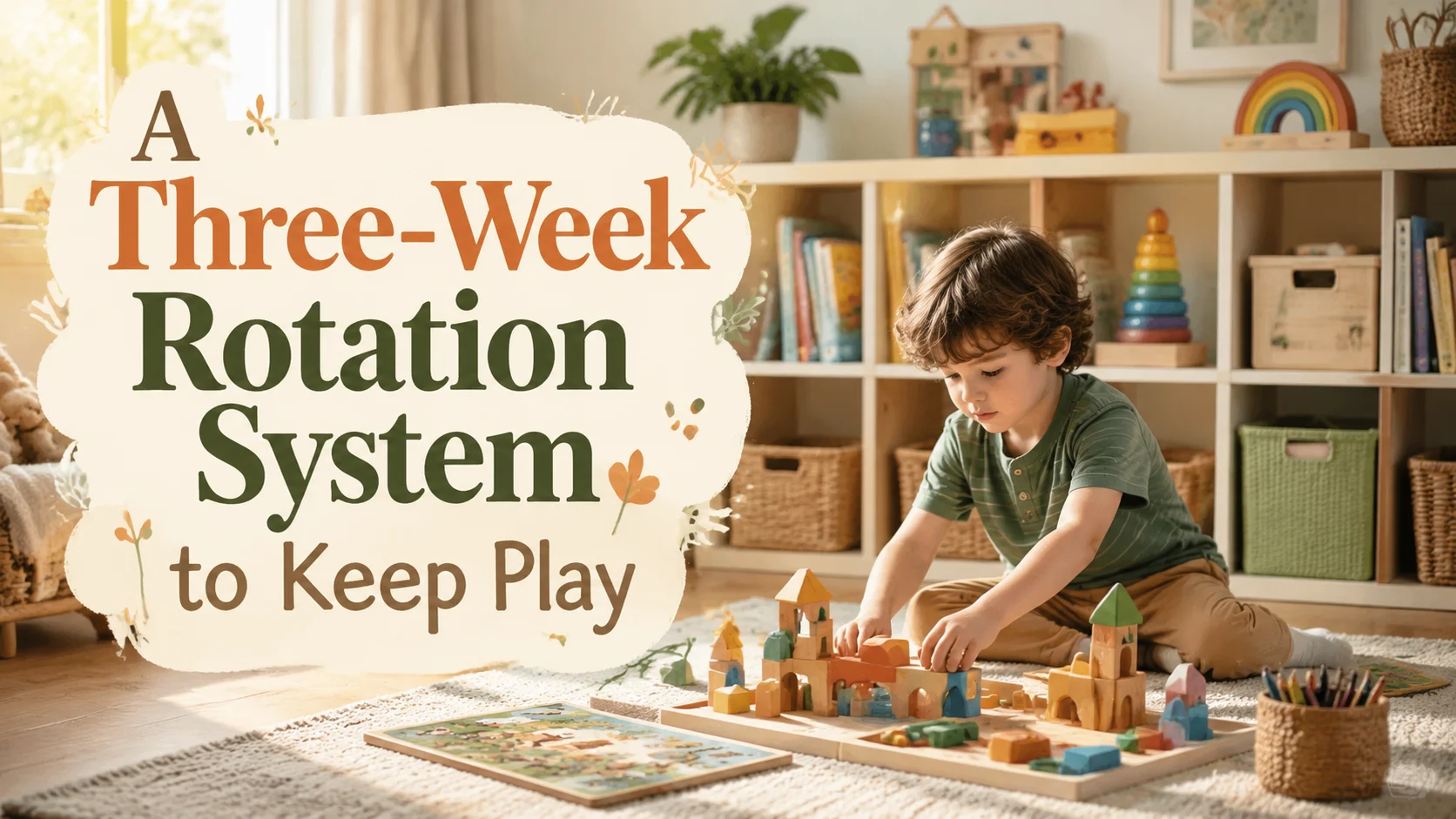
Why a predictable rotation beats random clutter
Children get overwhelmed by too many visible options; a predictable rotation reduces decision fatigue and keeps attention on a few meaningful items without removing novelty.
Rotation supports mastery: offering the same puzzle or block set for a focused period helps kids practice skills and finish projects before the item cycles away.
A predictable rhythm also makes maintenance easier for caregivers, because you know when to tidy, wash, or repair pieces instead of responding to daily clutter surprises.
How to choose what stays, what sleeps, and what retires
Start with an honest 20–30 minute sweep: pull everything from the shelf, sort into categories, and set aside duplicates or broken pieces for repair or donation.
Keep three active-station groups: one for books, one for open-ended materials like blocks, and one for focused toys such as puzzles and shape-sorters to preserve varied play types.
Reserve a small box of long-term favorites that never fully leave rotation but get refreshed only every few months; these anchor familiarity while you cycle other items.
A practical three-week rotation schedule
Week 1: Offer a 'focus set'—one puzzle, one block set, and three books visible on the shelf; keep a small sensory or art drawer accessible to switch interest without expanding display.
Week 2: Swap in a 'construction set'—change the block type and one book, rotate in a new puzzle or open-ended manipulative; store the previous week's items in labeled bins for easy retrieval.
Week 3: Introduce a 'story and small-world' week—arrange books with a small-world tray and a few complementary loose parts; at the end of week three, rotate everything using the same swap routine.
Staging, labeling, and quick storage tricks
Use clear, shallow bins or low baskets so children can see and reach materials; label each bin with a picture and a short phrase that matches how your child talks about the item.
Keep a 'return basket' on a lower shelf for end-of-play tidying; make return a short game with a two-minute timer to build consistent cleanup habits without nagging.
When you pack rotated items, tuck small parts into zipper bags and label them with the rotation week name; this prevents missing pieces and speeds up the next swap.
How to introduce rotation so kids cooperate
Explain the system in one short, positive sentence: say, 'We keep three kinds of toys on the shelf so you can play longer with each one' and show the calendar marker where swaps happen.
Invite your child to pick one item to put in the 'special box' for the next rotation; giving a small choice increases buy-in while you maintain overall limits.
Use a visual cue like a colored dot on the week the shelf changes, and make the first few swaps into a mini-ritual so your child learns the cadence instead of seeing it as loss.
Common snags and easy fixes to keep the system working
If a child resists a swap, offer a short 'replay' period: let them reframe a finished activity by taking one photograph of their creation before packing it away.
When parts go missing, keep a small repair kit with tape, extra pegs, and a soft marker to note gaps; set a monthly check-in to mend or permanently retire damaged pieces.
If rotation feels like extra work, batch your swaps: swap all shelves in one 15-minute session on the same weekday and keep a simple checklist so it’s quick and repeatable.
Hashtags
Related Articles
- More play learning articles
- Two-Minute Setups, Five-Minute Invitations: Practical Prompts to
- Low-mess sensory play ideas for families with small spaces: Practic
- Monthly Themed Rotation: A Calm, Predictable System for Books, Bloc
- Micro-Sensory Stations: Low-Mess Play Setups for Tiny Living