
Low‑Mess Sensory Play for Small Spaces: Practical Setups and Activi
Simple, low-mess sensory play setups for apartments and small homes that fit small tables, the kitchen floor, or a balcony. Practical materials, quick activities, and cleanup tricks to make sensory time doable every day.
Quick Answer
Simple, low-mess sensory play setups for apartments and small homes that fit small tables, the kitchen floor, or a balcony. Practical materials, quick activities, and cleanup tricks to make sensory time doable every day.
- Why low‑mess sensory play matters in small homes
- Quick setup: zones, surfaces, and basic gear
- Container choices that save space and reduce mess
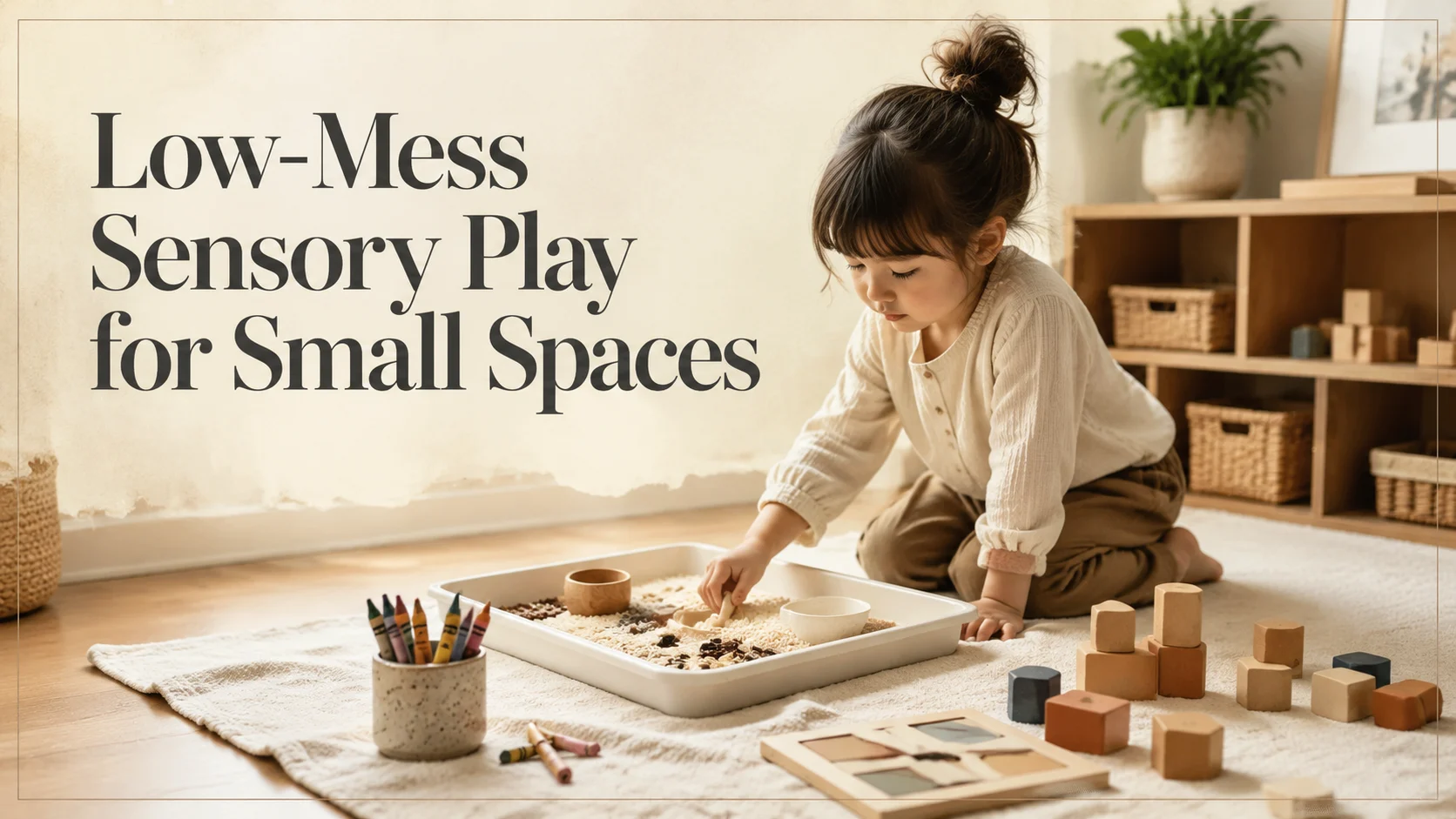
Why low‑mess sensory play matters in small homes
Sensory play builds fine motor skills, language, and curiosity without needing lots of space, which makes it ideal for apartments and shared rooms where floor area is limited.
Choosing low‑mess options reduces the friction around doing regular sessions so caregivers are more likely to offer sensory exploration several times a week instead of waiting for a big open space.
When you plan low‑mess activities you can keep materials in compact containers, set clear boundaries for play, and protect furniture and textiles while still offering rich tactile experiences.
Quick setup: zones, surfaces, and basic gear
Designate a reusable play zone that is easy to clear: a small folding table, a kitchen island, or a 3x4 foot rug that defines where sensory play happens and keeps materials contained.
Use an inexpensive waterproof mat, a vinyl placemat, or a shower curtain under the play area to catch spills and simplify wiping; choose something that folds or rolls for compact storage when not in use.
Stock a compact kit: three shallow lidded containers, two spoons and a small scoop, a handful of reusable sensory fillers, and baby wipes. Keep this kit in a bin under a couch or on a shelf for quick access.
Container choices that save space and reduce mess
Shallow, wide containers keep fillers visible and reduce pitching; pick plastic cafeteria trays, baking sheets with 1-inch sides, or silicone muffin pans that nest for storage and are easy to wipe.
Clear lidded shoeboxes or food-storage containers are perfect for prefilled activities; assemble a few themed kits and stack them vertically to make rotation fast and tidy in small closets.
Repurpose small household items as tools: ice-cube trays become sorting stations, clothespins add pincer practice, and a reusable silicone cupcake liner works as a tiny scoop that fits in small hands.
Five practical low‑mess sensory activities you can start tonight
Dry pasta and scooping station: fill a shallow tray with uncooked pasta, add two scoops and a funnel. Encourage pouring into cups to practice hand control; keep a small bin nearby for quick returns.
Water writing on a tray: offer a damp paintbrush and a slate or gray baking sheet. Children make marks with water that vanish as they dry, giving repetition and sensory feedback with almost no cleanup.
Frozen texture blocks: freeze small toys or herbs in ice-cube trays with water and food coloring. Give one ice cube per child on a tray, a small spoon, and a towel for drips; melts create sensory change without sticky residue.
Velcro and fabric match: a small board or placemat with fabric swatches and velcro dots builds tactile discrimination. Use leftover fabric scraps and a cardboard backing to keep the activity contained and washable.
Scented sensory cards: a set of laminated cards dabbed with different food-safe extracts (vanilla, lemon, cinnamon) offers olfactory play. Store in a small envelope; smell-based play adds richness without loose materials.
Cleanup routines that actually get used
Use a two-minute tidy timer: set a phone alarm and make cleanup a game—everyone has a job like returning tools, folding the mat, and snapping the lid on containers. Short, timed tasks make cleanup predictable.
Keep a small caddy of cleaning supplies near the play zone: microfiber cloths, a spray bottle of mild cleaner, hand towels, and a designated trash bag. Having supplies within reach removes hesitation after play.
Label storage with photos or simple words so older toddlers can learn to put materials away. Clear visual systems reduce the cognitive load for caregivers and speed the reset for the next session.
Adapting activities by age, space, and attention span
For babies, focus on low items like a sealed sensory bottle or fabric squares; keep sessions under ten minutes on a high chair tray to protect floors and maintain engagement without mess.
Toddlers benefit from slightly longer sessions and more tools—offer scoops, tongs, and small containers. Rotate one or two activities per day so you don’t need a large spread and can reuse the same footprint.
Preschoolers enjoy simple challenges layered onto sensory bases, such as matching colors, timed transfers, or storytelling prompts. These additions keep the same low‑mess materials engaging for older children.
Hashtags
Related Articles
- More play learning articles
- Two-Minute Setups, Five-Minute Invitations: Practical Prompts to
- Low-mess sensory play ideas for families with small spaces: Practic
- Monthly Themed Rotation: A Calm, Predictable System for Books, Bloc
- Micro-Sensory Stations: Low-Mess Play Setups for Tiny Living