
Pack, Label, and Stage Kindergarten Gear: A Calm System for Every
Practical steps to label, pack, and stage kindergarten backpacks, lunchboxes, and clothes so mornings run smoothly and last-minute scrambles fade into predictable routines.
Quick Answer
Practical steps to label, pack, and stage kindergarten backpacks, lunchboxes, and clothes so mornings run smoothly and last-minute scrambles fade into predictable routines.
- Start with a Simple Audit and One-Place Rules
- Labeling That Works: Durable, Fast, and Kid-Readable
- Pack the Night Before with a Simple Checklist
Start with a Simple Audit and One-Place Rules
Spend 20–30 minutes before school starts to inventory clothes, backpacks, lunch gear, and paperwork so you know what you actually have and what needs replacing. Lay items out on the floor and sort into categories: daily, spare, season-specific, and school-only. This prevents buying duplicates and makes staging later much easier.
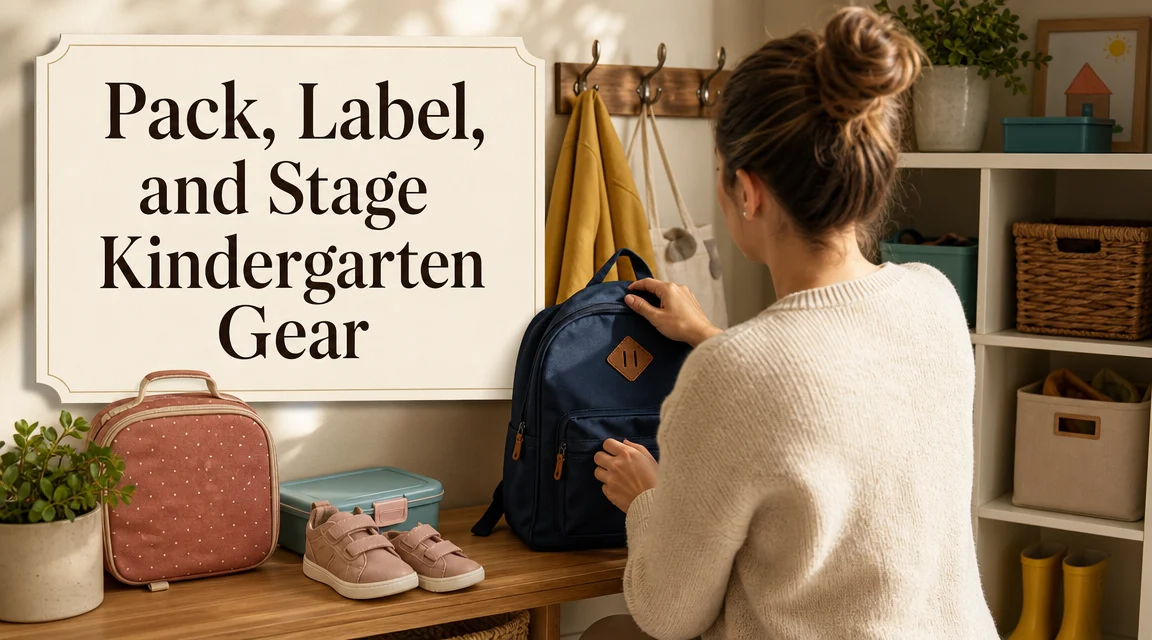
Decide on one dedicated drop zone for everything that needs to go to school — a hook, shelf, or basket near the door — and make it a family rule that anything school-related must land there. One-place rules reduce search time in the morning and create a single visual check for parents and kids. Pick the spot based on your home layout; it should be visible from where you gather morning energy.
Label that drop zone with a short sign and a simple visual cue for your child, like a sticker or small chalkboard drawing, so they know their responsibility. Make the cue part of the routine: dump backpack and water bottle there, hang jacket, place library book in the ‘to return’ bin. A child-facing signal makes ownership easier and reduces back-and-forth.
Labeling That Works: Durable, Fast, and Kid-Readable
Choose a labeling approach that fits your kid and gear: iron-on name labels for clothing, waterproof sticker labels for lunch containers, and a permanent marker or bag tag for backpacks. Prioritize durability for items washed or handled often; low-friction labels or laminated tags will last the school year and reduce relabeling chores.
Make name labels readable for busy teachers and aides: full name or last name initial plus room number if known, and a small icon your child recognizes if multiple kids share names. If privacy is a concern at your school, use initials and a matching color dot to help teachers return items without spelling a full name loudly.
Create a quick relabeling kit — a stack of replacement stickers, a fine-point permanent marker, and iron-on patches — and store it with your school supplies so you can fix lost or worn labels in minutes. Keep a spare set of labels in the car or a purse during the first month when items are most likely to go missing.
Pack the Night Before with a Simple Checklist
Adopt a 3-item pre-bed packing habit: check backpack, pack lunch/snack, and set out clothes. Use a laminated checklist on the fridge with three boxes labeled the same way so kids can help tick things off. The simplicity reduces decision fatigue and creates a predictable habit that kicks in automatically.
Prepare lunches and snacks the night before and place them in the fridge ready to grab, or use insulated lunch kits that can sit packed overnight. For younger children, include an extra snack and a simple reusable water bottle clearly labeled; for older kindergartners, balance independence with a small note inside the lunchbox as a positive cue if needed.
Lay out tomorrow's outfit, including socks and shoes, and place them near the backpack drop zone so dressing and packing happen in the same spot. If your child chooses clothes, offer two teacher-approved options and let them pick; that keeps autonomy while guaranteeing readiness and saves morning power struggles.
Staging Supplies at Home and in the Car for Real-World Mornings
Create three staging stations: home drop zone for daily items, a home 'return' bin for library/books/forms, and a car staging basket for days you commute by car. The car basket should include spare mask or tissues, a small first-aid pack, and a folded spare outfit for unpredictable spills — compact and labeled so you can restock weekly.
Rotate seasonal gear monthly so jackets, hats, or sun shirts are visible and accessible at the door during their months of use. Store off-season items in labeled clear bins above or below the staging area with a simple label like 'Summer Hats' so swapping is quick and checks are easy for caregivers or grandparents.
Keep a clipboard or folder in the staging area labeled 'School Today' to collect forms, permission slips, or payment envelopes; make a habit of scanning or photographing important forms the evening they come home so you have a digital backup and avoid last-minute hunting for lost notes.
Communication, Backups, and Maintaining the System
Set a weekly 10-minute family tidy time to inspect labels, backpacks, and the staging area so problems are small and fixed before they become stressful. Use this time to restock snacks, swap wet-weather gear, and check for missing library books or school notices so nothing surprises you on Monday morning.
Establish two backups: a spare set of clothes at school in a labeled zipper bag and an emergency contact card inside the backpack that includes your name, phone, and school pickup plan. These low-effort backups save time and guilt when small incidents happen, and teachers appreciate clearly labeled extras they can access without calling.
Teach one simple script to your child for morning handoffs — for example, 'I put my lunch in the bin and my library book in the return box' — and practice it during the first weeks so they build muscle memory. Consistent small rituals and periodic checks keep the system functional and lower stress for the whole family as the kindergarten year unfolds.
Hashtags
Related Articles
- More preschool kindergarten articles
- Label, Pack, Stage: A Kindergarten Launch Routine That Stops Last-M
- First-week daycare drop-off routines that help mornings feel predic
- The Quiet Transition: A Practical 4-Station After‑School Decompress
- First‑Week Daycare Drop‑Off: A Predictable Morning Routine That