
The Two-Bin Household System: Cut School, Daycare, and Activity
A practical two-bin system simplifies backpacks, sports gear, and permission slips so busy families spend less time searching and more time moving. Set up, daily habits, and a weekly reset keep clutter from piling up.
Quick Answer
A practical two-bin system simplifies backpacks, sports gear, and permission slips so busy families spend less time searching and more time moving. Set up, daily habits, and a weekly reset keep clutter from piling up.
- Why two bins beat the pileup
- Choosing bins and a strategic location
- Daily habits that make the system work
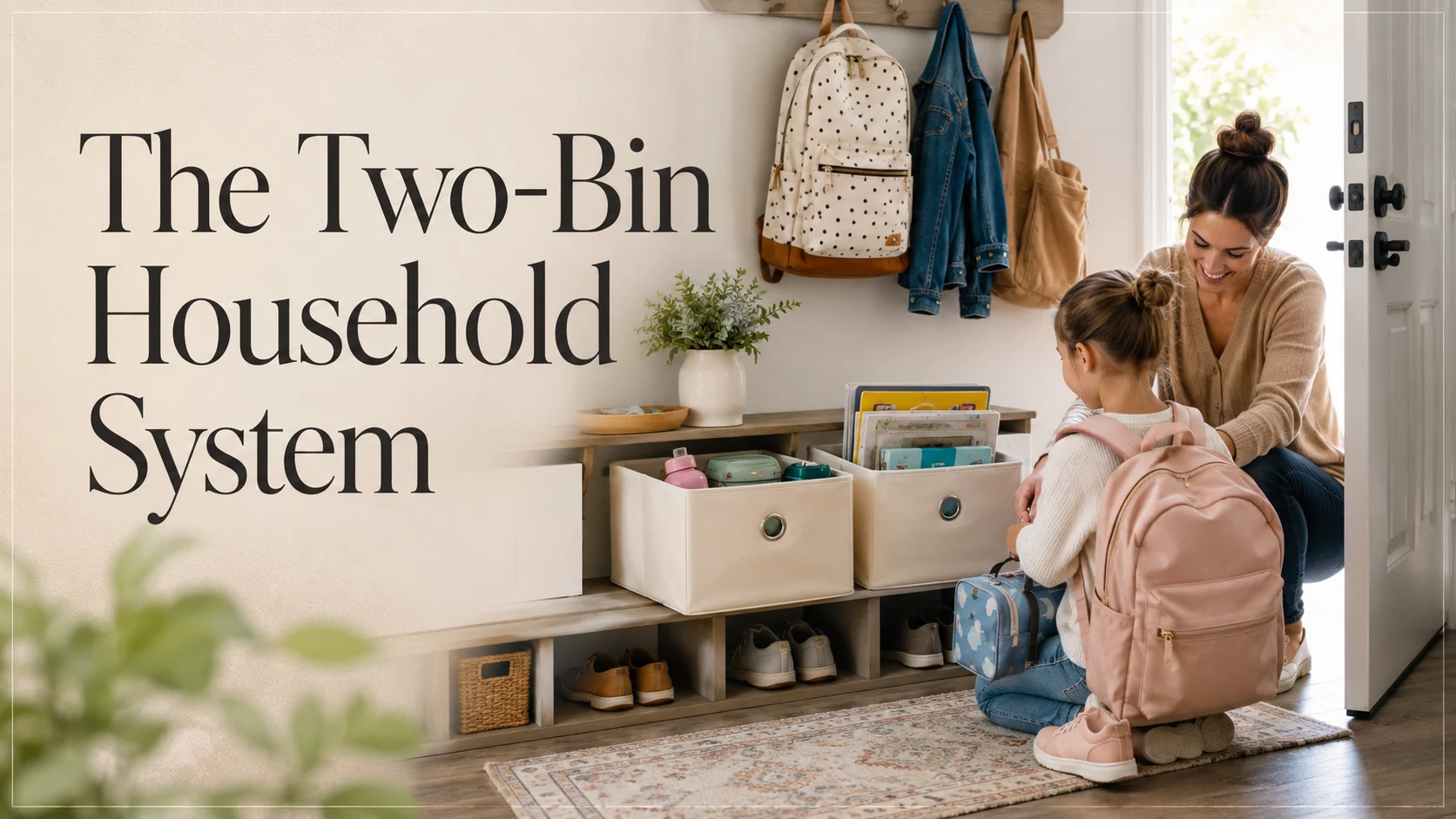
Why two bins beat the pileup
Households with multiple kids often end up with stacked backpacks, muddy cleats, and sheeted permission slips that become visual noise and daily friction for caregivers. A two-bin system reduces decision fatigue by creating two dedicated, visible zones: Incoming and Outgoing. That clear division converts a chaotic pile into an intentional flow, which saves minutes each morning and evening without complicated rules.
Most family storage advice asks you to micro-manage dozens of categories; the two-bin approach minimizes cognitive load by focusing on status rather than type. Incoming holds items that need attention—forms to sign, wet clothes to dry, notes to read—while Outgoing holds ready-to-go items for the next day like backpacks, shoes, signed permission slips, and packed snacks. This status-focused logic aligns with how families actually operate under time pressure.
A two-bin system is adaptable to different homes and ages: use large open bins near the door for older kids, or shallow bins at a lower height for preschoolers who want to participate. The goal is maintainability—bins should be easy to access and clear enough that any family member can follow the flow without repeated reminders. That simplicity makes it more likely the system will still be in use weeks and months from now.
Choosing bins and a strategic location
Select two bins that are durable, easy to clean, and visually distinct so family members can learn the system quickly; baskets, plastic crates, or canvas bins work well as long as they are sturdy. Size the bins for your typical items: a deep bin for winter boots and sunhats, or a long, shallow bin for sports balls and water bottles. Label them clearly with text or symbols so younger kids can self-manage without guessing.
Place the bins in a high-traffic transition zone where items naturally move through the home—near the back or garage door, beside the mudroom bench, or at the bottom of the stairs if the bedrooms are upstairs. The location should minimize walking with heavy items while also being in plain sight so outgoing items aren’t hidden in a closet. Aim for a single consistent spot rather than scattering mini bins around the house.
Consider small add-ons: a clipboard or a slim wall pocket near the Incoming bin for papers that need signing, a hook rail for repeat outerwear, and a shallow tray for keys and masks. These extras keep small but crucial items from slipping into the wrong bin. Keep the setup adjustable: if a piece of gear consistently bypasses the system, change the bin size or add a micro-solution rather than abandoning the approach.
Daily habits that make the system work
Morning and evening routines anchor the two-bin flow; the core habit is a brief five-minute check during those transition times. In the evening, each child gathers their Outgoing items and places them in the designated bin after school or activities, and caregivers perform a quick visual check—snack packed, permission slip signed, shoes paired—before the night concludes. This small investment avoids last-minute scrambles the next morning.
Mornings should include a two-step glance: check the Outgoing bin for readiness and the Incoming bin for any items that need immediate attention. If the Outgoing bin is missing an item, make it a one-action fix—grab from a staging shelf or assign a 60-second task to the child to remedy it. Keeping the checks brief and predictable helps even distracted early-morning family members to participate consistently.
Teach kids to use the system by role-modeling and small, explicit tasks: show them where to put a signed form, how to dry a wet mitt before placing it, and how to re-pack a snack container. Use a short checklist posted above the bins for early readers or a picture sequence for younger children. Repeat the routine for two weeks to create a habit loop—consistency beats perfect organization when daily life is busy.
Weekly reset: maintenance that prevents overwhelm
Set one weekly 15- to 30-minute reset—Sunday evening often works for school schedules—where the family reviews both bins and returns items to permanent storage or replaces consumables. Move washed uniforms and clean shoes back to their long-term spots, file or digitize important forms from the Incoming bin, and replenish aftercare snacks or batteries. A named weekly slot reduces mental load and keeps clutter from re-accumulating.
During the reset, discard or scan papers older than a set threshold and return miscellaneous items to owners with a short reminder to prevent repeated build-up. Use clear rules: permission slips older than a week go to a short-term file unless needed later; broken items are placed in a repair basket for immediate triage. The weekly rhythm prevents items from becoming invisible until they’re urgently missing.
Make the reset an active family ritual with minimal friction: assign one parent or a rotating child to lead the check, play a short playlist, and set a timer so the task stays bounded. When everyone participates, the system becomes communal rather than parental-only labor. Keep a small supply stash—zip bags, a marker, tape—near the bins to handle quick fixes during the reset.
Troubleshooting and scaling for activities and seasons
If particular activities generate more clutter, add a third micro-bin for sport-specific gear that needs frequent washing or inspection but avoid creating too many permanent stations. For example, use a removable laundry basket for muddy cleats that sits next to the Incoming bin during soccer season and store it out of sight otherwise. Seasonal toggles keep the two-bin core simple while accommodating spikes in gear volume.
When the system isn’t sticking, observe the friction points: is the bin too high for kids, is the location inconvenient during bad weather, or are items left in cars? Fix the smallest friction to improve compliance—lower the bin, add a weatherproof shelf, or keep a compact umbrella and flashlight by the bin for rainy-day transitions. Targeted adjustments are more effective than overhauling the whole system.
For blended families or households with alternating schedules, pair the bins with shared digital cues: a single shared calendar note or a photo of the Outgoing bin’s contents for the nighttime caregiver reduces miscommunications. Keep expectations explicit—agree on what constitutes Outgoing readiness—and revisit the rules at family check-ins. Practical systems survive when rules are simple and communicated clearly.
Hashtags
Related Articles
- More family routines articles
- A Sunday evening family reset that does not take over the whole
- A Family Calendar Everyone Actually Uses: A Practical Setup for
- Two Bins, Less Chaos: A Practical Household System to Stop School
- A Family Calendar Everyone Actually Follows: A Practical System