
Quick Play Prompts to Help Toddlers Begin Independent Play
Short, intentional play prompts set toddlers up to play on their own. This guide gives practical steps, example five-minute invitations, setup tips, and troubleshooting so caregivers can build independent play habit by small, repeatable wins.
Quick Answer
Short, intentional play prompts set toddlers up to play on their own. This guide gives practical steps, example five-minute invitations, setup tips, and troubleshooting so caregivers can build independent play habit by small, repeatable wins.
- Why five-minute invitations work
- How to set the space for quick invitations
- Ten practical five-minute play invitations
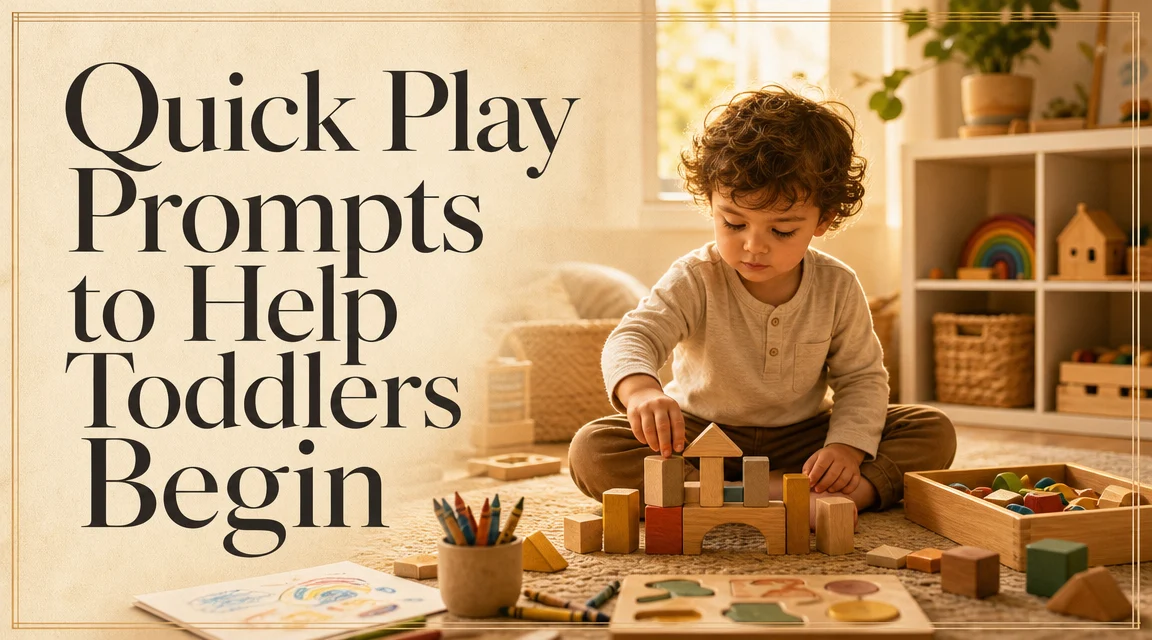
Why five-minute invitations work
Toddlers have limited attention spans and benefit from small, clear invitations that match their energy. A brief, well-timed prompt reduces resistance because it feels achievable, not overwhelming, and creates positive practice with independent play. Caregivers who use short invitations give kids repeated low-pressure chances to try being solo while still nearby and responsive.
Starting with five minutes builds a reliable cue that play can be short and still satisfying, which helps kids learn to initiate and stay engaged gradually. Each success increases confidence and helps children internalize the idea that play can be fun without constant adult input. Repetition matters more than length: daily tiny trials move the skill forward faster than infrequent long sessions.
Five-minute prompts also fit into real family rhythms—they are easy to add before a meal, after quiet time, or during a caregiving task. Because the commitment is small, caregivers are more likely to start the invitation consistently and follow through. Over weeks, those short moments stack into a routine that supports longer stretches of independent play without dramatic transitions or power struggles.
How to set the space for quick invitations
Choose a small, contained play area where a child can see you but still feel independent; a rug, low table, or corner of the living room works well. Keep that space stocked with rotated, age-appropriate materials that are easy to bring out and put away; limiting choices to two or three items reduces overwhelm and increases focus. Use a visible boundary like a small rug or basket so the child understands where the invitation takes place and the expectation for play.
Arrange materials so they invite action: open-ended toys, sensory bins, chunky puzzles, or a small stack of board books are good candidates for five-minute invitations. Avoid toys that require adult assembly or constant intervention; choose items the child can operate mostly on their own. Keep a simple timer or visual cue handy to mark the five-minute window and normalize the short, contained experiment in solo play.
Keep safety and cleanability in mind so you can step back with confidence: remove tiny pieces, choose washable items for sensory invitations, and ensure the area is free from hazards. Having a tidy, predictable setup makes it easier for caregivers to offer invitations multiple times per day without a big prep overhead. When cleanup is quick, caregivers are more likely to repeat the routine and the child learns tidy habits alongside independent play.
Ten practical five-minute play invitations
Stacked-cup sorting: Offer a set of nesting or stacking cups and a small basket; say, “Let’s see how many towers you can build in five minutes.” This activity is simple to start, requires minimal instruction, and encourages fine motor control and concentration. Rotate cup colors or add stickers occasionally to keep the invitation novel without changing the setup each time.
Treasure-pail exploration: Fill a shallow container with safe, varied items—soft blocks, fabric scraps, wooden spoons—and a small scooper. Invite your toddler to explore and move objects between containers for five minutes. Tactile variation and transferring objects support independent decision-making and can be left available for repeat invitations.
Story-picture play: Lay out three picture books or laminated cards with clear images and say, “Pick one and tell me what you see while I make tea nearby.” Toddlers practice narrative skills and focus while feeling the comfort of your presence. Prompt minimal involvement like flipping pages or pointing to characters to reduce adult-led storytelling and encourage solo engagement.
Sticker-scene quick play: Set a sheet of paper and a small pack of stickers and invite your child to create a picture in five minutes. Stickers are gratifying and low-mess; they let toddlers make visible choices and enjoy immediate results without adult help. Keep a shallow tray of stickers next to the play area so the activity can be repeated easily.
Busy-box fine-motor station: Provide a lidded container with large beads and a pipe-cleaner, or a velcro shapes board, and invite your toddler to see how many pieces they can add in five minutes. This concentrates on hand skills and persistence. Swap the content every few days to refresh interest while maintaining the same physical setup for predictability.
How to introduce invitations and set expectations
Use a consistent phrase and small ritual to introduce invitations so the toddler recognizes the cue—something like, “Five-minute play time: you, this corner, and me nearby.” Consistency in wording and location helps the child learn the routine and reduces negotiation. Pair the phrase with a visible timer or a short song so the start and end become predictable signals that the child can understand.
Position yourself nearby but not engaged in play: be in the same room doing a neutral task like reading, folding laundry, or preparing a snack. Your presence reassures the child without directing their actions and makes it easy to respond if they need help. If the child checks in, offer minimal phrases—“I see you’re building”—to acknowledge without taking over.
Celebrate independent effort, not perfect outcomes: comment on the child’s choices and concentration—“You kept going for four minutes, nice work”—to reinforce trying rather than producing a specific finished product. Gradually extend invitations by a minute or two when the child shows readiness, but prioritize predictability over pushing time limits. The goal is steady practice, not immediate duration gains.
Troubleshooting common hurdles
If a child immediately seeks constant adult involvement, shorten the initial invitation to one to two minutes and increase presence with gentle prompts before stepping back. Build tolerance in tiny increments so the toddler experiences success without frustration, and gradually lengthen the invitations as confidence grows. Patience and consistent repetition are more effective than long, infrequent pushes toward solo play.
When a child rejects the space or materials, try switching to a different modality—sensory, building, or narrative—rather than forcing the same setup. Sometimes novelty or a simple tweak like adding a new color or changing location restores interest. Keep two fallback invitations that you know reliably engage your child and rotate them to maintain momentum without turning play into a battleground.
If caregivers find it hard to stay hands-off, set a parallel task that keeps your attention occupied and reduces the temptation to intervene, such as folding towels or a short phone checklist. Use a timer on your phone to honor the five minutes and practice waiting; the more caregivers hold the boundary, the clearer the routine becomes for the child. Track small wins in a simple note so you can see progress and stay motivated to repeat the invitations daily.
Hashtags
Related Articles
- More play learning articles
- Two-Minute Setups, Five-Minute Invitations: Practical Prompts to
- Low-mess sensory play ideas for families with small spaces: Practic
- Monthly Themed Rotation: A Calm, Predictable System for Books, Bloc
- Micro-Sensory Stations: Low-Mess Play Setups for Tiny Living