
Shelf Calm: A Practical System to Rotate Books, Blocks, and Puzzles
A step-by-step rotation plan that reduces overwhelm and boosts engagement by cycling books, blocks, and puzzles in small, intentional sets. Easy setup, low-maintenance schedule, and tips to keep kids curious without new purchases.
Quick Answer
A step-by-step rotation plan that reduces overwhelm and boosts engagement by cycling books, blocks, and puzzles in small, intentional sets. Easy setup, low-maintenance schedule, and tips to keep kids curious without new purchases.
- Why a Rotation System Works and What Calm Looks Like
- Set Up Your Play Shelf for Easy Rotation
- A Simple Schedule That Fits Real Family Life
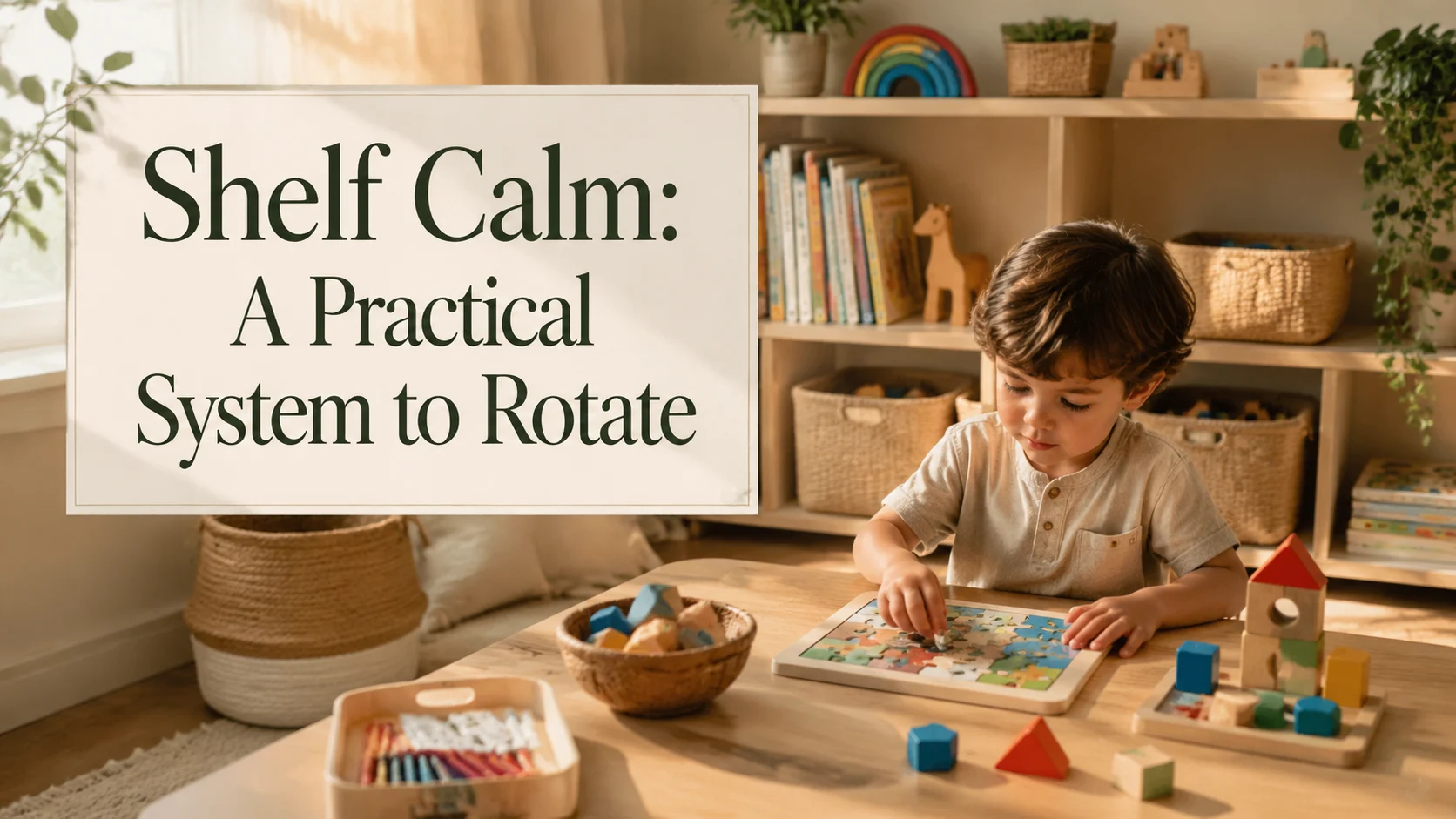
Why a Rotation System Works and What Calm Looks Like
A rotation system reduces visual clutter and decision fatigue by keeping only a few accessible items at once, which helps children focus on deep play for longer stretches. Removing excess choices prevents the usual pile-up where nothing gets finished and everything feels available but uninteresting. Aim for three to five active items per shelf or basket depending on your child's age and attention span; that range balances variety with manageability.
Calm play isn’t silence; it’s predictable availability, fewer fights over items, and more sustained engagement with each toy or book. You’ll notice longer stretches of construction, less repeated asking for different things, and easier transitions to cleanup when shelves aren’t overflowing. Use the rotation to set expectations: kids learn that favorites reappear on schedule, which reduces constant requests for all toys to be out at once.
A systemized rotation also stretches your existing collection’s value: toys and books feel new again when they come back after a break. This is especially useful for blocks and puzzles that benefit from revisit and practice. Label your rotation method as a family routine—children respond to consistent rhythms—and keep rules simple and positive so the rotation becomes part of daily life rather than a battle point.
Set Up Your Play Shelf for Easy Rotation
Start by curating into three practical categories: read-aloud books, open-ended blocks or construction sets, and problem-solving puzzles or manipulative kits. Place one category per accessible basket or shelf level so it is visually obvious where items belong and which category is currently active. Keep heavy or small-piece items out of reach for younger children, and make an ‘out-of-rotation’ bin for fragile or seasonal items to store safely.
Choose containers that make swapping fast: four shallow baskets or clear bins with labels, two low shelves with baskets, or a single shelf divided by vertical separators. Use low shelves for the current rotation and a higher shelf or closet space for stored items. Make sure each bin or shelf holds only the number of pieces that match your target three-to-five active-item range; overstuffed bins defeat the purpose by recreating clutter.
Photograph each curated set before storing it so you remember what goes together and can rotate by photo rather than rummaging. Tape a small photo inside the lid of each storage box or keep a rotation board on the wall with thumbnails and dates. This step saves decision time and prevents the slow creep of mixed-up parts spilling between sets.
A Simple Schedule That Fits Real Family Life
Pick a rotation rhythm that matches your child’s attention and your household tempo: weekly for toddlers needing frequent novelty, biweekly for preschoolers, or monthly for school-age kids who prefer deeper projects. Put the next swap on a visible family calendar so caregivers and older siblings can help execute rotations on schedule. Flexibility matters—if a child is deeply engaged, let them extend the set by a day and note it on the calendar so you don’t swap mid-investment.
Use natural anchors to trigger swaps instead of relying on willpower: switch on the first day of the month, every Monday morning, or right after laundry day when you already handle linens and toys. For families juggling daycare or work, coordinate rotations with caregivers so the same items aren’t missing when the child goes to another setting; a short photo and list in a shared notes app keeps everyone aligned. Track three months and adjust the frequency if you see boredom or overstimulation.
Keep two ‘evergreen’ slots for favorites that children return to regularly, and rotate the rest to keep novelty high without losing comfort. This hybrid approach respects attachment while still delivering the benefits of rotation. Periodically review engagement: if a once-favorite sits untouched, consider retiring it to storage or donating it, and replace it on the rotation board with a different item from the reserve.
Swap Smart: How to Rotate Without Drama
Make swaps predictable and participatory by involving your child as a helper; create a simple checklist they can follow for packing up and bringing out new items. Use a two-stage swap ritual: tidy current items together, then unwrap or reveal the new set with a brief naming or storytelling activity to spark curiosity. This ritual reduces resistance because it’s part clean-up and part shared excitement rather than abrupt loss of a favorite toy.
If sibling disputes arise, rotate by child-specific baskets or allow each child a personal item to keep accessible while rotating the shared collection. For families with age ranges, create mixed-age rotation days where items are chosen for cooperative play and individual days for age-appropriate sets. When handing off a rotated item to storage, tuck a short note describing the child’s last project so you can reintroduce the set with continuity the next time it appears.
Use small incentives tied to the routine—not bribes—to encourage cooperation, such as choosing the swap playlist or getting to place the rotation photo on the family board. Avoid framing rotation as punishment; instead, talk about it as a way to keep toys exciting and make space for new creations. If tears come, validate feelings quickly and offer a countdown plan for when the item will return so expectations stay clear and predictable.
Maintaining the System: Storage, Refresh, and Minimal Maintenance
Designate a single storage area for rotated items such as a closet shelf, under-bed box, or labeled tote in a hallway to keep the play area tidy and rotation effortless. Keep basic repair supplies—baggies for lost puzzle pieces, a small tape roll, and spare connectors—for quick fixes so toys can return to rotation fast. Once a month, do a quick inventory pass to remove broken pieces and re-bag loose parts to prevent future frustration during play.
Refresh the rotation every season or when developmental shifts happen, swapping in toys that encourage new skills like fine motor work, early math concepts, or imaginative scenarios. Rotate books to match interests and seasonal themes, pairing one story with a related manipulative or puzzle for cross-modal engagement. Keep a small wish-list of low-cost or secondhand items to replace retired pieces if you want occasional novelty without expanding the permanent collection.
Keep a short log—digital or paper—of what worked and what didn’t for each rotation cycle so future choices are guided by observed engagement rather than assumptions. Note whether children played solo, with siblings, or asked adults to join; this helps tune future sets to encourage independence or collaboration. With a low-effort system in place, you’ll spend less time rescuing overwhelmed playrooms and more time noticing real learning and joy at the shelf.
Hashtags
Related Articles
- More play learning articles
- Two-Minute Setups, Five-Minute Invitations: Practical Prompts to
- Low-mess sensory play ideas for families with small spaces: Practic
- Monthly Themed Rotation: A Calm, Predictable System for Books, Bloc
- Micro-Sensory Stations: Low-Mess Play Setups for Tiny Living