
The Three-Basket Rotation: Calm Play Shelves for Busy Toddlers
A practical system to rotate books, blocks, and puzzles into three ready baskets so play stays focused, toys stay fresh, and cleanup becomes predictable for busy families.
Quick Answer
A practical system to rotate books, blocks, and puzzles into three ready baskets so play stays focused, toys stay fresh, and cleanup becomes predictable for busy families.
- Why rotating matters: focus, safety, and fewer meltdowns
- Quick audit: what to keep, what to shelve, and what to donate
- The three-basket system: how to set it up and run it weekly
Why rotating matters: focus, safety, and fewer meltdowns
Keeping every toy accessible every day looks generous but often overwhelms toddlers and caregivers; rotating reduces visual clutter so a child can focus on one or two activities at a time and play more deeply without constant context switching.
Rotation also helps safety and maintenance: small pieces stay off low shelves when out of season, and toys that need repair or missing pieces can be pulled aside rather than becoming part of daily frustration; this lowers both choking risks and tantrum triggers.
Parents report fewer cleanups and sharper transitions when shelves display a limited, intentional set of items; a predictable rotation becomes part of the household rhythm, so kids learn what to expect during play and when it’s time to tidy.
Quick audit: what to keep, what to shelve, and what to donate
Start with a 30-minute sweep: empty the shelf and sort toys into three piles—regular keepers that match current skills, near-term shelf for rotation, and donate/repair; use simple criteria like completeness, age-appropriateness, and recent interest to decide.
For books, choose 8–12 titles total for the under-three crowd and favor sturdy board books and predictable pattern stories; shelve seasonal or overly complex picture books to rotation baskets so storytime stays fast and satisfying.
Blocks and puzzles should be grouped by complexity—large wooden blocks and 4–6 piece puzzles live in the active pile, while tiny-piece sets and 24-piece puzzles move to a rotated bin until the child demonstrates readiness.
The three-basket system: how to set it up and run it weekly
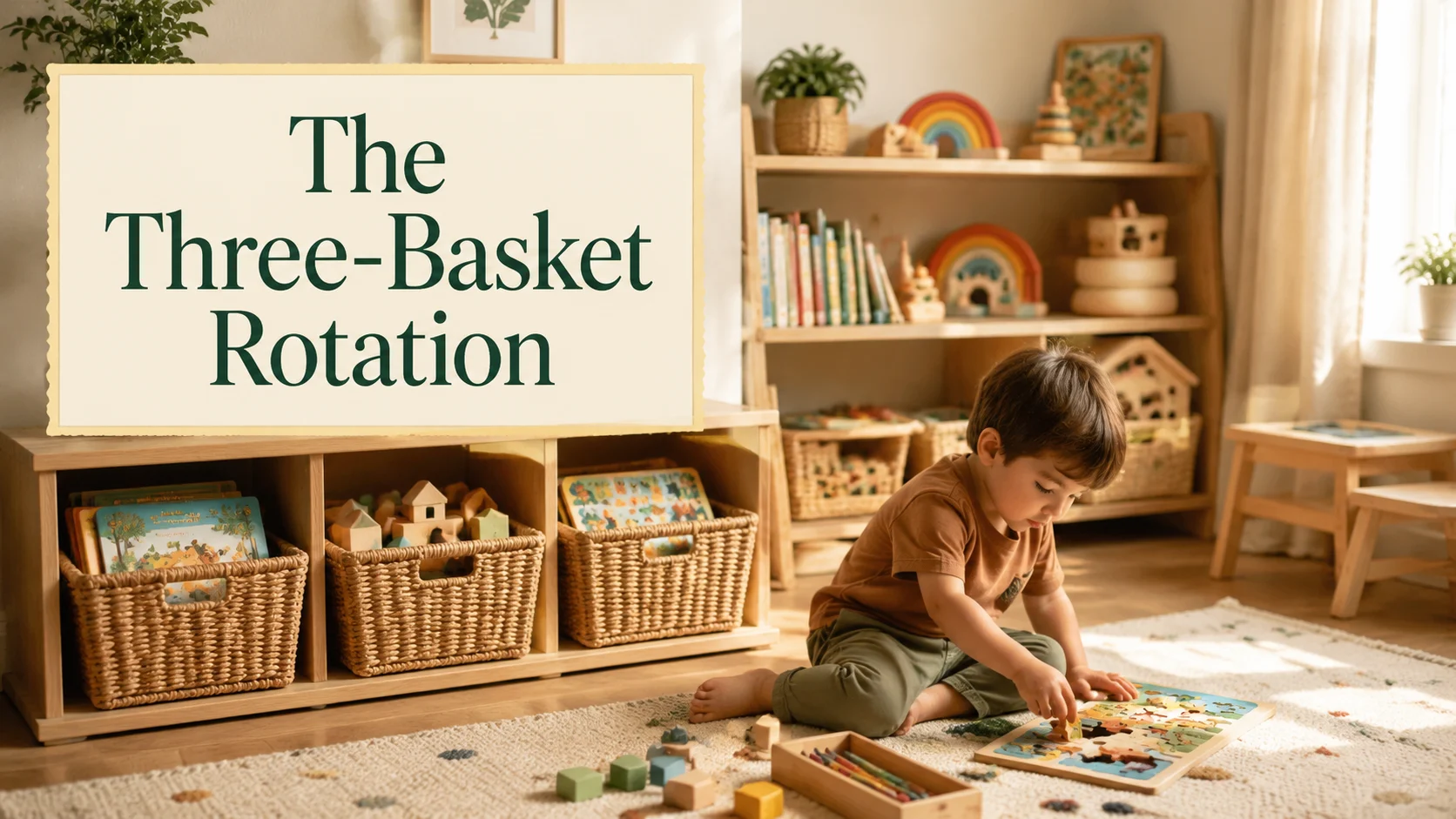
Designate three labeled baskets: Everyday (current favorites), Near-Future (items to introduce next), and Resting (stored away for a month); keep baskets the same size so rotation decisions are simple and visible to caregivers.
Pick consistent timing for swaps—Sunday evening or Monday morning works for many families—and rotate one basket at a time so the shelf shifts gradually; this predictable cadence helps toddlers adjust and reduces resistance to new materials.
When swapping, do a quick inspection: missing pieces go to a repair zip bag, batteries get checked, and books with torn pages go to an at-home repair pile; a five-minute prep keeps introduced items playable and safe for the week.
Presentation matters: staging the shelf for inviting play
Keep the shelf low and open with clear sightlines; place one type of activity per shelf level—books on a forward-facing lower ledge, blocks in an easy-open bin, and puzzles on a flat tray—so children can choose without overwhelming options.
Use neutral containers and a small label or picture cue for each basket so younger children can match icons to items; limit visible quantities to three to five books and one manipulative activity to encourage sustained attention rather than rapid toy-hopping.
Rotate with a small reveal strategy: put a new book with a familiar favorite or display the beginning of a train layout; pairing new and known elements makes transitions smoother and gives caregivers a natural way to introduce play each time.
Troubleshooting and evolving the routine as your child grows
If a rotated item is ignored repeatedly, move it to donate or store longer; conversely, if something from Resting becomes a sudden favorite, promote it to Everyday and swap another item out to maintain balance and prevent shelf overload.
Adjust rotation frequency by developmental stage—weekly swaps often work for toddlers, while preschoolers may benefit from biweekly changes because they need more time to explore complexity and narrative play.
Involve older siblings or caregivers in a simple rotation checklist to share responsibility; a two-item rule (introduce no more than two new things at once) preserves familiarity and helps the family sustain the system without friction.
Hashtags
Related Articles
- More play learning articles
- Two-Minute Setups, Five-Minute Invitations: Practical Prompts to
- Low-mess sensory play ideas for families with small spaces: Practic
- Monthly Themed Rotation: A Calm, Predictable System for Books, Bloc
- Micro-Sensory Stations: Low-Mess Play Setups for Tiny Living